
Pull to refresh
Logo
Daily Brief
Following
Why Sign Up
Lebanon expels Iranian ambassador as regional war reshapes old alliances

Lebanon expels Iranian ambassador as regional war reshapes old alliances

Force in Play
By Newzino Staff |

For the first time, Beirut treats Tehran's envoy as unwelcome — a move unthinkable before Hezbollah's battlefield losses and the fall of Iran's supreme leader

4 days ago: Deadline for Iranian envoy's departure expires

Overview

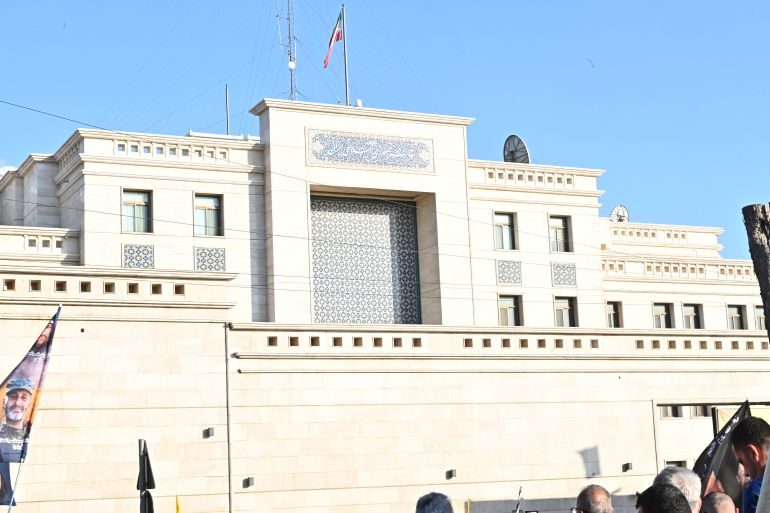
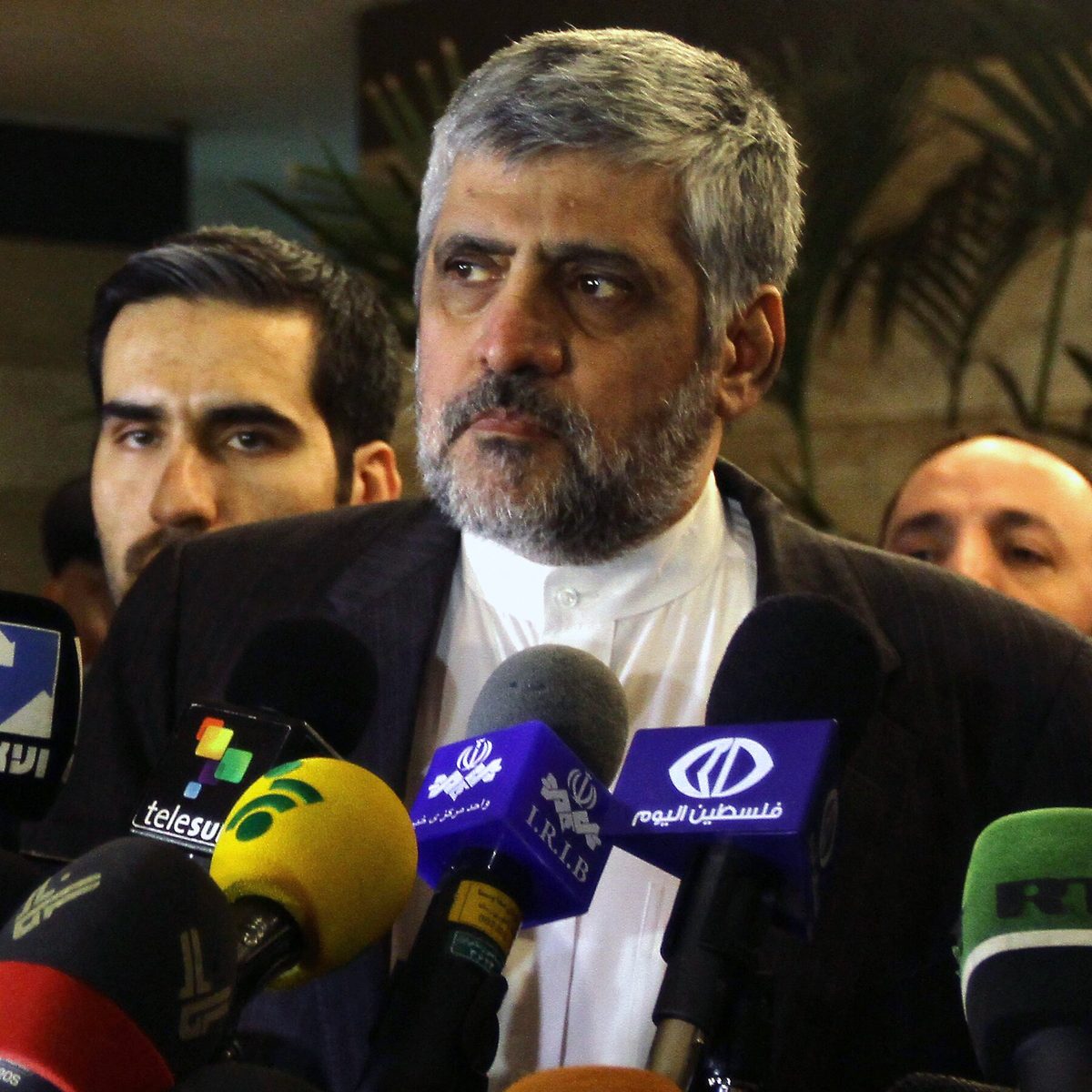
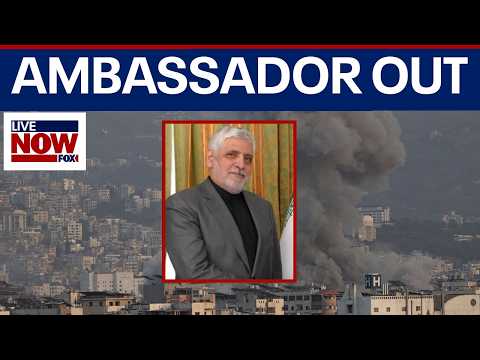
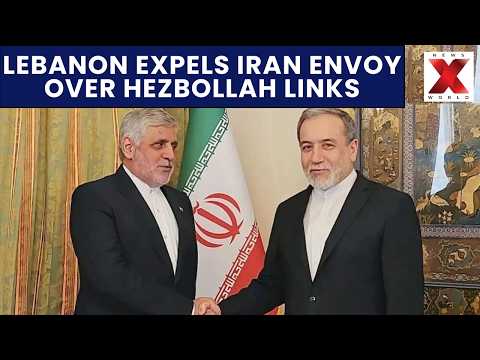
Iran has stationed diplomats, intelligence officers, and Revolutionary Guard operatives in Lebanon for more than four decades, building Hezbollah into the most powerful non-state military force in the Middle East. On March 24, 2026, Lebanon's foreign ministry told Iran's newly appointed ambassador-designate to leave the country within five days — the first time Beirut has ever expelled an Iranian envoy.

Why it matters

Lebanon is attempting to dismantle four decades of Iranian influence over its security and foreign policy during an active regional war.

Key Indicators

43
Years of Iranian military presence in Lebanon
The IRGC first deployed to Lebanon's Bekaa Valley in 1982 to help found Hezbollah.
1st
First expulsion of an Iranian envoy by Lebanon
No previous Lebanese government had declared an Iranian diplomat persona non grata.
5 days
Time given for ambassador to depart
Foreign Minister Youssef Rajji set a March 29 deadline for Mohammad Reza Shibani to leave.
1,000+
Fatalities in renewed Lebanon fighting
Both militants and civilians killed since Hezbollah broke the 2024 ceasefire on March 2.

Interactive

Exploring all sides of a story is often best achieved with Play.

Ever wondered what historical figures would say about today's headlines?

Sign up to generate historical perspectives on this story.

Sign Up

Debate Arena

Two rounds, two personas, one winner. You set the crossfire.

People Involved

Organizations Involved

Timeline

  1. Deadline for Iranian envoy's departure expires

    Diplomatic

    The five-day deadline set by Lebanon's foreign ministry for Sheibani to leave the country expired, marking the completion of the first expulsion of an Iranian diplomat in Lebanese history.

  2. Lebanon declares Iranian ambassador persona non grata

    Diplomatic

    Foreign Minister Youssef Rajji withdrew the agrément for ambassador-designate Mohammad Reza Sheibani, accusing him of providing diplomatic cover for IRGC operations and holding unauthorized meetings with Hezbollah. He was given until March 29 to leave.

  3. Iranian missile debris falls near Beirut

    Military

    An Iranian-made Qadr-110 ballistic missile, likely aimed at another country, exploded over Lebanese airspace. Debris fell in neighborhoods north of Beirut, causing minor building damage but no casualties.

  4. Israel begins new ground operations in southern Lebanon

    Military

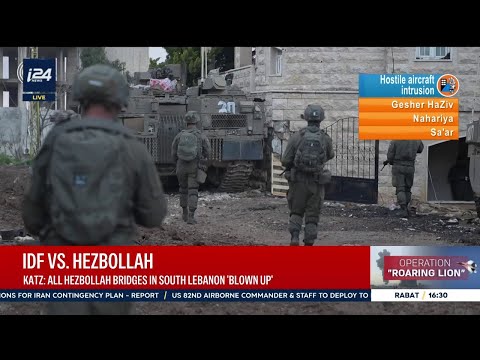
    The Israeli military launched ground operations in response to Hezbollah's ceasefire violation, widening the combat zone in southern Lebanon.

  5. Hezbollah breaks ceasefire, attacks northern Israel

    Military

    Hezbollah launched projectiles at a missile defense site south of Haifa — its first attack on Israel since the November 2024 ceasefire. Lebanon's government publicly condemned the strikes as unauthorized.

  6. US and Israel launch joint strikes on Iran, kill Khamenei

    Military

    Operation Epic Fury began with coordinated US and Israeli airstrikes on Iranian military, nuclear, and leadership targets. Supreme Leader Ali Khamenei and several top officials were killed in the first wave.

  7. Mass protests erupt across Iran

    Political

    Iran's largest protests since 2022 broke out over currency collapse and worsening conditions. Authorities killed thousands of protesters in January crackdowns.

  8. Twelve-Day War: Israel strikes Iranian nuclear sites

    Military

    Israel launched over 200 fighter jets to strike Iranian nuclear facilities, military bases, and infrastructure. Iran retaliated with 500+ ballistic missiles over 12 days. A ceasefire was announced June 24.

  9. Nawaf Salam forms new Lebanese government

    Political

    The former International Court of Justice president formed a technocratic cabinet, including Foreign Minister Youssef Rajji, marking a political shift away from Hezbollah's traditional veto power.

  10. Joseph Aoun elected president of Lebanon

    Political

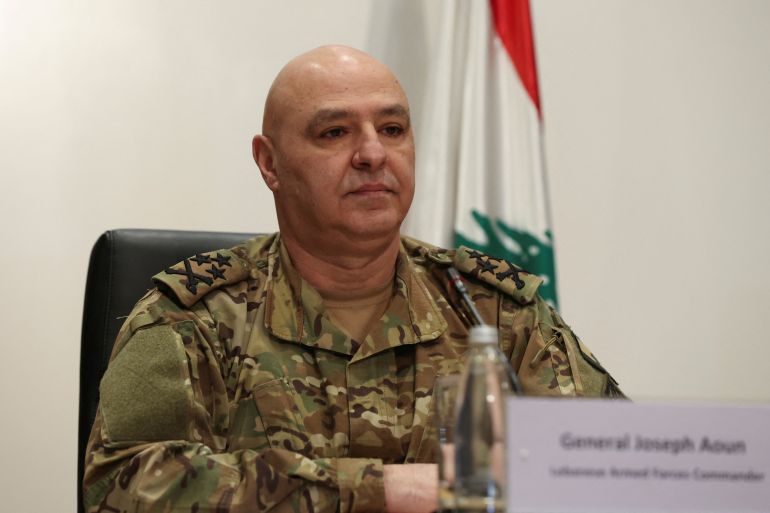
    Parliament elected the former army commander as president, ending a two-year vacancy that persisted because Hezbollah blocked candidates it opposed.

  11. Israel-Hezbollah ceasefire takes effect

    Diplomatic

    A US- and France-brokered ceasefire required Hezbollah to withdraw north of the Litani River and the Lebanese Armed Forces to deploy in southern Lebanon.

  12. Israel kills Hezbollah leader Hassan Nasrallah

    Military

    A massive Israeli airstrike on Beirut's southern suburbs killed Nasrallah after 32 years leading Hezbollah, along with several senior commanders.

Scenarios

1

Lebanon severs full diplomatic relations with Iran

Discussed by: Alma Research and Education Center; analysts at the Foundation for Defense of Democracies

If the war intensifies and Iran retaliates against Lebanese sovereignty — or if IRGC operatives are found still operating on Lebanese soil — Salam's government could escalate from expelling a single ambassador to a full diplomatic break. Gulf states, particularly Saudi Arabia, would likely increase financial support to Lebanon in exchange. This would be the most dramatic rupture in the 40-year relationship but would require sustained political will against Hezbollah's domestic opposition.

2

Expulsion holds but relations stabilize at a lower level

Discussed by: Atlantic Council Middle East analysts; Washington Institute for Near East Policy

Lebanon maintains its position on Sheibani but does not escalate further. Iran appoints a less provocative chargé d'affaires and scales back visible IRGC activity in Beirut. Both sides keep the embassy open with reduced staff. This scenario preserves a diplomatic channel while signaling that Lebanon's tolerance for overt Iranian interference has narrowed. It is the most likely outcome if the broader Iran war reaches a ceasefire.

3

Hezbollah pressures government to reverse course

Discussed by: Al Jazeera analysts; The National (Abu Dhabi)

Despite its weakened military position, Hezbollah retains significant political infrastructure in Lebanon. If the war subsides and Hezbollah reconsolidates domestically — or if Iran's successor leadership offers economic incentives — the political calculus could shift. A future Lebanese government, or even the current one under enough pressure, could quietly restore full diplomatic standing. Lebanon has a long history of bold sovereignty moves that erode over time, as happened after the 2005 Cedar Revolution.

4

Lebanon caught between warring powers, sovereignty erodes further

Discussed by: ACLED conflict analysts; UN Security Council Report

The expulsion becomes symbolic rather than structural. Israeli ground operations expand in the south while Iran continues using non-diplomatic channels to support Hezbollah. Lebanon's state institutions — already strained by economic crisis — lack the capacity to enforce sovereignty over either external actor. The diplomatic gesture changes the headline but not the reality on the ground.

Historical Context

Cedar Revolution and Syrian withdrawal from Lebanon (2005)

February-April 2005

What Happened

After the assassination of former Prime Minister Rafik Hariri on February 14, 2005, over one million Lebanese — roughly a quarter of the population — protested in Beirut demanding Syria end its 29-year military occupation. Under combined domestic and international pressure, Syria completed its troop withdrawal by April 26.

Outcome

Short Term

Syria pulled out 14,000 troops and Lebanon held its first elections without Syrian interference in decades.

Long Term

The gains proved fragile. Hezbollah, backed by Iran, filled much of the power vacuum Syria left. By 2008, Hezbollah seized parts of Beirut to enforce its political veto, and its armed status remained untouched.

Why It's Relevant Today

Lebanon's 2026 move against Iran echoes the 2005 sovereignty push against Syria. The central question is whether this attempt at independence will prove more durable, given that Iran's proxy — unlike Syria's army — is woven into Lebanon's political and social fabric.

Albania severs diplomatic ties with Iran over cyberattack (2022)

September 2022

What Happened

Albania became the first NATO member to sever diplomatic relations with Iran, expelling all Iranian diplomats and embassy staff after attributing a major July 2022 cyberattack on Albanian government systems to Iranian state actors. The FBI and Microsoft confirmed Iran's involvement.

Outcome

Short Term

Iran recalled its staff and denied involvement. The move drew strong US support and set a precedent for diplomatic consequences over state-sponsored cyber operations.

Long Term

Albania maintained the break and deepened ties with the US and NATO allies. Iran lost its diplomatic footprint in the country permanently.

Why It's Relevant Today

Albania's case shows that a full diplomatic break with Iran is achievable and sustainable for a smaller country with strong Western backing — conditions that also apply to Lebanon's current government, though Lebanon's entanglement with Iran runs far deeper.

Saudi Arabia-Iran diplomatic rupture and restoration (2016-2023)

January 2016 - March 2023

What Happened

Saudi Arabia severed diplomatic ties with Iran in January 2016 after protesters stormed Saudi diplomatic facilities in Tehran, following Riyadh's execution of Shia cleric Nimr al-Nimr. Bahrain, Sudan, and other states followed. The break lasted seven years until China brokered a restoration of relations in March 2023.

Outcome

Short Term

The rupture deepened the Saudi-Iranian proxy competition across Yemen, Syria, Iraq, and Lebanon.

Long Term

The 2023 restoration demonstrated that even deep diplomatic breaks in the Middle East are reversible when strategic conditions change — a lesson that applies to any Lebanon-Iran scenario.

Why It's Relevant Today

The Saudi precedent shows both that diplomatic ruptures with Iran can persist for years and that they can be reversed. Lebanon's move is less dramatic than full severance, leaving more room for either escalation or quiet restoration.

Sources

(10)