
Pull to refresh
Logo
Solomon Islands to let China security pact lapse and sign treaty with Australia

Solomon Islands to let China security pact lapse and sign treaty with Australia

Rule Changes

Honiara told Beijing it will not renew the 2022 police agreement, which expires in April 2027, as Prime Minister Matthew Wale arrives in Canberra for a sweeping bilateral deal.

Overview

Updated 1 hour ago

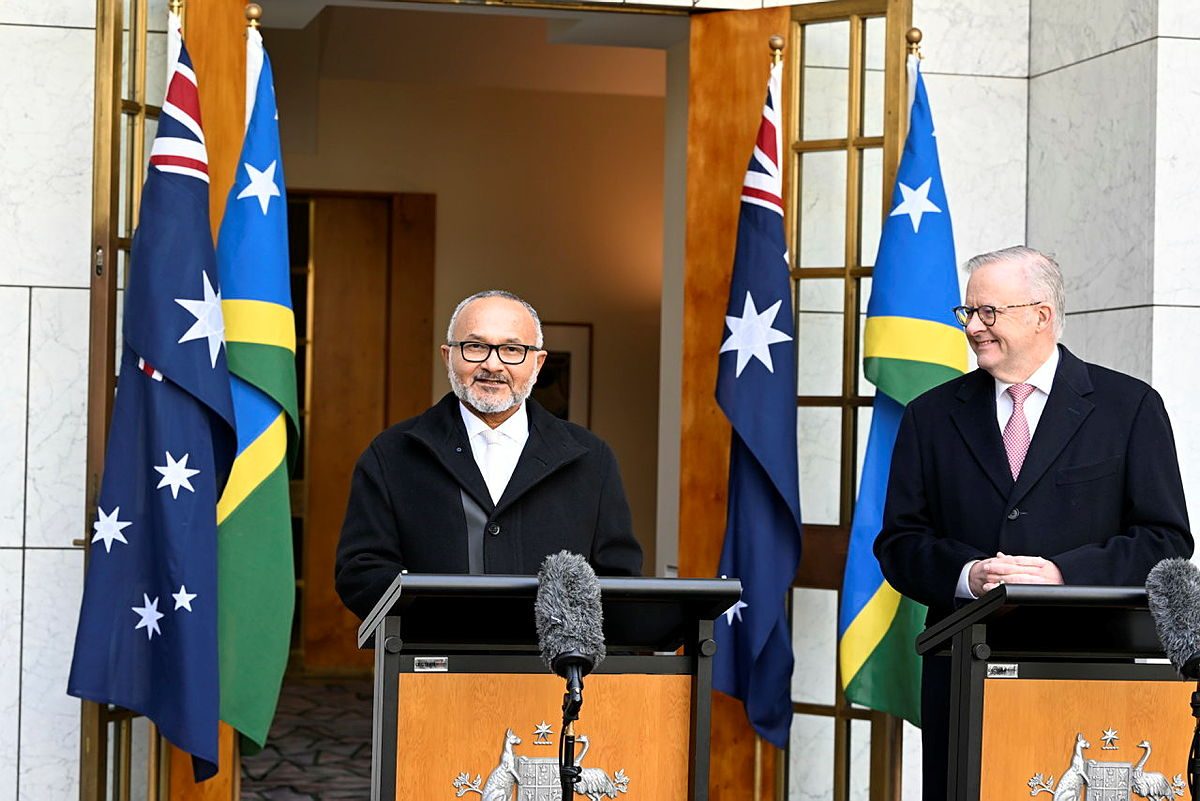
Solomon Islands has told Beijing it will not renew the 2022 security pact that brought about two dozen Chinese police into the country. The decision landed as Prime Minister Matthew Wale arrived in Canberra to sign a broad treaty with Australia.

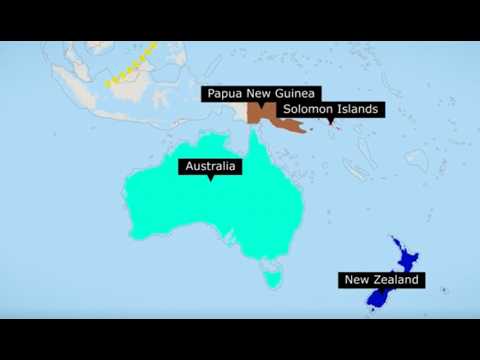
Australia is putting A$980 million in additional funding behind the treaty, including A$142 million for Wale's free-education policy. The deal ends a Chinese police foothold about 1,600 kilometers northeast of Australia, and it hands Wale a fight at home, where the former prime minister who signed the pact now leads the opposition.

Why it matters

Ending the pact removes a Chinese police presence from the South Pacific and makes Australia Solomon Islands' security guarantor.

Questions about this story

Free account needed to ask — your question is kept and asked for you right after sign-up. Answers are public.

No questions yet — be the first to ask.

Key Indicators

A$980M
Additional Australian funding pledged
Package tied to the new treaty, reported by the ABC; includes A$142 million for free education.
24
Chinese police stationed in Solomon Islands
About two dozen permanent Chinese police under the 2022 pact.
April 2027
Date the China pact runs out
The five-year agreement ends without renewal.
A$142M
Funding for Wale's free-education policy
Figure from leaked briefing texts reported by the ABC.
800,000
Solomon Islands population
About 800,000 people across the archipelago, per AAP reporting.

Voices

Curated perspectives — historical figures and your fellow readers.

Sign up to generate historical perspectives on this story.

People Involved

Organizations Involved

Timeline

April 2022 November 2026

6 events Latest: Today
Tap a bar to jump to that date
  1. Solomon Islands tells Beijing it will not renew

    Today Decision

    Nine Newspapers reports the pullout; the ABC confirms through sources that Honiara will let the pact expire in April 2027.

  2. Sogavare warns against ditching the pact

    Statement

    The former prime minister and architect of the 2022 deal says the country must weigh what it stands to lose.

  3. Australian aid routed to MPs' constituency funds

    Report

    ABC reports budget assistance meant for cyclone recovery and fuel costs reached MPs' special grants.

  4. Matthew Wale becomes prime minister

    Election

    Wale takes office after the May election and flags a review of the China pact.

  5. Pact becomes an issue in Australia's federal election

    Politics

    The agreement damages Scott Morrison's national security standing during the campaign; the Albanese government wins.

  6. Solomon Islands signs security pact with China

    Treaty

    Prime Minister Manasseh Sogavare's government signs a security agreement letting China rotate police training teams through the country.

Scenarios

1

China pact lapses in April 2027 with no renewal

Likely Resolves by May 31, 2027

Discussed by: Oliver Nobetau of the Lowy Institute; ABC reporting citing Solomon Islands government sources

Honiara has told Beijing it will not renew the five-year agreement, and the Australia treaty is scheduled for signing on November 25. If nothing changes before April 2027, the Chinese police team rotates out and Australia's 2017 security treaty becomes the working arrangement.

2

Wale loses a no-confidence vote before the pact expires

Possible Resolves by Apr 30, 2027

Discussed by: Nobetau, who noted Wale has already faced one motion of no confidence

Sogavare, now opposition leader, has criticised the pullout, and Wale's parliamentary majority has already been tested once. A successful motion would install a government that could reopen the China question well before April 2027.

3

Honiara reverses course and renews the China pact

Unlikely Resolves by Apr 30, 2027

Discussed by: Sogavare and critics of the pullout

Sogavare has warned the country must weigh what it loses from ending the arrangement, and Beijing says its cooperation is open and inclusive. A change of government or a dispute over Australian funding could reopen the door before the April 2027 expiry.

Historical Context

3 moments from history that rhyme with this story — and how they unfolded.

July 2003 - June 2017

Regional Assistance Mission to Solomon Islands (2003-2017)

After years of ethnic conflict known as the Tensions, Australia led a multinational police and military mission that restored basic order and public services. It ran for 14 years and was the region's largest post-conflict operation.

Then

Militia leaders were arrested and the capital returned to functioning government control.

Now

The mission made Australia the default security provider, a role formalised by a 2017 bilateral security treaty.

Why this matters now

It explains why Canberra treats a Chinese police presence in Honiara as a direct challenge to a role it has held for two decades.

September 2019

Solomon Islands switches recognition to Beijing (2019)

Sogavare's cabinet ended diplomatic ties with Taiwan, which dated to 1983, and recognised the People's Republic of China. The decision was contested at home and drew attention from Washington and Canberra.

Then

Beijing opened an embassy and aid and infrastructure followed.

Now

The switch paved the way for the 2022 security pact and made Solomon Islands a fault line in Pacific geopolitics.

Why this matters now

It shows how quickly alignment can flip in Honiara, in either direction, and why this week's reversal carries weight beyond one agreement.

2009 - 2014

Fiji turns to China after Western sanctions (2009)

After the 2006 coup, Fiji was suspended from the Pacific Islands Forum and faced travel and diplomatic restrictions from Australia and New Zealand. Commodore Frank Bainimarama's government courted Beijing for loans and diplomatic cover.

Then

China supplied funding and opposed the Western suspensions, while Fiji's neighbours lost leverage.

Now

Relations with Australia and New Zealand normalised after Fiji's 2014 election, but Chinese lending stayed.

Why this matters now

It is the clearest precedent for how Pacific states use a Chinese option when a Western partner applies pressure, and how that leverage can outlast the dispute that created it.

Sources

(6)