Anchor

Mexico reintroduces bison to desert reserve, ecosystem begins recovering
New Capabilities47 American bison returned to Coahuila after a 160-year absence; predators and scavengers are already coming back
Today: Cuatrociénegas recovery story gains wide attentionNew here? Follow stories to track developments over time. Create a free account to get updates when stories you care about change.
Overview
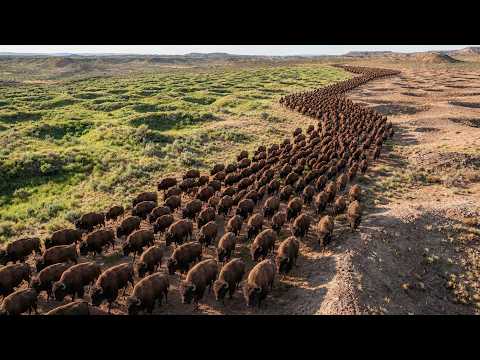
Updated 1 hour agoFor roughly 160 years, American bison were absent from northern Mexico, hunted out by the late 1800s. In 2025, conservationists brought 47 of them back to a protected desert reserve in Coahuila state. Months later, the landscape is already showing signs of recovery.
The bison act as ecosystem engineers. Their hooves break up compacted soil, their grazing clears dry vegetation that fuels wildfires, and their dung feeds beetles that aerate the ground. Camera traps in the reserve have captured pumas, lynxes, and collared peccaries returning to the area—species not seen there for years.
Why it matters
If bison can restore degraded Chihuahuan Desert grassland, the model could reshape how North America brings damaged landscapes back to life.
Questions about this story
Free account needed to ask — your question is kept and asked for you right after sign-up. Answers are public.
No questions yet — be the first to ask.
Key Indicators
47
Bison reintroduced to El Santuario reserve
Three arrived in August 2025, 44 more in November 2025.
8
Calves born in the reserve since the release
Indicates the herd is adapting to its new environment.
4,000
Size of the Cuatrociénegas protected reserve
A 400,000-hectare UNESCO-recognized habitat with gypsum dunes and endemic species.
Related Media
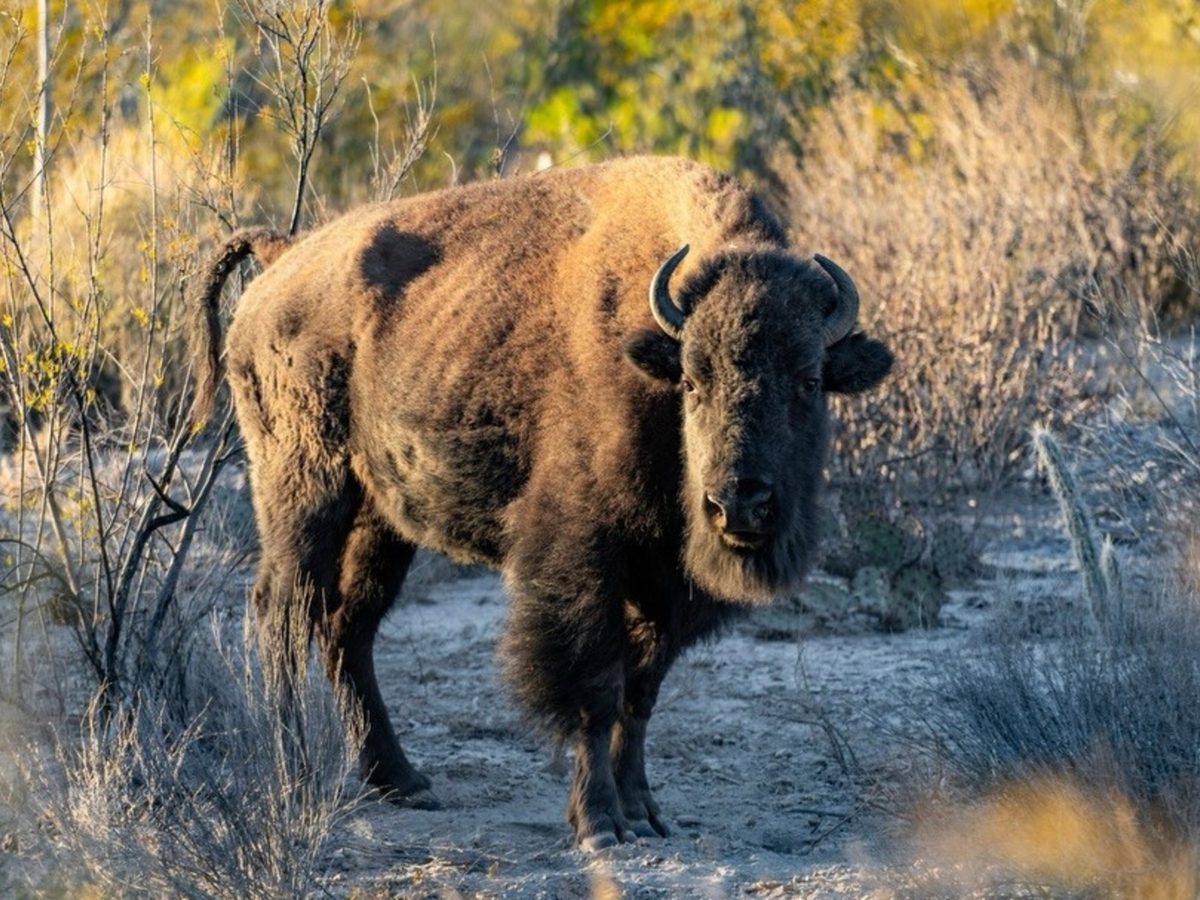
Mexico released 47 bison into a desert just a few months ago, and wildlife is already returning on its own
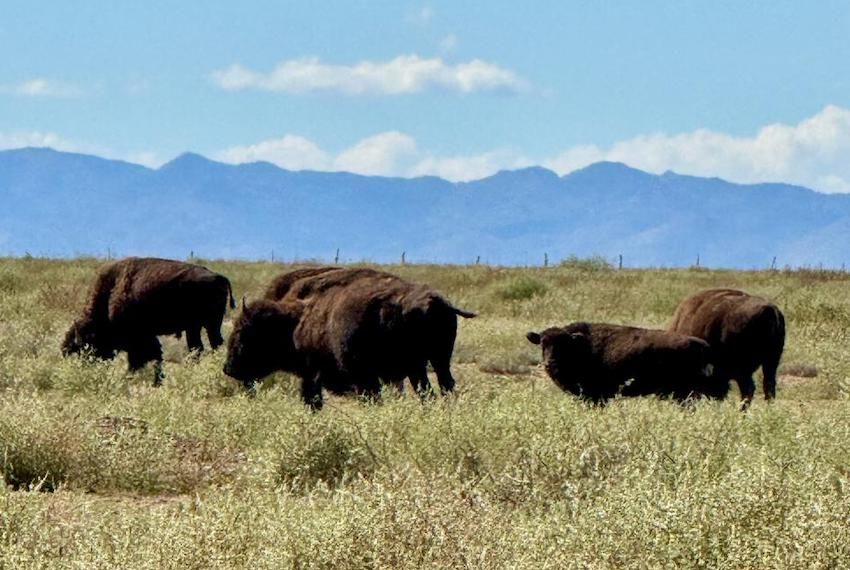
44 bison released into Coahuila reserve
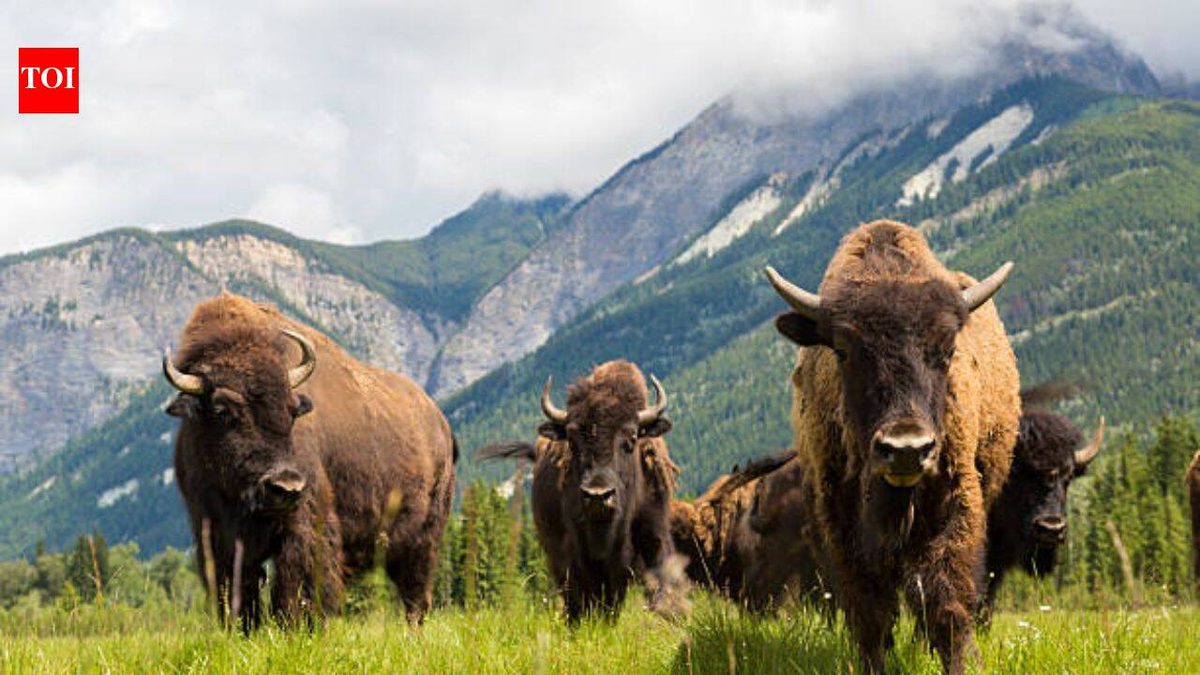
American bison had been hunted to extinction in Mexico; 160 years later the country introduced 47 bison in 2025 and the ecosystem is slowly restoring itself - The Times of India
289 views
46:37
The Southern Herd: Bison Recovery in Mexico
Great Plains Conservation Network

12.7K views
2:15
The Historic Return of the American Bison to Coahuila
EXCELSIOR
68.3K views
16:21
They Released Bison Into a Desert Degraded for Over 100 Years
Mandarin Tech
Images from Openverse under Creative Commons licenses. Videos from YouTube.
Voices
Curated perspectives — historical figures and your fellow readers.
Play
Exploring all sides of a story is often best achieved with Play.
Most of these play right now — no account needed. Sign up to save scores, keep a streak, and unlock Debate and Predict.
Log in
Sign Up
Higher or Lower
A number from this story, against one from elsewhere in the news — guess which is bigger, then keep the chain going. 5 rounds, 3 strikes; a miss costs a strike and resets your streak.
Example
Anchor
EU tariff revenue
$52B
Big for this kind of number
Mystery
Pentagon AI contract
?
Round 1
Streak: 0
Mystery
?
Keyboard: ↓/L lower · ↑/H higher
0 pts
Best streak: 0 · Rounds: 0
0 points — sign up to put that on the leaderboard.
Now try on this story
Connections
Sixteen names from the news. Find the four hidden groups of four. Four mistakes max.
Loading today's puzzle…
0/4 groups
Mistakes
Sign up to keep a daily streak — a new puzzle lands every day.
Now try on this story
Exit debate?
Your progress in this debate will be lost.
How it works
- 1 Two AI personas square off on this story.
- 2 You predict who'll win each round — correct picks earn XP.
- 3 One crossfire question is yours to fire. Pick it carefully.
Couldn't generate a topic
Select Your Champions
Choose one persona for each side of the debate
DEBATE TOPIC
Choose personas with different perspectives for a more dynamic debate.
SIDE A (PRO)
Select debater for this side:
No debate personas available right now.
SIDE B (CON)
Select debater for this side:
No debate personas available right now.
VS
Get ready to make your prediction...
Round of
Claim
Evidence
Stakes
Crossfire Answer
Closing Statement
Claim
Evidence
Stakes
Crossfire Answer
Closing Statement
Your Crossfire Question
Generating arguments...
Who's Got This Round?
Make your prediction before the referee scores
The referee scores both sides on
Correct predictions earn +20 XP
· Press 1 or 2 to pick
Evidence
40%
Logic
30%
Detail
20%
Style
10%
Round Results
Your Pick
Not this time
(%)
Overall Score
/10
Your Pick
Not this time
(%)
Overall Score
/10
Set the Crossfire
Pick the question both personas must answer in the final round
Crafting crossfire questions...
Choosing a question earns +10 XP crossfire bonus
🏆
Total XP Earned
Cred Change
Predictions
Debate Oracle! You called every round!
Sharp Instincts! You know your debaters!
The Coin Flip Strategist! Perfectly balanced!
The Contrarian! Bold predictions!
Inverse Genius! Try betting the opposite next time!
XP Breakdown
Base completion
+20 XP
Rounds played ( rounds x 5 XP)
+ XP
Correct predictions ( correct x 20 XP)
+ XP
Crossfire bonus
+10 XP
Accuracy
%
Prediction History
Round
You picked:
✓
✗
Now try on this story
Keep debating to level up your credibility and unlock achievements
People Involved
Organizations Involved
FP
Fundación Pro Cuatrociénegas
Nonprofit conservation foundation
Manages El Santuario reserve and leads bison reintroduction
The nonprofit that manages El Santuario, a protected area within the Cuatrociénegas UNESCO reserve.
Cuenca Los Ojos
Binational nonprofit
Preparing bison release in Sonora
A binational nonprofit restoring a 120,000-acre preserve in Sonora, Mexico, near the U.S. border.
Timeline
January 1860 September 2026
8 events
Latest: Today
Tap a bar to jump to that date
-
Cuatrociénegas recovery story gains wide attention
Today MilestoneReddit UpliftingNews post spotlights the reintroduction and its rapid ecological effects.
-
Sonora herd prepared for release at Cuenca Los Ojos
DevelopmentFirst bison to roam Sonora in roughly 200 years, descended from the Wind Cave donation.
-
Camera traps capture returning predators
ObservationPumas, lynxes, and collared peccaries recorded in areas where they had been absent for years.
-
Eight calves born in the reserve
MilestoneBirths indicate the herd is healthy and the environment is suitable.
-
44 more bison arrive at El Santuario
ReintroductionMulti-group effort involving the Mexican Fund for Conservation of Nature brings the herd to 47.
-
First 3 bison released at El Santuario
ReintroductionInitial release in Cuatrociénegas, a collaboration between Fundación Pro Cuatrociénegas and Museo del Desierto.
-
Wind Cave National Park donates 23 bison to Chihuahua
TransferU.S. bison sent to federally protected land in Janos, Chihuahua, forming the source herd.
-
Bison extirpated from northern Mexico
HistoricalHunting eliminated American bison from the region by the late 19th century.
Historical Context
2 moments from history that rhyme with this story — and how they unfolded.
1913
Wind Cave National Park bison restoration (1913)
Wind Cave National Park in South Dakota received 14 bison from the New York Zoological Society, helping rebuild a species reduced from tens of millions to roughly 1,000 by 1889.
Then
The park's herd grew steadily and became a source population for bison conservation worldwide.
Now
Bison from this line were donated to Mexico in 2009, eventually producing the Cuatrociénegas herd.
Why this matters now
Today's Mexican reintroduction is the product of a century-old recovery chain that began with a small herd in South Dakota.
January 1995
Yellowstone wolf reintroduction (1995)
Wildlife officials released 14 gray wolves from Canada into Yellowstone National Park, ending a 70-year absence. The wolves preyed on elk, which had overgrazed aspens and willows.
Then
Elk herds dropped, vegetation recovered, and scavenger species from eagles to bears benefited within a decade.
Now
The reintroduction became the global model for keystone species restoration.
Why this matters now
The bison approach mirrors Yellowstone in reverse: instead of restoring a top predator to control grazers, Mexico restored the grazer itself to regenerate the landscape.
Sources
(10)Related Stories
Kazakhstan's first wild-born Przewalski's horse foal in 200 years
New Capabilities
Updated 3 days ago
Trump signs order directing gray wolf delisting review
Rule Changes
Updated 3 days ago
India's cheetah reintroduction after 70-year extinction
New Capabilities
Updated May 29
Saint Louis Zoo red wolf pups join wild pack in North Carolina
New Capabilities
Updated Yesterday
Utah adds 450 elk hunting permits as drought strains herds
Rule Changes
Updated 5 days ago
Amur leopard conservation breeding resumes in Helsinki
New Capabilities
Updated Yesterday