
Pull to refresh
Logo
Hera returns first close-up of the asteroid system NASA struck

Hera returns first close-up of the asteroid system NASA struck

New Capabilities

The European Space Agency probe is inspecting Didymos and Dimorphos four years after NASA's DART impact

Overview

Updated 1 hour ago

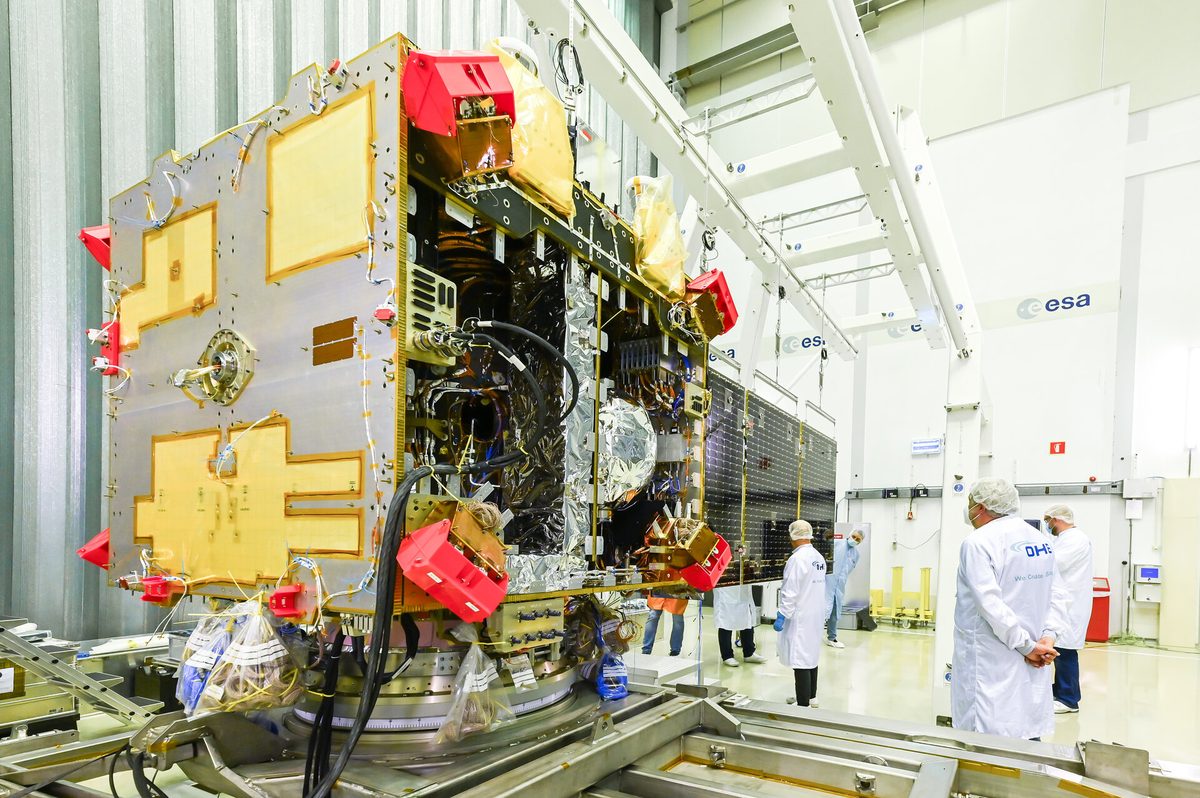
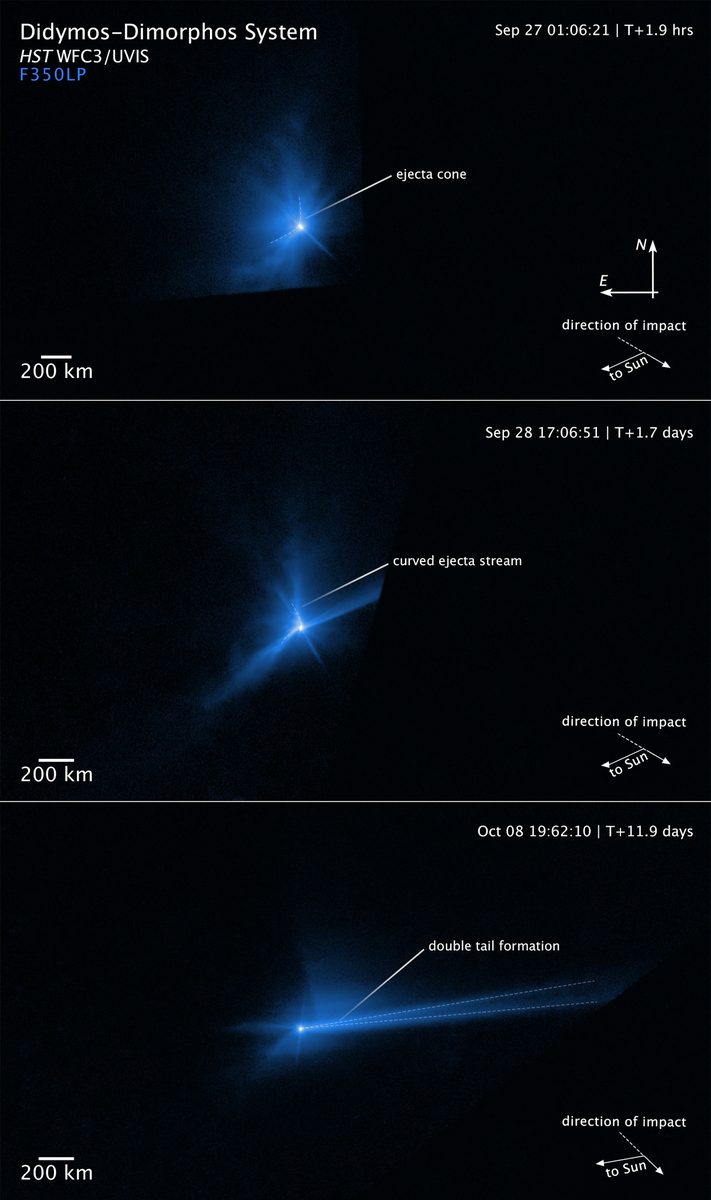
A European spacecraft has sent back the first close-up of the asteroid system NASA deliberately struck in 2022. The image, taken from 60 kilometers away, shows the larger asteroid Didymos in sharp relief and leaves its smaller companion, Dimorphos, mostly in shadow.

The European Space Agency's Hera mission is there to measure what the impact did. Its readings will show whether hitting an asteroid with a spacecraft is a repeatable defense technique or a one-time demonstration.

Why it matters

Hera's measurements will show whether asteroid deflection can be aimed reliably, or whether each asteroid's loose rubble structure makes the result unpredictable.

Questions about this story

Free account needed to ask — your question is kept and asked for you right after sign-up. Answers are public.

No questions yet — be the first to ask.

Key Indicators

33 min
Orbital period change
Dimorphos's orbit around Didymos shortened by about 33 minutes after DART's impact.
780 m
Didymos diameter
The larger asteroid that Dimorphos orbits.
6.1 km/s
DART impact speed
The speed at which the 580-kilogram spacecraft struck Dimorphos.
196.8 million km
Distance from Earth
Where the Didymos system sits as Hera arrives.
15%
Binary asteroids
Share of all asteroids that astronomers believe orbit in pairs.

Voices

Curated perspectives — historical figures and your fellow readers.

Sign up to generate historical perspectives on this story.

People Involved

Organizations Involved

Timeline

November 2021 November 2026

4 events Latest: Yesterday
Tap a bar to jump to that date
  1. Hera returns first close-up of Didymos

    Latest Observation

    From 60 kilometers away, Hera's camera captures the larger asteroid's boulder-strewn surface, with Dimorphos in shadow.

  2. ESA launches Hera on a two-year journey

    Mission

    The European spacecraft sets out to inspect the Didymos system and the DART impact site.

  3. DART strikes Dimorphos at 6.1 km/s

    Impact

    The impact shortens Dimorphos's orbit around Didymos by about 33 minutes, more than scientists predicted.

  4. NASA launches DART toward the Didymos system

    Mission

    A 580-kilogram spacecraft lifts off on a collision course with Dimorphos, a moonlet orbiting the larger asteroid Didymos.

Scenarios

1

Hera's images show DART carved a distinct crater on Dimorphos

Uncertain Resolves by Q2 2027

Discussed by: ESA and the Hera science team

Hera's close-up camera will image the impact site. A well-defined crater would support models that DART excavated a bowl. A reshaped asteroid would suggest the collision redistributed the whole body instead.

2

Hera measures Dimorphos's mass, pinning down DART's efficiency

Likely Resolves by End of 2027

Discussed by: Michael Kueppers, ESA Hera project scientist

DART's orbital change is known, but the mass of Dimorphos is not. Hera's radio tracking and its CubeSats' gravity measurements will supply it, letting scientists compute how much momentum the impact actually transferred.

3

Hera finds debris from DART's impact on Didymos

Possible Resolves by End of 2027

Discussed by: Michael Kueppers, ESA Hera mission scientist

The two asteroids are about 1 kilometer apart. If impact ejecta crossed that gap, Didymos's surface may carry fresh material. Hera will map both bodies to check.

4

Hera confirms Dimorphos is tumbling rather than locked to Didymos

Uncertain Resolves by End of 2027

Discussed by: Eva Lilly, Planetary Science Institute

Before impact, Dimorphos kept the same face toward Didymos. The collision may have knocked it into a tumble. Hera's repeated imaging will show whether it has settled back into a stable rotation.

Historical Context

3 moments from history that rhyme with this story — and how they unfolded.

July 2005

Deep Impact (2005)

NASA's Deep Impact spacecraft released a 370-kilogram impactor that struck comet Tempel 1 at about 10 kilometers per second. The flyby spacecraft watched the plume of debris thrown up by the collision.

Then

The impact exposed water ice and organic material from beneath the comet's surface.

Now

It showed that a deliberate impact could reveal a small body's interior, a technique DART later applied to deflection.

Why this matters now

Deep Impact was the first deliberate strike on a solar system body for science. DART used the same kinetic approach, but aimed to change an orbit rather than study a plume.

February 2013

Chelyabinsk meteor (2013)

A roughly 20-meter asteroid exploded about 30 kilometers above Chelyabinsk, Russia. The shockwave shattered windows across the city and about 1,500 people sought medical care.

Then

The event prompted new attention to asteroid detection and planetary defense budgets.

Now

It became a standard reference for why even small asteroids pose a real risk.

Why this matters now

Chelyabinsk is the reason agencies test deflection at all. Hera's job is to turn one successful test into a method that could be used if a threatening asteroid is found.

June 2018 - November 2019

Hayabusa2 at Ryugu (2018-2019)

Japan's Hayabusa2 spacecraft arrived at the asteroid Ryugu and found a rubble pile of loose boulders rather than solid rock. It collected samples and returned them to Earth in 2020.

Then

The samples confirmed that Ryugu formed from debris that clumped together.

Now

Rubble-pile structure became the default model for small asteroids, shaping how engineers plan impacts.

Why this matters now

Dimorphos is also a rubble pile. Hayabusa2 showed how loosely such bodies hold together, which is why scientists are unsure whether DART left a crater or rearranged the whole asteroid.

Sources

(8)