
Pull to refresh
Logo
Daily Brief
Following
Why Ranks Sign Up
OPEC+ sets oil policy without the UAE for the first time

OPEC+ sets oil policy without the UAE for the first time

Built World

The alliance weighs a fourth straight output hike while the Strait of Hormuz stays shut and its biggest swing producer walks away

Today: 41st ministerial meeting, no UAE in the room

Overview

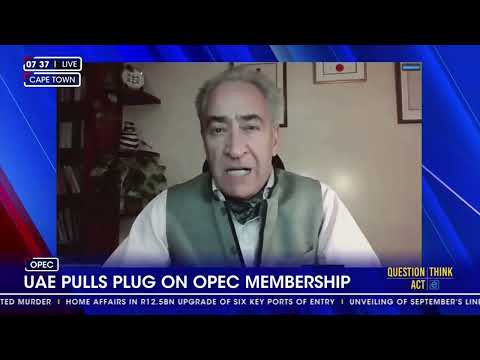
For decades, every OPEC+ output decision had the United Arab Emirates in the room, usually pushing to pump more. On Sunday, ministers met in Vienna without it for the first time. The UAE's exit took effect May 1 and pulled about 3.5 million barrels a day out of the group's quota math.

The group leaned toward a fourth straight monthly increase in output targets, even as the Strait of Hormuz stays effectively closed by the Iran conflict. That strait carries roughly a fifth of the world's oil. Brent crude recently traded above $100 a barrel, so what these ministers decide shows up at the pump.

Why it matters

OPEC+ quotas help set the price of crude, and crude sets the price of gasoline, diesel, and shipping for nearly everyone.

Questions about this story

No questions yet — be the first to ask.

Key Indicators

3.5M b/d
Barrels per day removed from the baseline
The quota baseline the UAE took with it when its exit took effect May 1, 2026.
188K b/d
Size of the June output hike
The monthly increase OPEC+ set for June, the benchmark for the next decision.
4th
Consecutive monthly increase weighed
The run of hikes since the Strait of Hormuz closed in late March.
>$100
Brent crude, per barrel
Brent has traded above $100 since the strait closed, up from the $70s before the conflict.
~20%
Share of world oil through Hormuz
The portion of global crude supply that normally transits the strait.

Voices

Curated perspectives — historical figures and your fellow readers.

Ever wondered what historical figures would say about today's headlines?

Sign up to generate historical perspectives on this story.

Play

Exploring all sides of a story is often best achieved with Play.

Log in to play. Track your picks, climb the leaderboards. Log in Sign Up
Predict 4 ways this could play out. Contrarian picks score more — points lock when the scenario resolves. Log in to play
Higher or Lower Two numbers from this story. Guess which is bigger. 5 rounds to set a streak. Log in to play
Timeline Five events from this story — drag them oldest to newest. Log in to play
Connections Sixteen names from the news. Find the four hidden groups of four. Log in to play

People Involved

Organizations Involved

Timeline

April 2023 June 2026

8 events Latest: Today
Tap a bar to jump to that date
  1. 41st ministerial meeting, no UAE in the room

    Today Policy

    Ministers meet in Vienna and lean toward a fourth straight monthly hike while the Strait of Hormuz stays closed.

  2. First output hike without the UAE

    Policy

    OPEC+ sets a 188,000 barrel-a-day increase for June, its first production decision since losing the UAE.

  3. UAE exit takes effect

    Policy

    The withdrawal removes about 3.5 million barrels a day from the group's quota baseline and frees the UAE to pump at will.

  4. UAE announces it will quit OPEC

    Statement

    Abu Dhabi says it will leave OPEC and OPEC+ after years of disputes over a quota it saw as too low.

  5. Strait of Hormuz declared closed

    Conflict

    Iran's IRGC closes the strait to shipping tied to the US, Israel, and allies. Brent jumps toward $114.

  6. Brent crude passes $100

    Market

    Oil breaks above $100 a barrel as the Gulf conflict raises fears for supply through the Strait of Hormuz.

  7. US and Israel strike Iran

    Conflict

    Coordinated airstrikes hit Iranian military and nuclear sites, opening the conflict that soon disrupts Gulf oil flows.

  8. OPEC+ announces deep voluntary cuts

    Policy

    The alliance agrees to hold back about 1.65 million barrels a day to support prices. Unwinding these cuts later drives the 2026 hikes.

Historical Context

3 moments from history that rhyme with this story — and how they unfolded.

July 2021

UAE-Saudi quota standoff (2021)

The UAE blocked an OPEC+ deal, demanding a higher production baseline that better reflected its expanded capacity. Talks collapsed publicly for days before a compromise raised Abu Dhabi's reference level. The dispute exposed a lasting rift over how barrels get divided.

Then

OPEC+ patched together a deal that lifted several baselines, including the UAE's.

Now

The grievance never fully healed and seeded the case for the 2026 exit.

Why this matters now

The fight that nearly broke the group in 2021 is the same one that finally pulled the UAE out five years later.

January 2019

Qatar leaves OPEC (2019)

Qatar withdrew from OPEC after 57 years to focus on natural gas, where it is a global leader. It framed the move as strategic, not political, though it came amid a regional rift. Its oil output was small, so the supply effect was minor.

Then

OPEC lost a long-standing member but little production volume.

Now

It showed members could leave without the cartel unraveling.

Why this matters now

Qatar's quiet exit set the template, but the UAE removes far more capacity, testing whether the group bends or breaks.

1984-1988

Tanker War in the Gulf (1984-1988)

During the Iran-Iraq war, both sides attacked oil tankers in the Persian Gulf, threatening traffic through the Strait of Hormuz. The US Navy began escorting reflagged Kuwaiti tankers to keep oil moving. Prices spiked on each fresh disruption.

Then

Shipping insurance soared and naval escorts kept most oil flowing.

Now

It proved the strait could be contested for years without a full, permanent closure.

Why this matters now

The current closure goes further than the Tanker War did, raising the stakes for every barrel OPEC+ decides to add or hold.

Sources

(7)