


Pull to refresh
Logo
Suspected Russian aircraft violate Japanese airspace, prompting scrambles in Japan, South Korea and Taiwan

Suspected Russian aircraft violate Japanese airspace, prompting scrambles in Japan, South Korea and Taiwan

Force in Play

Two planes crossed near Okinoshima island for about three minutes each — Japan's first announced Russian incursion since September 2024

Overview

Updated 50 minutes ago

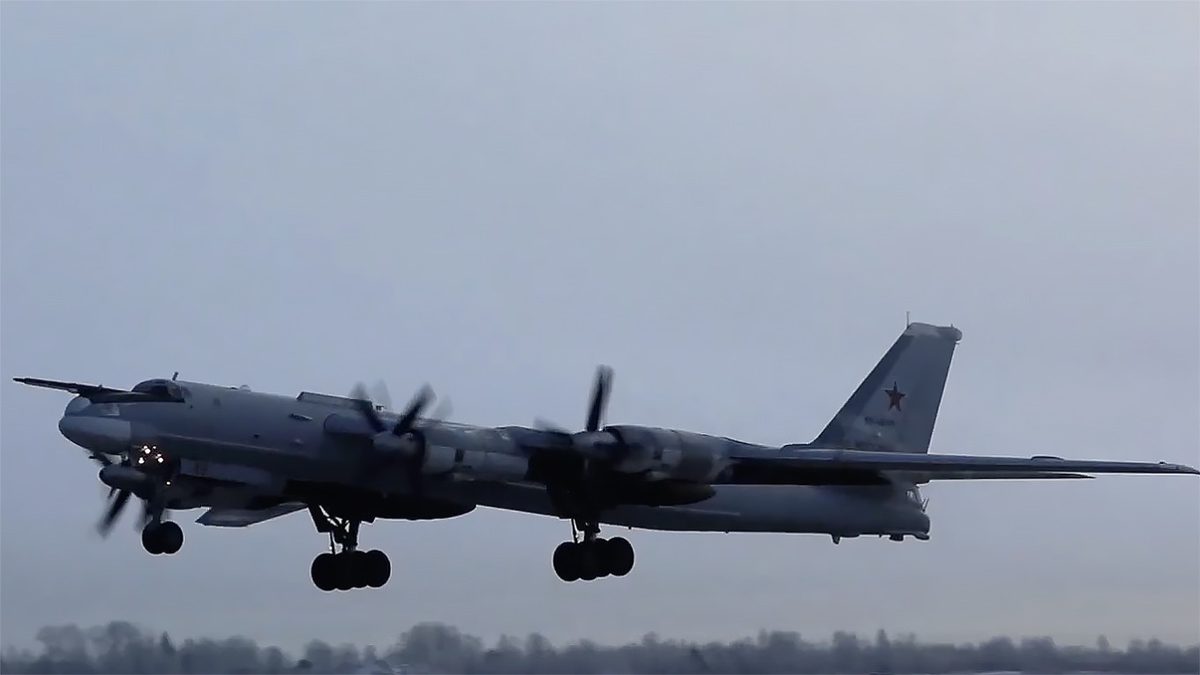
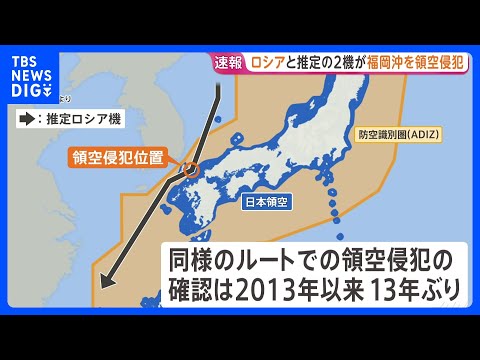
At 4:07 a.m. local time on Nov. 17, an aircraft believed to be Russian entered Japanese airspace northwest of Okinoshima island, off Fukuoka prefecture. A second followed about two minutes later. Each stayed roughly three minutes, long enough for Japan's Air Self-Defense Force to scramble fighters and issue radio warnings.

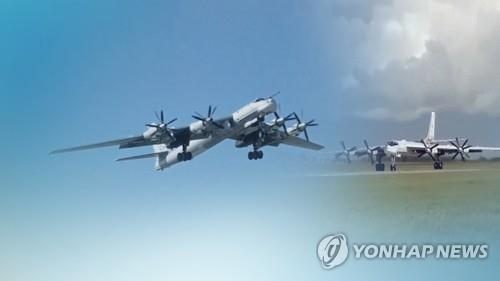
Japan's Defense Ministry lodged an "extremely stern protest" with Moscow. South Korea sent up jets after Russian aircraft entered its air defense identification zone over the Sea of Japan, and Taiwan's military said it responded to two Russian sorties in its own zone. Those zones are buffer areas beyond sovereign airspace, not territory.

Why it matters

Japan's fighter scrambles are at a four-year high; each incursion raises the chance of a midair miscalculation over the East China Sea.

Questions about this story

Free account needed to ask — your question is kept and asked for you right after sign-up. Answers are public.

No questions yet — be the first to ask.

Key Indicators

2
Suspected Russian aircraft in Japanese airspace
One entered at about 4:07 a.m., the second at about 4:09 a.m.
~3 min
Time each aircraft spent over Japanese territory
Japan's defense ministry said both planes were inside the airspace for roughly three minutes.
45
Russian and Soviet airspace violations announced by Japan
The defense ministry counts this as its 45th such announcement, including Soviet-era cases.
50
Total foreign airspace violations reported by Japan
Nikkei reported this is the 50th incursion by any foreign aircraft.
5
Tu-95MS bombers launched from Ukrainka air base
Open-source analyst AviVector tracked five bombers departing Russia's Far East on Nov. 16.
11 hours
Length of the Sea of Japan training flight
Three of the bombers and their refueling tankers flew the long patrol, per AviVector.

Voices

Curated perspectives — historical figures and your fellow readers.

Sign up to generate historical perspectives on this story.

People Involved

Organizations Involved

Timeline

September 2024 November 2026

5 events Latest: Today
Tap a bar to jump to that date
  1. Two suspected Russian aircraft enter Japanese airspace

    Today Airspace violation

    Japan scrambled fighters and protested; South Korea and Taiwan also responded to Russian aircraft.

  2. Five Tu-95MS bombers take off from Ukrainka air base

    Military movement

    Three flew an 11-hour Sea of Japan route; two turned south.

  3. Russia detains a Japanese journalist on spying allegations

    Diplomatic

    The detention added to months of mounting pressure on Tokyo from Moscow.

  4. Putin visits a disputed Pacific island

    Diplomatic

    His first such visit drew a sharp rebuke from Prime Minister Sanae Takaichi.

  5. Russian patrol plane breaches Japanese airspace near Hokkaido

    Airspace violation

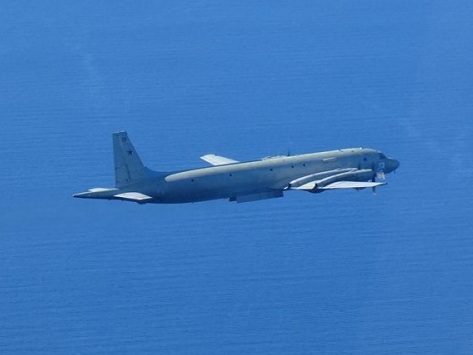
    An Il-38 crossed in three times near Rebun Island; Japanese fighters deployed flares.

Scenarios

1

Another Russian airspace incursion is announced within three months

Likely Resolves by Feb 17, 2027

Discussed by: Japanese defense officials, who say they are staying on alert and analyzing the flight's purpose

Japan's defense ministry has recorded a rising tempo of Russian and Chinese military flights near its borders, and Japanese officials said after this incident they would step up vigilance. If the pattern holds, another announced violation — or a similar scramble in the East China Sea — follows before winter ends. The trigger would be another long-range Russian patrol routing south from the Far East.

2

Moscow acknowledges the flight and flights pause

Unlikely Resolves by Feb 17, 2027

Discussed by: No named party has predicted this; Russian officials had not commented as of Nov. 17

Japan has demanded that Russia take preventive measures. Moscow could publicly explain the route as a training flight, express regret and route subsequent patrols away from Japanese territory. That would require the Kremlin to treat the incident as a cost worth addressing during a period of pressure on Tokyo, which it has not done after past incursions.

3

A close intercept forces Japan to rewrite scramble rules

Unlikely Resolves by May 17, 2027

Discussed by: Japanese defense officials and aviation-safety analysts watching scramble counts

Japan's intercepts are conducted by radio warning; in 2024 its fighters went further and deployed flares. A near-collision or unsafe pass involving Russian aircraft would push the defense ministry to formalize new intercept procedures, such as wider use of flares or changed rules of engagement. No such incident has been reported in this case.

Historical Context

3 moments from history that rhyme with this story — and how they unfolded.

September 2024

Russian Il-38 incursion near Rebun Island (2024)

A Russian Il-38 patrol aircraft crossed into Japanese airspace three times near Rebun Island, north of Hokkaido. Japan's Air Self-Defense Force scrambled F-15 and F-35 fighters, issued radio warnings and deployed flares — the first use of flares under Japan's measures against airspace intrusions.

Then

Tokyo protested to Moscow, which offered no public explanation for the flight.

Now

The episode became the reference point for Japan's airspace-violation announcements, cited in every subsequent report until November 2026.

Why this matters now

Japan's defense ministry measures this week's incident against the 2024 case, calling it the first announced Russian violation since then.

June 2019

Tu-95 bombers enter Japanese airspace (2019)

Russian Tu-95 bombers crossed into Japanese airspace, prompting Japan to scramble fighters and lodge a protest. The incursion was the last confirmed Russian bomber violation before the 2024 patrol-plane case.

Then

Japan protested through diplomatic channels; the flights continued periodically.

Now

Russian long-range patrols near Japan became routine enough that Tokyo now reports scrambles against them regularly.

Why this matters now

The aircraft in this week's incident are suspected to be Tu-95MS bombers on a long-range route, matching the 2019 profile rather than the 2024 patrol-plane case.

2010

Russian Tu-95 enters Taiwan's air defense zone (2010)

A Russian Tu-95 entered Taiwan's northeastern air defense identification zone before turning toward Japan's Ryukyu Islands after a radio warning. Taiwanese officials cited the case when describing how unusual it is for Russian bombers to come that close to the island.

Then

The aircraft left the zone without entering Taiwanese territorial airspace.

Now

Russian long-range aviation has rarely transited near Taiwan since, making the Nov. 17 detection notable for Taipei.

Why this matters now

It shows why Taiwan treated this week's two Russian sorties as unusual enough to announce publicly.

Sources

(9)