
Pull to refresh
Logo
BepiColombo reaches Mercury to become the second mission to orbit it

BepiColombo reaches Mercury to become the second mission to orbit it

New Capabilities

Two European and Japanese orbiters will separate in December and begin science work in April 2027

Overview

Updated 59 minutes ago

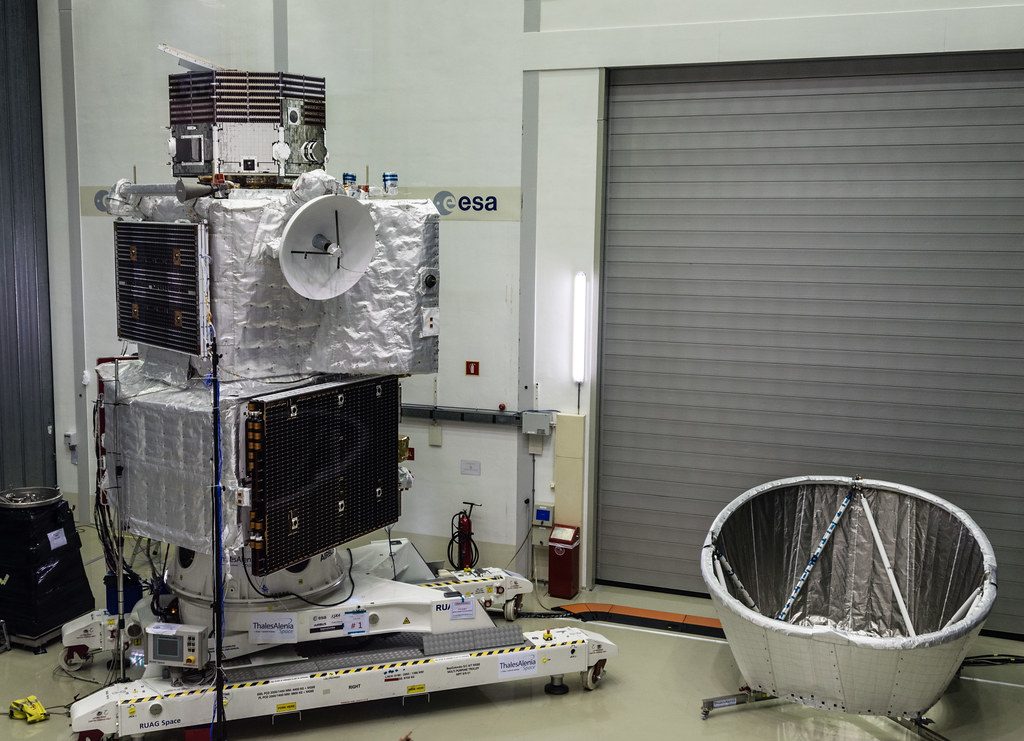
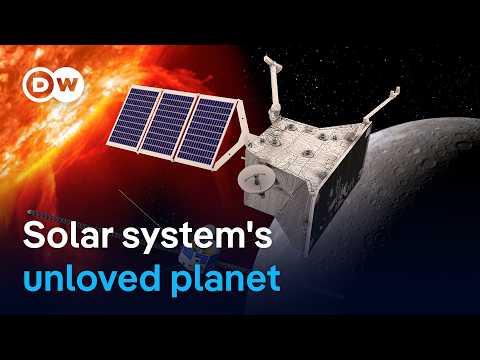
After eight years and six billion miles, the European-Japanese BepiColombo mission has reached Mercury. Its thrusters fire on 21 November to slow the spacecraft enough for capture, making it only the second mission in history to orbit the planet.

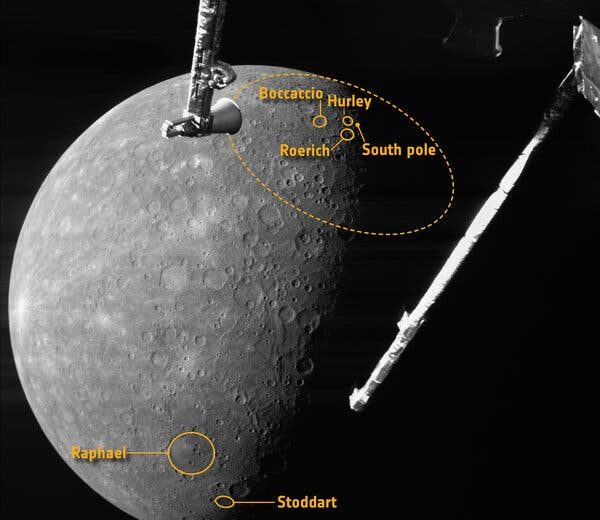
Two orbiters ride the spacecraft, and they split apart in December. They will circle Mercury's poles at different altitudes, one imaging the surface while both measure the magnetic field at the same time. The €1.6bn mission is built to answer three questions Mercury has resisted since 1974: how it formed so close to the Sun, why it generates a magnetic field, and what the ice in its shadowed craters is made of.

Why it matters

Two orbiters are now the only spacecraft at Mercury, the least-explored rocky planet. What they measure will define what we know about it.

Questions about this story

Free account needed to ask — your question is kept and asked for you right after sign-up. Answers are public.

No questions yet — be the first to ask.

Key Indicators

€1.6bn
Mission cost
Covers the two spacecraft, launch and operations for ESA and JAXA.
6bn miles
Distance travelled
The looping route required nine planetary flybys to shed speed.
9
Planetary flybys
One of Earth, two of Venus and six of Mercury.
2
Orbiters after separation
ESA's Mercury Planetary Orbiter and JAXA's Mio will fly separate polar orbits.

Voices

Curated perspectives — historical figures and your fellow readers.

Sign up to generate historical perspectives on this story.

People Involved

Organizations Involved

Timeline

October 2018 April 2027

7 events Latest: Today
Tap a bar to jump to that date
  1. Science operations begin

    Upcoming Science

    Both orbiters start their main measurement campaigns, expected to run at least a couple of years.

  2. European orbiter reaches its final orbit

    Upcoming Orbit change

    A series of burns lowers the Mercury Planetary Orbiter into a two-hour polar orbit.

  3. The two orbiters separate

    Upcoming Separation

    Latches release, cables are cut and a spring pushes the orbiters apart slower than walking pace.

  4. Thrusters fire to enter orbit

    Today Orbit insertion

    Four of the European orbiter's thrusters fire near the south pole to slow the stack into capture.

  5. Spacecraft arrives at Mercury

    Milestone

    After eight years and six billion miles, the stack reaches Mercury with the capture burn set for the next day.

  6. Transfer module jettisoned

    Milestone

    The Mercury Transfer Module separates, leaving the two orbiters and their sunshield as one stack.

  7. BepiColombo launches from French Guiana

    Launch

    The two orbiters leave Earth stacked together on an Ariane 5 rocket.

Scenarios

1

Both orbiters separate cleanly and science begins in April 2027

Likely Resolves by May 31, 2027

Discussed by: ESA mission operations

Controllers have rehearsed the separation and the thermal covers that must close behind it. If the latches release and the spring push goes as planned, Mio settles into a nine-hour orbit while the European orbiter spirals down to a two-hour one over three months.

2

A thermal cover fails and one orbiter is lost

Possible Resolves by Jan 31, 2027

Discussed by: Ignacio Tanco and Santa Martinez, ESA

Every separation leaves a gap in the spacecraft's insulation that has to close. Sunlight at Mercury is about 10 times stronger than at Earth. A jammed cover would expose hardware to heat it was not built to survive before the orbiters reach their final orbits.

3

BepiColombo finds ice in the southern craters

Uncertain Resolves by End of 2028

Discussed by: Sean Solomon and the BepiColombo science team

MESSENGER found water ice in permanently shadowed craters near the north pole. The European orbiter's camera and spectrometers will look for the same signature in the south, which was never imaged in detail.

Historical Context

3 moments from history that rhyme with this story — and how they unfolded.

August 2004 – April 2015

MESSENGER (2004–2015)

NASA launched MESSENGER in 2004 and flew it past Mercury three times before it settled into orbit in March 2011. Over four years it mapped most of the surface, confirmed a global magnetic field and found water ice in permanently shadowed craters near the north pole. It ran out of fuel and was deliberately crashed into the planet in April 2015.

Then

MESSENGER produced the first global maps of Mercury and the first direct evidence of polar ice.

Now

It left the south pole poorly imaged and the ice's composition unmeasured, which is what BepiColombo was built to address.

Why this matters now

BepiColombo is the first spacecraft to reach Mercury since MESSENGER's 2015 crash.

March 1974 – March 1975

Mariner 10 (1974–1975)

Mariner 10 used a gravity assist from Venus, the first ever flown, to reach Mercury three times. Its camera mapped about 45% of the surface and found a magnetic field and a heavily cratered landscape.

Then

It proved a spacecraft could reach Mercury at all, but only by borrowing Venus's gravity.

Now

Its partial coverage left half the planet unseen until MESSENGER arrived in 2011.

Why this matters now

The same orbital mechanics still govern BepiColombo's route: nine flybys to shed speed without falling into the Sun.

2000 – present

Cluster (2000–)

ESA launched four identical spacecraft in 2000 to fly in formation through Earth's magnetosphere, measuring the same regions from different points at the same time.

Then

The mission showed how to tell a boundary that is moving from one that is changing in place.

Now

Multi-spacecraft measurement became standard for studying magnetic fields in space.

Why this matters now

Mio and the European orbiter will do the same at Mercury, the only rocky planet besides Earth with a global magnetic field.

Sources

(8)