
Pull to refresh
Logo
SuedLink's Elbe tunnel is done; 700-km power corridor nears 2028 commissioning

SuedLink's Elbe tunnel is done; 700-km power corridor nears 2028 commissioning

Built World

Tunnel boring under the Elbe finishes the hardest single section of Germany's 4-gigawatt north-south high-voltage line

Yesterday: Elbe tunnel completion announced

Overview

Updated 1 hour ago

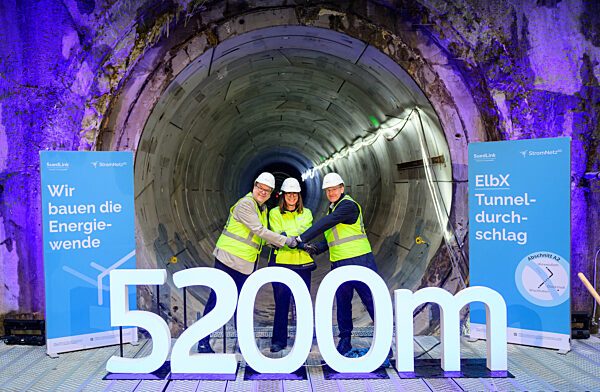
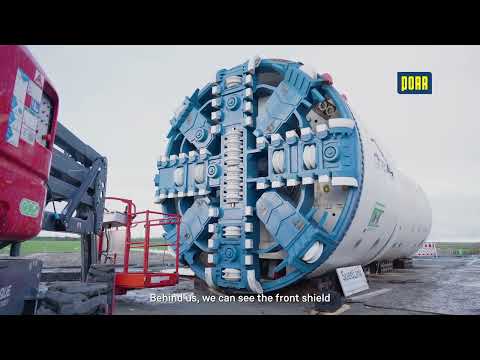
A tunnel boring machine named Elsa broke through under the Elbe River in June 2026, completing the single most difficult section of Germany's flagship north-south power line. Operators confirmed the 5.2-kilometer crossing between Wewelsfleth in Schleswig-Holstein and Wischhafen in Lower Saxony in August, clearing the way for high-voltage direct-current cables that will carry wind power south.

SuedLink is a roughly 700-kilometer corridor split between two operators: TenneT builds the northern half, TransnetBW the southern. Together they move 4 gigawatts of wind energy from the gusty north to industrial demand in Bavaria and Baden-Württemberg. Full operation is targeted for the end of 2028 — six years later than originally planned, after a 2015 political decision forced a redesign from overhead lines to buried cables.

Why it matters

SuedLink carries 4 gigawatts of wind power south when it opens in 2028, letting Germany's northern turbines run instead of being paid to shut down.

Questions about this story

Free account needed to ask — your question is kept and asked for you right after sign-up. Answers are public.

No questions yet — be the first to ask.

Key Indicators

5.2 km
Elbe tunnel length
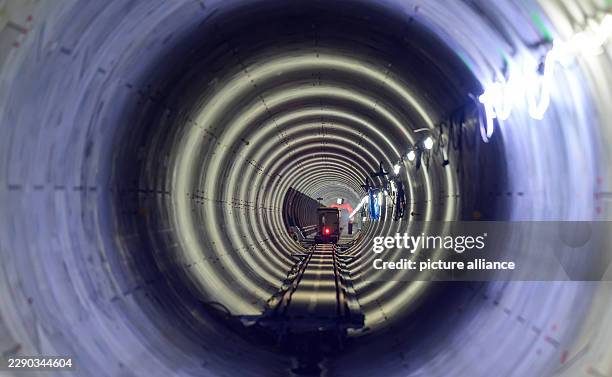
The tunnel boring machine Elsa drove from Wewelsfleth to Wischhafen at depths up to 40 meters.
4 GW
SuedLink transmission capacity
Total capacity of the direct-current line, enough for an estimated 10 million households.
700 km
Total line length
From Schleswig-Holstein through Lower Saxony and Thuringia to Bavaria and Baden-Württemberg.
10M
Estimated households served
Projection from grid operators once the full line enters commercial operation.
6
Cables for the tunnel
Two cables per SuedLink system plus one spare each, to ease maintenance and boost reliability.

Voices

Curated perspectives — historical figures and your fellow readers.

Ever wondered what historical figures would say about today's headlines?

Sign up to generate historical perspectives on this story.

Play

Exploring all sides of a story is often best achieved with Play.

Most of these play right now — no account needed. Sign up to save scores, keep a streak, and unlock Debate and Predict. Log in Sign Up
Predict 3 ways this could play out. Back the one you believe — contrarian picks score more when a scenario has a resolution date. Log in to play

People Involved

Organizations Involved

Timeline

November 2015 December 2028

7 events Latest: Yesterday
Tap a bar to jump to that date
  1. Full commissioning targeted

    Upcoming Projection

    SuedLink expected in commercial operation six years behind the original 2022 schedule.

  2. Cable pulling into the tunnel to begin

    Upcoming Construction

    Six cables planned: two for each SuedLink system plus one spare each, pulled through the four-meter bore.

  3. Elbe tunnel completion announced

    Latest Milestone

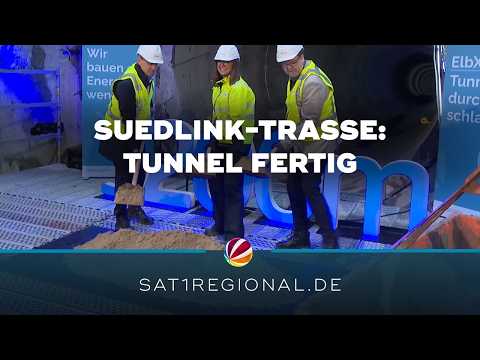
    Operators confirm the crossing is complete; interior fit-out begins ahead of the late-2027 cable pull.

  4. Elbe tunnel breakthrough at Wischhafen

    Milestone

    Elsa reaches the target shaft after 16 months and 5,224 meters of boring, completing the hardest section.

  5. Tunnel boring machine Elsa starts under the Elbe

    Construction

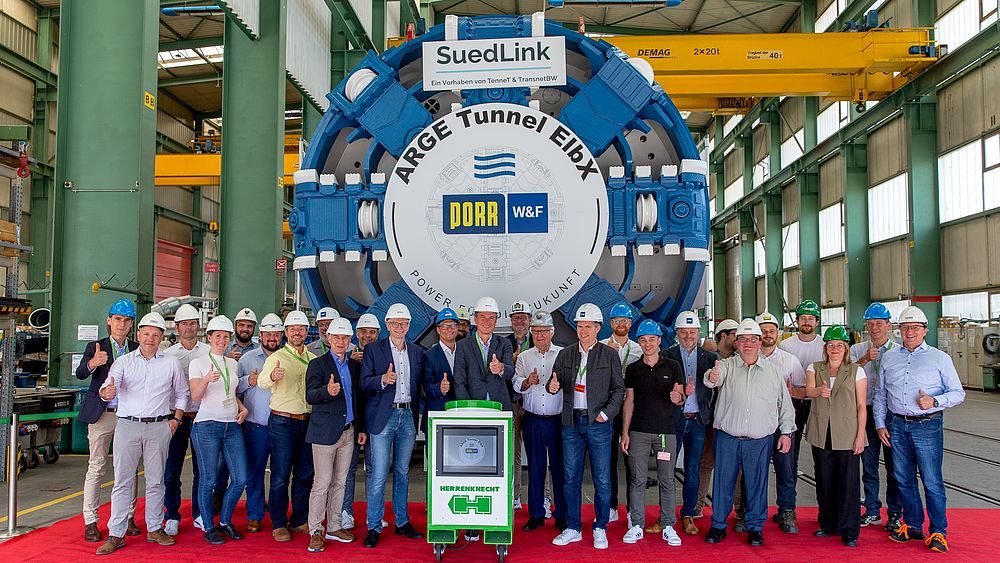
    Herrenknecht TBM launches from Wewelsfleth, Schleswig-Holstein, boring toward Wischhafen through water-bearing geology.

  6. Construction begins on SuedLink

    Construction

    TenneT starts building the northern section after years of planning delays, route protests, and redesign.

  7. Coalition mandates underground HVDC cables

    Policy

    CDU/CSU-SPD coalition, pushed by Bavaria's Horst Seehofer, requires buried cables for major direct-current lines, forcing SuedLink redesign.

Historical Context

3 moments from history that rhyme with this story — and how they unfolded.

December 1987 – May 1994

Channel Tunnel (1987-1994)

Britain and France built a 50-kilometer rail tunnel under the English Channel, one of the largest private infrastructure projects ever attempted. Political delays, geological surprises, and financing problems pushed it years past schedule and billions over budget.

Then

The tunnel opened in 1994 several years late and nearly bankrupted its operators.

Now

It became a durable cross-border link now carrying high-speed rail and freight, and a standing cautionary tale about mega-project cost control.

Why this matters now

SuedLink shares the profile: an oversized, politically contested crossing that took years longer and cost more than planned, yet delivers lasting value once complete.

1993 – December 1994

Baltic Cable (1993-1994)

Germany and Sweden linked with a 250-kilometer HVDC undersea cable between Lübeck and the Swedish coast, among Europe's first commercial high-voltage direct-current connections. It proved that long-distance HVDC could trade power reliably across borders.

Then

The cable entered service in late 1994 as a working commercial link.

Now

It remains in operation and helped establish HVDC as the standard for long-distance European power transfers.

Why this matters now

SuedLink applies the same HVDC technology at continental scale, roughly three times Baltic Cable's length and sixteen times its capacity.

2014 – May 2021

NordLink HVDC cable (2014-2021)

Germany and Norway built a 623-kilometer high-voltage direct-current subsea cable to exchange wind power with Norwegian hydro storage. Permitting delays and cable manufacturing problems pushed commissioning back repeatedly.

Then

NordLink entered service in May 2021, enabling two-way power flows between the two grids.

Now

It proved the long-distance HVDC strategy Germany is repeating with SuedLink and the companion SuedOstLink and A-Nord corridors.

Why this matters now

The same technology and similar operator structure now apply to SuedLink; NordLink showed both the difficulty of such projects and their payoff once commissioned.

Sources

(10)