

Pull to refresh
Logo
Peruvian fossil whale had the most lopsided skull yet measured among cetaceans

Peruvian fossil whale had the most lopsided skull yet measured among cetaceans

New Capabilities

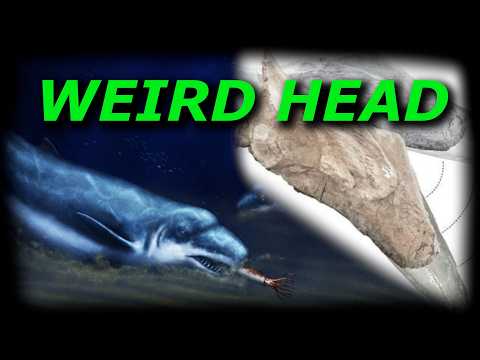
Scaphokogia huachafo, a pygmy sperm whale from the Pisco Formation, adds a new extreme to a family already built on asymmetric heads

Overview

Updated 2 hours ago

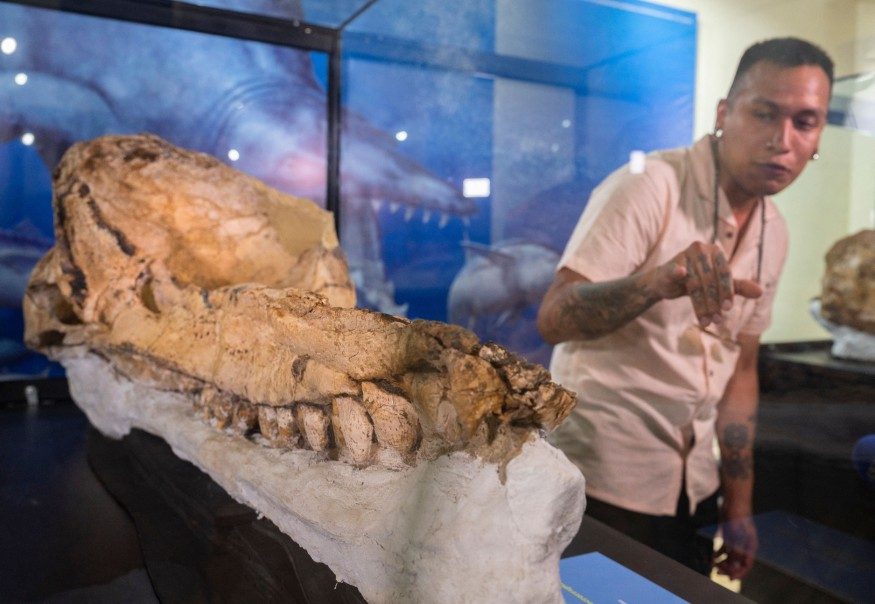
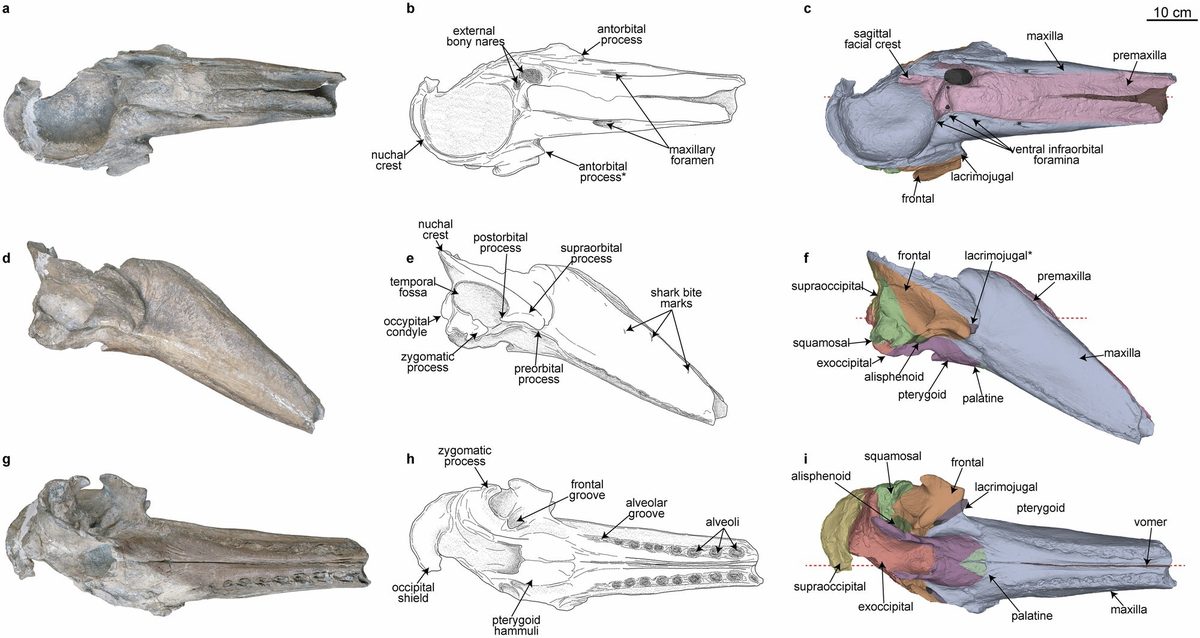
In 2015, Aldo Benites-Palomino handled a fossil skull from Peru's Sacaco Basin while preparing his bachelor's thesis. Both bony nostrils sat left of the midline, and the left one was much larger than the right. The obvious explanation was that millions of years of sediment had squashed it.

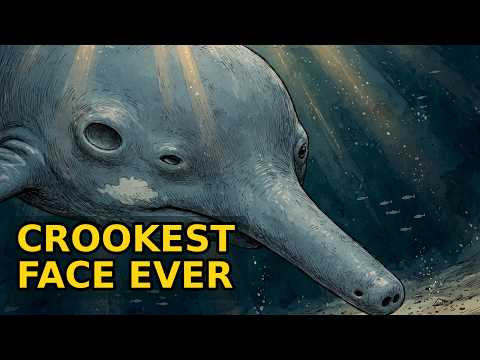
It hadn't. Every suture in the skull is fused and nothing else on the bone is crushed, so the team treats the shape as anatomy rather than damage. In Communications Biology they name the animal Scaphokogia huachafo and score its face against 31 whale and dolphin species. It comes out the most asymmetric of the set.

Why it matters

Toothed whales steer and hunt by sound, and their lopsided skulls are part of that equipment. This one is the most lopsided yet measured.

Questions about this story

Free account needed to ask — your question is kept and asked for you right after sign-up. Answers are public.

No questions yet — be the first to ask.

Key Indicators

31
Species compared
Whales and dolphins in the 3D shape analysis of facial asymmetry.
31°
Downward tilt of the snout
Angle between rostrum and skull axis in S. huachafo, against 16–21° in the older species S. cochlearis.
55°
Maximum neck flexion
Rostrum angle at full ventral flexion, reconstructed from the atlas of a related Scaphokogia specimen.
6.3–5.6M years
Age of the fossil bed
Deposited in the Sacaco Basin during the Late Miocene.

Voices

Curated perspectives — historical figures and your fellow readers.

Sign up to generate historical perspectives on this story.

People Involved

Organizations Involved

Timeline

2015 November 2026

2 events Latest: 3 days ago
  1. Scaphokogia huachafo named and measured

    Latest Research

    The team reports the most extreme facial asymmetry recorded among cetaceans, tied to seafloor foraging.

  2. Skull surfaces during a bachelor's project

    Research

    Benites-Palomino encounters the specimen and begins years of ruling out burial damage.

Scenarios

1

A wider comparison knocks Scaphokogia off the top

Possible Resolves by End of 2029

Discussed by: The paper itself hedges, calling the result the most extreme documented among cetaceans and only 'potentially' among mammals; the analysis covered whales and dolphins only.

A later geometric morphometric study adds non-cetacean mammals, or simply finds a more extreme whale. Either result would demote the headline claim while leaving the anatomy unchanged. The paper already shows how sensitive the ranking is: when the authors scored only the left-right difference in the premaxillae, the smaller S. totajpe came out more extreme than S. huachafo.

2

New skull material confirms the echolocation read

Uncertain Resolves by End of 2030

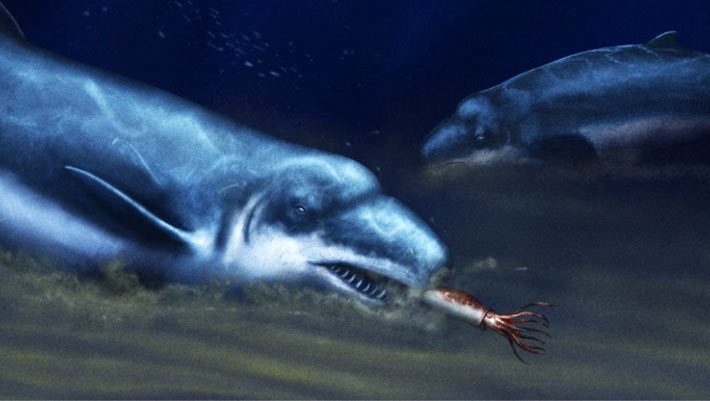
Discussed by: The authors propose that S. huachafo lacked the specialised snout structures other bottom feeders use, and instead scanned soft sediment with sound.

The echolocation argument is an inference from skull shape, not from preserved soft tissue or ear bones. A second skull with the ear region intact would let researchers check whether the acoustic anatomy matches the shape. Confirmation would make the genus a textbook case of a benthic forager that hunted by sound.

3

The cetacean record stands unchallenged

Likely Resolves by End of 2029

Discussed by: Comparative work on whale skull asymmetry has so far stayed inside the group, because the asymmetry is tied to sound-producing forehead structures that other mammals lack.

If no one runs the mammal-wide comparison, the finding settles into the narrower claim the abstract actually makes: the most extreme facial asymmetry documented among cetaceans. That would still be a real result, and a useful one for anyone modelling how far skull shape can drift when it is coupled to echolocation.

Historical Context

2 moments from history that rhyme with this story — and how they unfolded.

1990s

Odobenocetops, the walrus-dolphin of the Pisco Formation (1990s)

Paleontologists working Peru's coastal fossil beds described Odobenocetops, a small Miocene whale with a downturned snout and, in males, tusks of unequal length. It had no teeth suited to grabbing prey and has been read as a bottom feeder that used suction.

Then

Odobenocetops became the standard example of a whale specialised for feeding on the seafloor.

Now

It anchored the case that the Pisco Formation preserved an entire community of bottom-feeding marine mammals, not a single oddity.

Why this matters now

Scaphokogia is a second Pisco genus interpreted as a benthic specialist, which is what makes the ecosystem argument in the new paper plausible.

2023

Perucetus colossus, a dense-boned whale from Peru (2023)

Researchers described a giant early whale from southern Peru with thickened, dense skeletal bone and estimated its body mass in the range of the largest living whales. They argued the heavy skeleton suited slow swimming near the seafloor.

Then

Other researchers challenged the mass estimate and the lifestyle reconstruction.

Now

The dispute showed how much of a feeding ecology can rest on bone density alone.

Why this matters now

Scaphokogia's benthic case leans on the same kind of evidence, dense bone in the snout, so it inherits the same open questions.

Sources

(6)