

Pull to refresh
Logo
Daily Brief
Following
Why Ranks Sign Up
Native tribes move into utility-scale power generation

Native tribes move into utility-scale power generation

Built World

The Ute Mountain Ute Tribe starts construction on two solar-and-storage projects totaling 270 megawatts as federal renewable support recedes

Yesterday: Ute Mountain Ute brings Foxtail Flats online

Overview

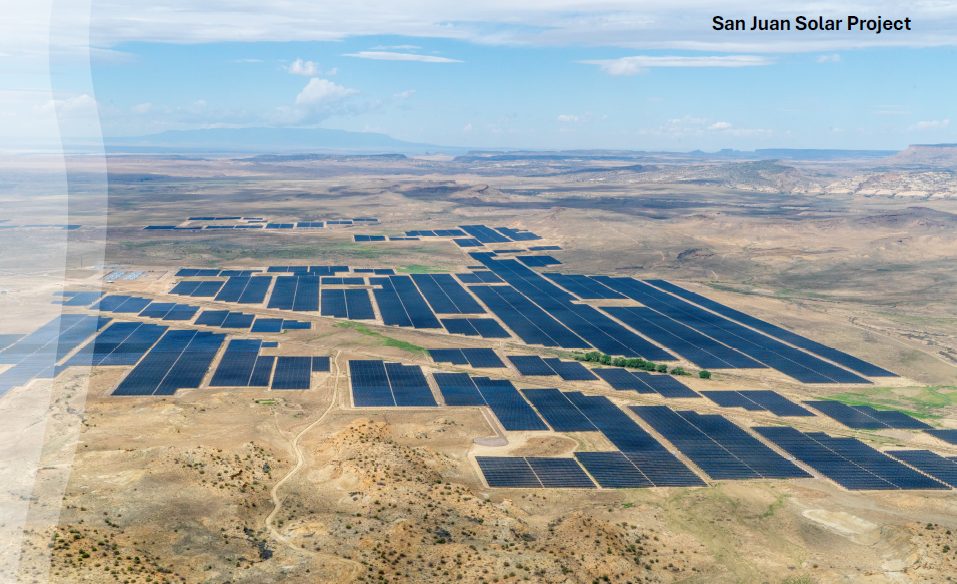
The Ute Mountain Ute Tribe broke ground in May 2026 on two co-located solar projects on its land in northwestern New Mexico. Foxtail Flats adds 170 megawatts of solar and 80 megawatts of battery storage; a second facility, Four Mile Mesa, adds 100 megawatts of solar and 100 megawatts of storage.

The tribe locked in its permits before Washington cut clean-energy tax credits, letting the projects keep their financing. Foxtail Flats sells power to Los Alamos County for national laboratories and Kirtland Air Force Base; Four Mile Mesa sells to PNM for Meta's data-center operations. Both reach commercial operation in summer 2027.

Why it matters

Tribes control millions of acres of sunlit land. Foxtail Flats shows they can own the power plants on it, not just lease the ground.

Questions about this story

No questions yet — be the first to ask.

Key Indicators

270 MW
Combined solar capacity
170 MW at Foxtail Flats (contracted to Los Alamos County) and 100 MW at Four Mile Mesa (contracted to PNM for Meta).
720 MWh
Total battery storage
320 MWh at Foxtail Flats and 400 MWh at Four Mile Mesa to hold solar output after the sun goes down.
63%
Output going to Los Alamos County
Foxtail Flats' 170 MW is contracted to Los Alamos County, which distributes power to national laboratories and Kirtland Air Force Base.
43.4 GW
US solar planned in 2026
Developers aim to add a record amount of utility-scale solar this year.
~600
Construction jobs at peak
Workers needed at peak construction, with some positions prioritized for tribal members.

Voices

Curated perspectives — historical figures and your fellow readers.

Ever wondered what historical figures would say about today's headlines?

Sign up to generate historical perspectives on this story.

Play

Exploring all sides of a story is often best achieved with Play.

Log in to play. Track your picks, climb the leaderboards. Log in Sign Up
Predict 4 ways this could play out. Contrarian picks score more — points lock when the scenario resolves. Log in to play
Higher or Lower Two numbers from this story. Guess which is bigger. 5 rounds to set a streak. Log in to play
Connections Sixteen names from the news. Find the four hidden groups of four. Log in to play

People Involved

Organizations Involved

Timeline

August 2022 July 2026

6 events Latest: Yesterday
Tap a bar to jump to that date
  1. Ute Mountain Ute brings Foxtail Flats online

    Latest Milestone

    NPR reports the tribe is bringing the project online, adding 270 megawatts of solar and 180 megawatts of storage over about 18 months.

  2. Foxtail Flats and Four Mile Mesa break ground

    Milestone

    DESRI and Tierra Adentro Growth Capital held a groundbreaking on Ute Mountain Ute land in San Juan County. Construction financing was led by NORD/LB and Santander, with SOLV Energy as the EPC contractor.

  3. Interior adds solar permitting reviews

    Regulatory

    An Interior Department memo adds new review layers for solar and wind projects on federal land.

  4. Federal law cuts clean-energy credits

    Policy

    New legislation phases out tax credits that had supported renewable projects, tightening the timeline for developers.

  5. Tribe secures federal permits

    Regulatory

    Foxtail Flats wins its federal permits in the final days before US renewable policy changed.

  6. Direct pay opens the door for tribes

    Policy

    The Inflation Reduction Act lets tax-exempt tribes collect the full value of clean-energy tax credits as cash payments.

Historical Context

3 moments from history that rhyme with this story — and how they unfolded.

March 2017

Moapa Southern Paiute Solar Project (2017)

The Moapa Band of Paiutes hosted a 250-megawatt solar plant on their reservation in Nevada. It was the first utility-scale solar project on tribal land. Los Angeles bought the power for its city grid.

Then

The plant sent clean power to Los Angeles and brought lease revenue and jobs to the reservation.

Now

It set a template for large solar farms on tribal land selling into distant urban grids.

Why this matters now

Foxtail Flats follows the same path of tribal land powering off-reservation demand, but with the tribe helping develop and own the plant rather than only leasing the ground.

2017

Kayenta Solar Facility (2017)

The Navajo Tribal Utility Authority built and owned the Kayenta solar plant in Arizona, starting at about 27 megawatts and later expanding. A tribal utility owned and ran the generation directly.

Then

The project trained a Navajo solar workforce and powered thousands of homes.

Now

It showed a tribal utility could own utility-scale generation, not just distribute bought power.

Why this matters now

Kayenta proved tribal ownership works at smaller scale. Foxtail Flats extends that idea to a much larger project feeding the regional grid.

November 2019

Navajo Generating Station closure (2019)

One of the West's largest coal plants, on Navajo land in Arizona, shut down. Its closure cut jobs and coal royalties for the Navajo Nation and Hopi Tribe.

Then

The shutdown removed a major employer and revenue source for both tribes.

Now

It pushed tribes to look at renewables to replace lost fossil-fuel income.

Why this matters now

The coal era's end on tribal land created pressure to find new energy revenue. Projects like Foxtail Flats are the answer some tribes are choosing.

Sources

(5)