

Pull to refresh
Logo
US completes Iraq withdrawal after two decades of military presence

US completes Iraq withdrawal after two decades of military presence

Force in Play

Baghdad takes over security as Iran-linked militias resist disarmament deadline

Today: US completes Iraq withdrawal

Overview

Updated 1 hour ago

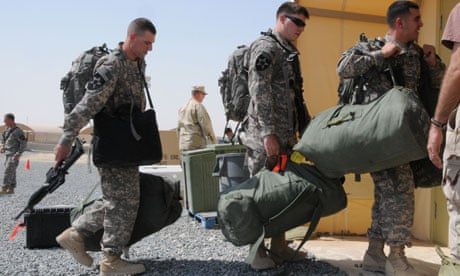
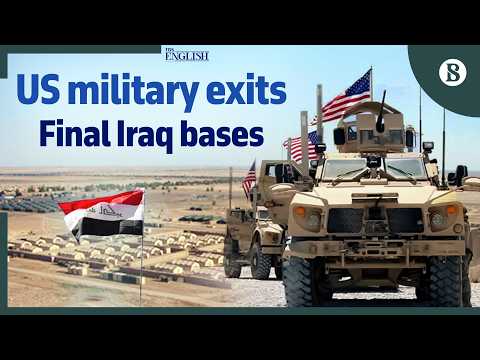
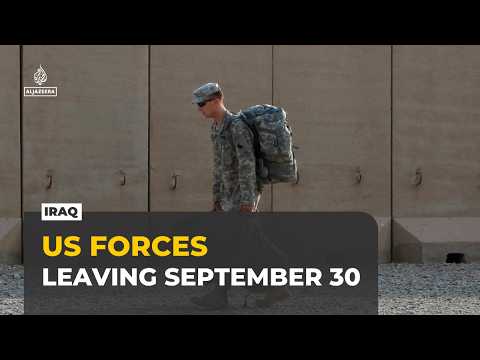
The last US forces left Iraq this week, ending a military presence that stretched back to the 2003 invasion. About 2,500 troops departed their remaining bases, completing a withdrawal negotiated in 2024 and closing the 12-year coalition campaign against the Islamic State group (ISIS).

The exit removes a check on Iranian influence. Iran-backed militias hold seats in Iraq's parliament and operate armed factions outside full state control. Prime Minister Ali al-Zaidi has pledged to disarm them by June 2027, but several powerful groups have rejected that plan.

Why it matters

Who controls Iraq's army, oil, and borders—Baghdad or Iran's armed factions—now depends on a disarmament deadline many militias reject.

Questions about this story

Free account needed to ask — your question is kept and asked for you right after sign-up. Answers are public.

No questions yet — be the first to ask.

Key Indicators

2,500
US troops withdrawn
Final US forces departed Iraq's remaining bases in September 2026.
23
Years of US military presence
From the 2003 invasion to the September 2026 withdrawal.
4,500
US deaths over two decades
Americans killed in Iraq since the 2003 invasion, per CBC.
273
Days until militia disarmament deadline
Iraqi government target for disarming all militias is June 30, 2027.

Voices

Curated perspectives — historical figures and your fellow readers.

Ever wondered what historical figures would say about today's headlines?

Sign up to generate historical perspectives on this story.

People Involved

Organizations Involved

Timeline

March 2003 September 2026

6 events Latest: Today
Tap a bar to jump to that date
  1. US completes Iraq withdrawal

    Today Withdrawal

    Last troops depart, ending 23-year presence and 12-year anti-ISIS mission.

  2. Final US forces begin departure

    Withdrawal

    Remaining 2,500 troops start leaving last bases; exit completes September 30.

  3. US and Iraq agree to end coalition mission

    Agreement

    Baghdad and Washington schedule a phased troop drawdown.

  4. ISIS seizes Mosul; US returns

    Conflict

    Islamic State captures Iraq's second city. US redeploys to lead anti-ISIS coalition.

  5. First US withdrawal completed

    Withdrawal

    Last US troops leave Iraq; occupation ends.

  6. US-led invasion of Iraq begins

    Conflict

    Coalition forces invade, toppling Saddam Hussein's government within weeks.

Scenarios

1

Iraqi government completes militia disarmament by mid-2027

Unlikely Resolves by Q2 2027

Discussed by: Al Jazeera and Iraqi government statements; Douglas Silliman suggests the withdrawal aims to weaken militias politically

Al-Zaidi's plan buys a 90-day ceasefire, during which armed groups halt attacks in exchange for assurances that US forces will not target them. Weapons then transfer to state control gradually, completing June 30, 2027. Success would make Iraq's militias answer to Baghdad alone.

2

Iran-backed militias reject disarmament, retain armed power

Likely Resolves by Jul 1, 2027

Discussed by: Reuters, The National, France 24; militia leaders have signaled refusal

Several powerful Iran-backed groups have already rejected disarmament or attached conditions. If they keep their weapons, they remain a parallel military force, a lever for Iranian influence, and a capacity to strike US and Israeli targets across the region. The June 2027 deadline would pass unmet.

3

ISIS launches new offensive amid Iraq's security gap

Possible Resolves by End of 2027

Discussed by: Reuters and France 24, citing warnings of a resurgent ISIS

ISIS has been reduced to a low-level insurgency but keeps sleeper cells. With coalition air support and intelligence gone, Iraqi forces may struggle to contain a coordinated campaign, especially in remote areas near the Syrian border. A major offensive would test whether Iraq can secure its own territory.

Historical Context

2 moments from history that rhyme with this story — and how they unfolded.

December 2011

First US withdrawal from Iraq (2011)

In December 2011, the final US troops left Iraq under a status-of-forces agreement. The US left behind a government fractured along sectarian lines and an army trained by American advisers.

Then

Within three years, ISIS seized Mosul and much of northern Iraq as the Iraqi army collapsed.

Now

US forces redeployed in 2014, launching the coalition campaign that defeated ISIS's territorial caliphate by 2019.

Why this matters now

The 2011 exit did not end US involvement in Iraq; it delayed a return. The 2026 exit faces the same risk.

August 2021

US withdrawal from Afghanistan (2021)

US forces left Afghanistan in August 2021 after a 20-year presence. The Afghan government collapsed within weeks, and the Taliban retook Kabul before the final flights departed.

Then

The Taliban reassumed control; the US embassy evacuated by airlift.

Now

The US ended its longest war. Analysts cite the episode as a reference point for the risks of rapid withdrawal.

Why this matters now

Iraq's security forces, like Afghanistan's, were built around US backing. The 2021 fall of Kabul shows how quickly trained forces can fold when that backing disappears.

Sources

(10)