

Pull to refresh
Logo
HALO Trust clears a quarter-million landmines in Zimbabwe as aid cuts threaten the 2030 deadline

HALO Trust clears a quarter-million landmines in Zimbabwe as aid cuts threaten the 2030 deadline

Force in Play

Zimbabwe has about 3% of its mined land left to clear and a five-year extension running to December 2030, but the operators that would finish the job are shrinking

Overview

Updated 2 hours ago

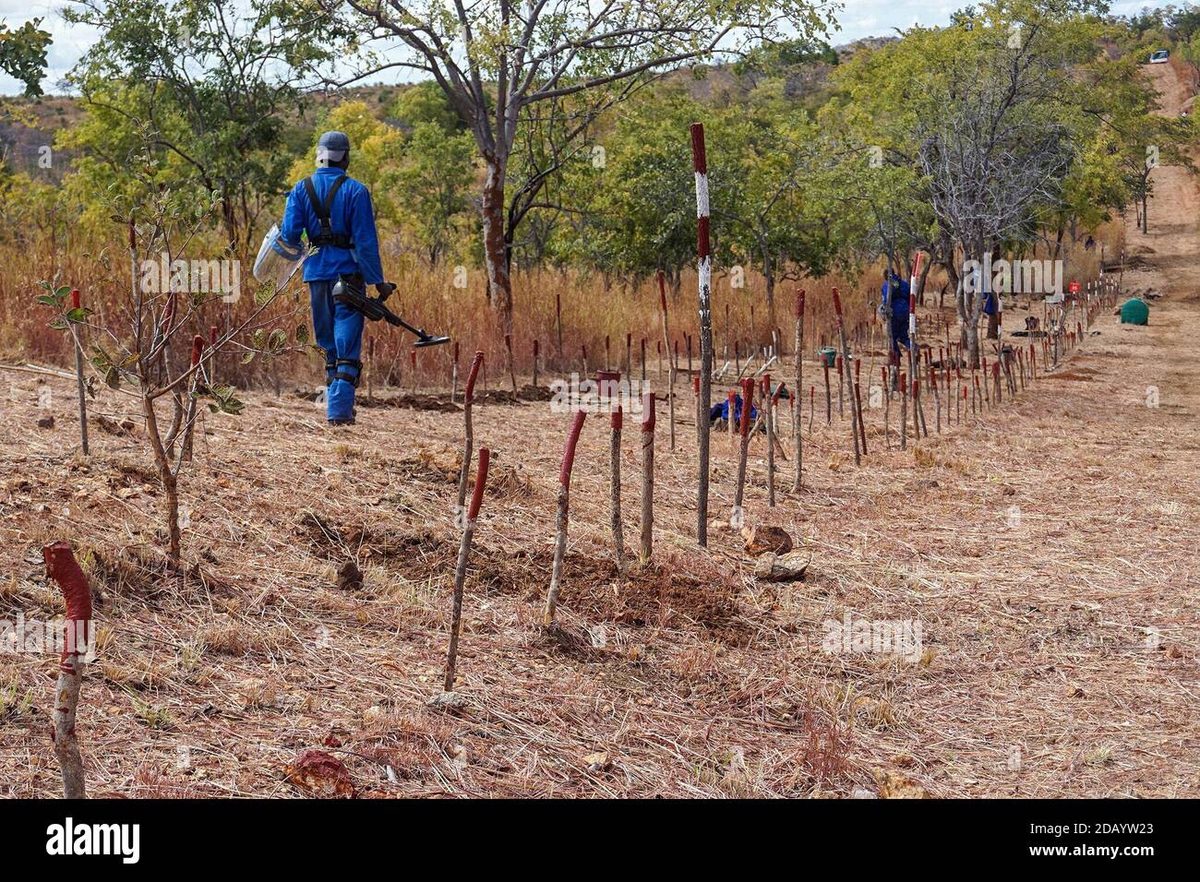
Farmers in Rushinga and Mount Darwin, in Zimbabwe's north-east, have spent their lives walking around minefields laid in the 1970s. In November 2026 the HALO Trust said its teams had destroyed 250,000 of those mines since 2013, and that Mount Darwin is the first district in the country cleared.

That leaves a small job and less money to do it. Zimbabwe's own accounting put remaining contamination at 9.4 square kilometres at the end of 2025, roughly 3% of what was laid. The national programme says it needs about $9.5 million a year through 2030. Since early 2025, the money has moved the other way.

Why it matters

Zimbabwe needs about $9.5 million a year to finish clearing by 2030. Donors are cutting instead, so the mined land stays mined.

Questions about this story

Free account needed to ask — your question is kept and asked for you right after sign-up. Answers are public.

No questions yet — be the first to ask.

Key Indicators

250,000
Landmines destroyed by HALO Trust since 2013
Cumulative total reported by the charity in November 2026.
9.4 km²
Mined land remaining at 31 December 2025
Zimbabwe's Article 7 transparency report records 9,398,108 square metres still contaminated.
97%
Contaminated land released since mine action began
The share cleared or surveyed as of the end of 2025.
$47.7M
Estimated cost to finish by 2030
Zimbabwe's revised 2026–2030 work plan puts the total programme cost at up to this figure.
$9.54M
Average annual funding needed through 2030
The yearly rate implied by Zimbabwe's five-year extension.
1,500
People killed or injured by mines since 1980
HALO's count of casualties since independence; about 120,000 cattle have also been killed.

Voices

Curated perspectives — historical figures and your fellow readers.

Sign up to generate historical perspectives on this story.

People Involved

Organizations Involved

Timeline

1976 November 2026

8 events Latest: 2 days ago
Tap a bar to jump to that date
  1. HALO reports 250,000th mine destroyed

    Latest Milestone

    The charity says Rushinga and Mount Darwin are transformed, and warns aid cuts threaten 2030.

  2. Zimbabwe files work plan putting cost at $47.7 million

    Filing

    The 2026–2030 plan needs about $9.54 million a year to hold the schedule.

  3. Zimbabwe misses its 2025 clearance deadline

    Deadline

    Remaining contamination stands at 9.4 square kilometres; a five-year extension runs to 2030.

  4. APOPO stops work and leaves Zimbabwe

    Funding

    The rat-and-dog detection group releases 9,931 square metres before suspending operations.

  5. U.S. aid cuts hit Zimbabwe's demining programme

    Funding

    HALO reduces staff and APOPO loses most of its income.

  6. HALO Trust starts clearing Zimbabwe's minefields

    Clearance

    Teams begin work in Rushinga and Mount Darwin districts in the north-east.

  7. Independence leaves the mines behind

    Aftermath

    Mines keep killing people and livestock; 1,500 casualties and 120,000 cattle are recorded in the decades that follow.

  8. Rhodesian forces lay border mine belts

    Conflict

    Mines are planted along the Mozambique and Zambia borders to block fighters during the liberation war.

Scenarios

1

Zimbabwe clears its last minefield before the 2030 deadline

Possible Resolves by Jan 31, 2031

Discussed by: HALO Trust and Zimbabwe's Article 7 transparency report, which both say the schedule is technically reachable with sustained funding

The remaining 9.4 square kilometres sit in narrow border strips, where mechanical teams and detector work have sped things up. If donors keep paying roughly $9.5 million a year, HALO and the state unit finish inside the extension and Zimbabwe declares itself mine-free.

2

Funding shortfall forces Zimbabwe to request a second extension

Possible Resolves by Q2 2030

Discussed by: Mine Action Review and Zimbabwe's own work plan, which tie completion to continued donor support

Zimbabwe already missed one deadline and needed five more years. If the annual $9.5 million does not arrive, the last polygons stay in the ground and the government files another Article 5 request rather than declare completion it cannot verify.

3

A new donor restores capacity and a second operator returns

Unlikely Resolves by End of 2028

Discussed by: Mine Action Review's country assessment, which notes the programme's capacity fell when APOPO withdrew

APOPO left because one government supplied 90% of its income. A different donor, or a restored U.S. contribution, could bring another operator back to the Mozambique border and put more teams on the remaining strips.

Historical Context

3 moments from history that rhyme with this story — and how they unfolded.

1976–1979

Rhodesian border mine belts (1976–1979)

The Rhodesian government laid belts of anti-personnel mines along the borders with Mozambique and Zambia to stop fighters entering the country during the liberation war. In places the density reached thousands of mines per kilometre of frontier.

Then

After independence in 1980, the mines kept killing cattle and farmers on land that had been farmland.

Now

The belts became the whole of Zimbabwe's clearance obligation, and the reason it is still clearing half a century later.

Why this matters now

Every mine HALO destroys today dates to those three years of laying.

1997

The Anti-Personnel Mine Ban Convention (1997)

States agreed to ban anti-personnel mines and to clear all mined areas under their control within ten years, with extensions available where clearance is not possible in time. Zimbabwe is a party and reports annually under Article 7.

Then

Countries with legacy minefields drew up national plans and reported progress to the convention.

Now

Deadlines became the calendar that donors and operators plan around. Zimbabwe's original December 2025 target came from this process; missing it produced a five-year extension to 2030.

Why this matters now

The 2030 date is a treaty commitment, not an aspiration, which is why the funding gap is measured against it.

March 2025

APOPO's withdrawal after U.S. funding cuts (March 2025)

APOPO, which used rats and dogs to find mines, drew about 90% of its income from the U.S. State Department's weapons removal office. When that money was cut, it released 9,931 square metres and sent most of its staff home. More than 30% of its Zimbabwean staff were women.

Then

Clearance capacity fell and deminers lost paid work, including one whose wage covered school fees.

Now

Zimbabwe's programme has relied since on HALO and the state unit, with fewer teams covering the same remaining ground.

Why this matters now

It shows how quickly a funding decision becomes an unmoved mine, and why HALO's 2026 warning is about money rather than technique.

Sources

(8)