
Pull to refresh
Logo
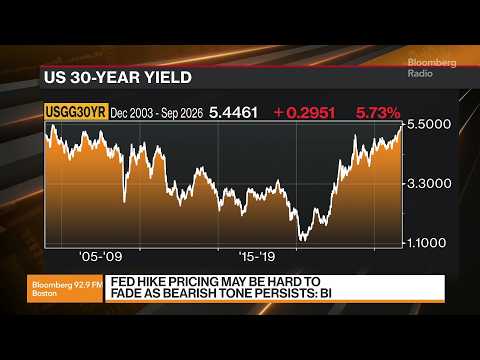
30-year Treasury yield hits highest since 2004 as global bond selloff deepens

30-year Treasury yield hits highest since 2004 as global bond selloff deepens

Money Moves

Iran war inflation, strong growth, and $40 trillion in federal debt push long-term borrowing costs to two-decade highs

Yesterday: 30-year Treasury yield hits 5.44%, highest since 2004

Overview

Updated Yesterday

The US government now pays more to borrow for 30 years than at any time since 2004. The 30-year Treasury yield hit 5.44% on September 24, part of a global selloff that pushed Japanese 10-year yields to 1996 highs and German bunds to their highest since 2009.

Three forces are squeezing long-term rates at once: the war in Iran keeps oil above $100 and inflation at 3.4%, the US economy keeps growing faster than forecast, and the federal government keeps borrowing more, with the national debt now past $40 trillion. Traders have priced in three Federal Reserve rate hikes over the next year.

Why it matters

Mortgage rates above 7% and rising: higher long-term yields mean costlier housing, car loans, and business debt for years.

Questions about this story

Free account needed to ask — your question is kept and asked for you right after sign-up. Answers are public.

No questions yet — be the first to ask.

Key Indicators

5.44%
30-year Treasury yield
Highest since 2004; up from 4.63% the day before the Iran war began.
3.4%
Annual CPI inflation, August
Well above the Fed's 2% target, reignited by the Iran war's oil shock.
70%
Market odds of October Fed hike
CME FedWatch also shows a 56% chance of another hike in December.
7%
30-year fixed mortgage rate
Highest in nearly two years, about a point above pre-war levels.
$40.1T
US national debt
Crossed the $40 trillion mark in August 2026.

Voices

Curated perspectives — historical figures and your fellow readers.

Ever wondered what historical figures would say about today's headlines?

Sign up to generate historical perspectives on this story.

People Involved

Organizations Involved

Timeline

June 2026 September 2026

5 events Latest: Yesterday
Tap a bar to jump to that date
  1. 30-year Treasury yield hits 5.44%, highest since 2004

    Latest Market

    US, German, and Japanese long-bond yields surge; traders price three Fed hikes over the next year.

  2. Treasury plans up to $6 billion long-bond buyback

    Policy

    The Treasury tries to hold down long-term borrowing costs as part of Secretary Bessent's measures.

  3. Strong US PMI data stokes rate-hike bets

    Economic data

    S&P Global's services index hits 58.7 and manufacturing 56.7, multi-year highs, while input costs jump on fuel and transport.

  4. Federal Reserve raises rates for first time since 2023

    Policy

    Chairman Kevin Warsh leads a quarter-point hike, breaking a three-year pause as inflation runs near 3.4%.

  5. US and Israel launch war with Iran

    Conflict

    Oil breaks $100 a barrel and US inflation reignites, starting the long climb in global bond yields. (Approximate date.)

Scenarios

1

Fed Hikes at Both October and December Meetings

Likely Resolves by End of 2026

Discussed by: CME FedWatch futures data, cited by CBS News

Traders see a 70% chance of a quarter-point hike at the Fed's October meeting and a 56% chance in December. Two hikes would put the federal funds rate at 4.25-4.5%. If oil stays above $100 and inflation holds near 3.4%, some analysts expect further increases in 2027.

2

30-year Yields Fall Below 5% as Iran Conflict Eases

Possible Resolves by Q1 2027

Discussed by: Alessandro Gabellone at Bank Degroof Petercam, via Swissinfo

Gabellone argues a Middle East resolution would relieve European rates through the energy channel. If oil falls from $105, inflation expectations cool and long yields could drop sharply. The 10-year yield traded below 4% as recently as early 2025, so the round trip would be steep.

3

Treasury Formalizes Yield-Curve Defense

Possible Resolves by Q2 2027

Discussed by: Straits Times reporting on Bessent's interventions

Bessent has already expanded buybacks of 20- and 30-year debt and bought yen to stop Japan selling Treasuries. If yields keep climbing, he could move to a formal yield-curve control program, capping long-term rates. That would be a historic step for the US, which has not tried such a policy outside wartime. Japan's own yield-cap experiment shows how hard such a policy is to unwind.

Historical Context

3 moments from history that rhyme with this story — and how they unfolded.

February-November 1994

1994 Great Bond Market Massacre

The Fed raised rates from 3% to 6% faster than markets expected, doubling long-bond yields and triggering a global selloff. Orange County, California went bankrupt over leveraged bets, and Mexico's peso crisis followed.

Then

Markets were turbulent but the US avoided recession.

Now

Surprise tightening can rupture markets even without a recession; the Fed later had to send strong signals to calm things down.

Why this matters now

Today's Fed restart of hikes after a pause echoes 1994, when markets did not believe the Fed would keep raising and paid for the mistake.

September 2016-March 2024

Japan's yield curve control (YCC), 2016-2024

The Bank of Japan capped 10-year yields at 0.25%, then repeatedly raised the ceiling as inflation rose, before abandoning the policy entirely in 2024. Yields surged to multi-decade highs after the cap was lifted.

Then

YCC held down borrowing costs for years but distorted bond and currency markets.

Now

Caps only work while they remain credible; when abandoned, yields jump. Japan's 10-year yield is now at a 1996 high.

Why this matters now

Directly relevant to any US move to cap long-term yields. Bessent's buybacks are a softer version of YCC, and Japan's exit shows how hard these programs are to unwind.

August-October 2023

US Treasury market, October 2023

The Fed hiked rates 11 times from 2022 to 2023. In October 2023 the 10-year yield touched 5% and the 30-year reached 5.04%, both multi-decade firsts, after heavy debt issuance and strong growth.

Then

Yields fell in 2024 after inflation cooled and the Fed began cutting rates.

Now

Showed a patient Fed can push yields back down once inflation breaks, even from 20-year highs.

Why this matters now

The closest recent precedent for today's yield levels. The 2023 peak reversed within a year, but today's oil shock and $40 trillion debt load make the current path harder.

Sources

(8)