

Pull to refresh
Logo
Canada signs free trade deal with UAE as part of non-US trade push

Canada signs free trade deal with UAE as part of non-US trade push

Rule Changes

CEPA eliminates tariffs on 99% of Canadian exports to its largest Middle East market

Overview

Updated 1 hour ago

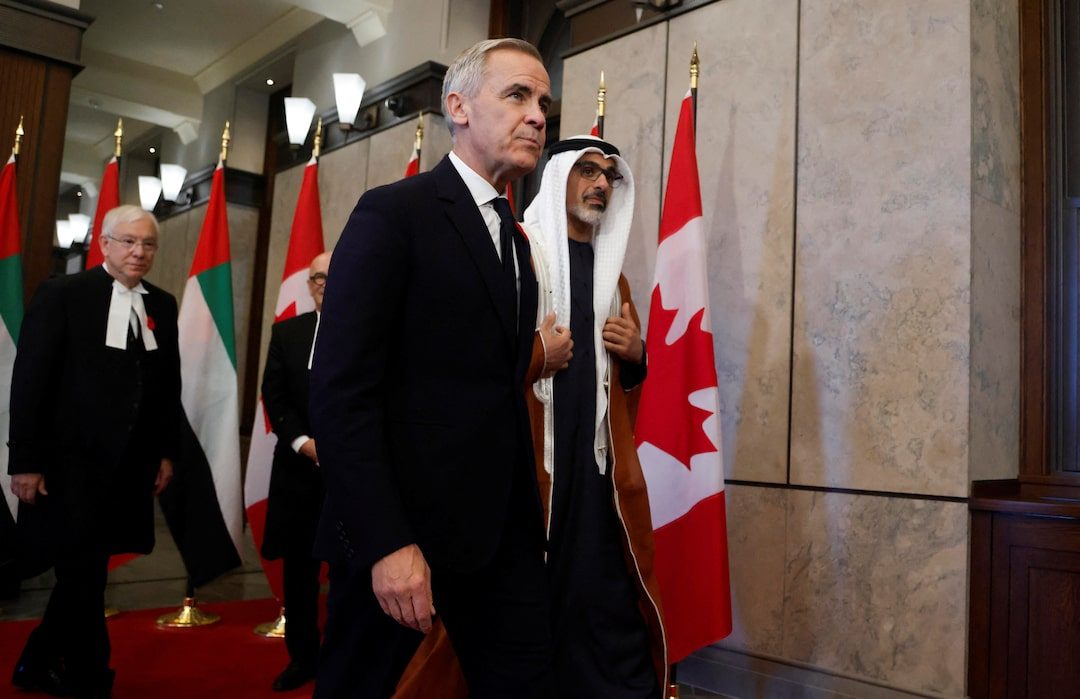
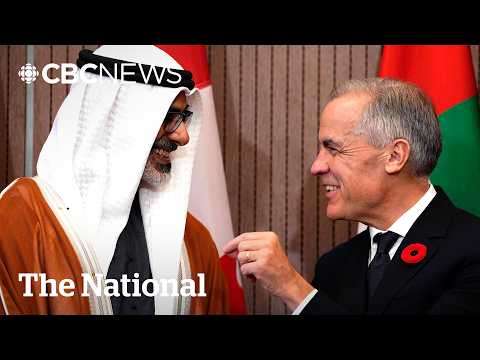
Ottawa and Abu Dhabi signed a free trade agreement on October 27, 2026, after a record 47-day negotiation. The Comprehensive Economic Partnership Agreement (CEPA) eliminates tariffs on over 99% of Canadian exports to the UAE, Canada's largest Middle East market.

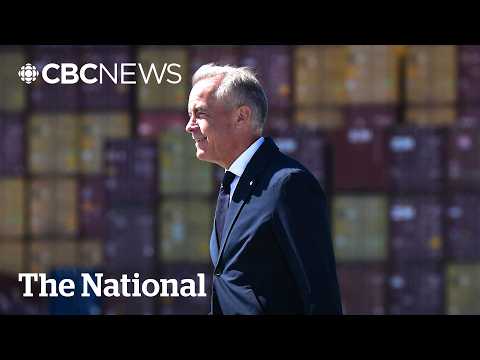
The deal anchors Prime Minister Mark Carney's pledge to double Canada's non-US trade within a decade. US President Donald Trump's tariffs have pushed Ottawa to sign agreements across Asia, Europe, and the Middle East, while talks with Washington remain stalled.

Why it matters

Canada sends roughly three-quarters of its exports to the US; if diversification fails, its economy stays hostage to Washington's tariff decisions.

Questions about this story

Free account needed to ask — your question is kept and asked for you right after sign-up. Answers are public.

No questions yet — be the first to ask.

Key Indicators

99%
Canadian exports to UAE with tariffs reduced or eliminated
Share covered by CEPA once fully implemented.
47 days
Days to negotiate CEPA
Fastest free trade agreement either country has ever negotiated.
$2.48B
Canada-UAE two-way trade last year
Al Jazeera's USD conversion of 3.5 billion Canadian dollars.
$70B
UAE investment commitment to Canada
Announced during Carney's November 2025 visit to Abu Dhabi.
10%
Annual growth in Canada-UAE trade
Average growth rate over the last several years, per government data.

Voices

Curated perspectives — historical figures and your fellow readers.

Sign up to generate historical perspectives on this story.

People Involved

Organizations Involved

Timeline

November 2025 October 2026

3 events Latest: Yesterday
  1. Canada and UAE sign CEPA in Ottawa

    Latest Treaty

    Carney and Crown Prince Khaled preside over signing; deal eliminates tariffs on 99% of Canadian exports.

  2. Canada and UAE conclude CEPA trade negotiations

    Negotiation

    Both sides wrap up talks for the Comprehensive Economic Partnership Agreement, setting up a signing.

  3. UAE commits $70 billion to Canada during Carney visit

    Investment

    PM Carney's Abu Dhabi visit secures a historic $70 billion UAE investment commitment.

Scenarios

1

CEPA takes effect in 2027 as planned

Likely Resolves by End of 2027

Discussed by: Government of Canada, Prime Minister's Office

Both governments expect ratification to proceed quickly. The deal enters into force in 2027, cutting tariffs on 99% of Canadian exports and setting up the projected doubling of two-way trade to $7 billion within a decade. This is the official expectation from Ottawa and Abu Dhabi.

2

Human rights opposition stalls or delays CEPA implementation

Unlikely Resolves by Q2 2027

Discussed by: Human Rights Watch, Trade Justice Network, Amnesty International Canada

Seventeen Canadian civil society groups signed an open letter warning that deeper UAE ties conflict with Canadian values, citing the UAE's human rights record and its alleged role in the Sudan war. If that pressure reaches parliament during ratification, implementation could slip past 2027 or face conditions.

3

Canada and UAE sign an extradition treaty

Uncertain Resolves by Q2 2028

Discussed by: CBC News reporting on the strategic partnership

Beyond trade, both countries agreed to launch negotiations toward an extradition treaty and a mutual legal assistance treaty. If talks succeed, it would mean formal criminal justice cooperation between the two countries. Human rights groups may push back on such cooperation given the UAE's record.

Historical Context

3 moments from history that rhyme with this story — and how they unfolded.

October 2020

UK-Japan trade deal (2020)

After leaving the European Union, Britain signed its first major independent trade deal with Japan — the UK-Japan Comprehensive Economic Partnership Agreement — in October 2020. It covered about $28 billion in annual trade and entered into force on January 1, 2021.

Then

The deal gave Britain a template for post-Brexit agreements and signaled it could trade outside the EU framework.

Now

UK trade deals since have expanded but have not replaced the lost EU trade volume, showing that diversification takes time.

Why this matters now

Like the UK after Brexit, Canada is signing trade deals to reduce dependence on a dominant partner amid an active trade dispute. The UK example shows such diversification is possible but slow to offset existing trade flows.

October 2016 - September 2017

Canada-EU CETA (2016-2017)

Canada's Comprehensive Economic and Trade Agreement with the European Union took nearly a decade to negotiate. It was signed in October 2016 and provisionally applied in September 2017, eliminating tariffs on about 98% of EU tariff lines.

Then

CETA gave Canadian exporters preferential access to the EU market, its second-largest trading partner.

Now

It became Canada's model for modern trade agreements, though its ratification dragged on for years due to regional hurdles.

Why this matters now

Shows Canada has pursued diversification before — but the UAE deal's 47-day negotiation is a dramatic departure from CETA's decade-long process. The comparison highlights how crisis urgency changes trade policy speed.

February 2022

UAE-India CEPA (2022)

The UAE signed its first major comprehensive economic partnership agreement with India in February 2022, covering about $45 billion in annual bilateral trade. The deal entered into force in May 2022.

Then

The UAE-India agreement became the template for the UAE's CEPA program, now extended to Indonesia, Turkey, and Canada.

Now

The UAE has steadily built a network of preferential trade agreements with major economies, reducing its own dependence on oil revenue.

Why this matters now

Shows the UAE's CEPA strategy is deliberate and expanding. Canada is its first G7 partner, marking the program's biggest test with a Western economy.

Sources

(9)