
Pull to refresh
Logo
Daily Brief
Following
Why Ranks Sign Up
NOAA declares El Niño has formed, forecasts a very strong event

NOAA declares El Niño has formed, forecasts a very strong event

Built World

Forecasters put the odds of a record-class winter event at 63 percent, nearly double their May estimate.

Yesterday: NOAA declares El Niño has arrived

Overview

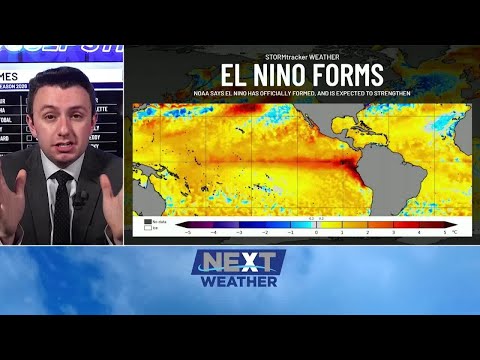
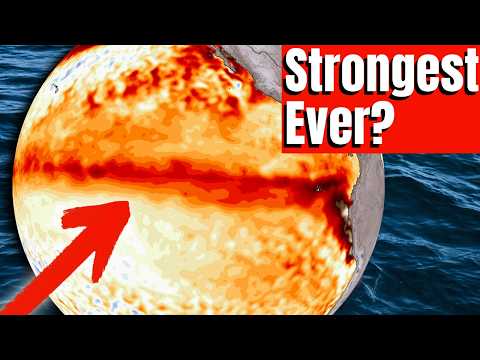
NOAA says El Niño has formed in the tropical Pacific, and it could become one of the strongest on record. Forecasters now put the odds of a 'very strong' event this winter at 63 percent, nearly double their May estimate.

El Niño changes where rain and drought land around the world. For the US, that often means a wetter, stormier South, a milder North, and shifts in heating demand and crop yields. The last very strong event, in 2015-16, helped push global temperatures to a then-record high.

Why it matters

A very strong El Niño reshapes US winter: wetter, stormier South, milder North, and swings in heating bills, crop yields, and flood risk.

Questions about this story

No questions yet — be the first to ask.

Key Indicators

63%
Odds of a 'very strong' event
NOAA's chance of a very strong El Niño for November–January, up from about 33 percent in May.
2.0°C
'Very strong' threshold
Pacific sea-surface temperatures must run this far above average to count as very strong.
0.5°C
Advisory threshold
Temperatures stayed above this mark for five straight months, triggering the advisory.
Since 1950
Record window
A very strong event would rank among the largest in NOAA's modern record.

Voices

Curated perspectives — historical figures and your fellow readers.

Ever wondered what historical figures would say about today's headlines?

Sign up to generate historical perspectives on this story.

Play

Exploring all sides of a story is often best achieved with Play.

Log in to play. Track your picks, climb the leaderboards. Log in Sign Up
Predict 4 ways this could play out. Contrarian picks score more — points lock when the scenario resolves. Log in to play
Higher or Lower Two numbers from this story. Guess which is bigger. 5 rounds to set a streak. Log in to play
Connections Sixteen names from the news. Find the four hidden groups of four. Log in to play

People Involved

Organizations Involved

Timeline

March 2026 June 2026

4 events Latest: Yesterday
Tap a bar to jump to that date
  1. NOAA declares El Niño has arrived

    Latest Declaration

    After five straight months of above-threshold warming, NOAA issued an El Niño Advisory. It raised the odds of a very strong winter event to 63 percent.

  2. May outlook keeps very-strong odds modest

    Forecast

    NOAA's May update put the chance of a very strong winter event near one in three.

  3. NOAA issues an El Niño Watch

    Forecast

    Forecasters flagged warming Pacific waters and said El Niño was likely to form within months.

  4. Pacific returns to neutral

    Background

    Weak La Niña conditions faded, leaving the tropical Pacific near its long-term average and primed to warm.

Historical Context

3 moments from history that rhyme with this story — and how they unfolded.

May 1997 – April 1998

1997–98 El Niño

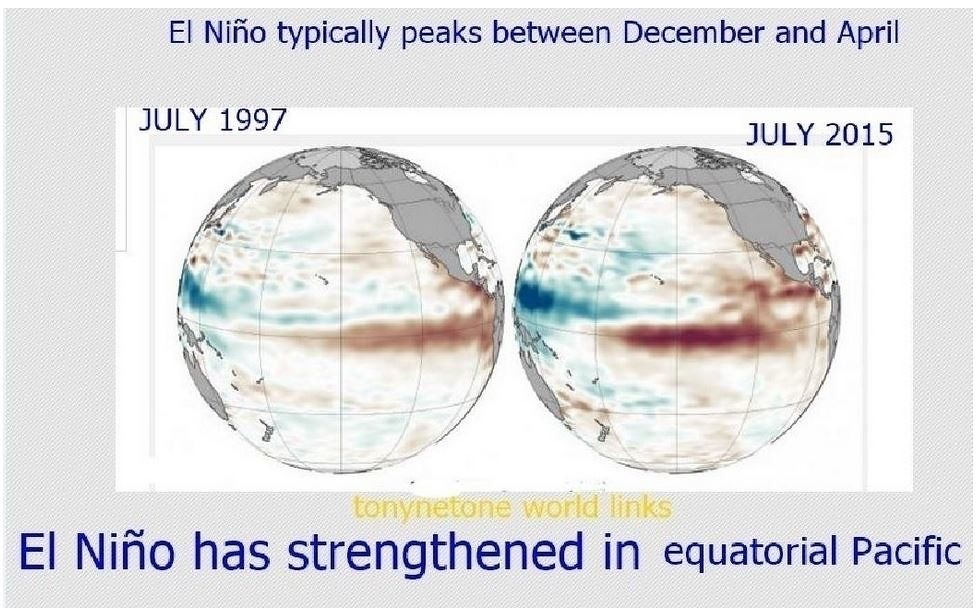
One of the strongest El Niños ever recorded brought floods to California and Peru, drought and fires to Indonesia, and a record run of Pacific super typhoons. Pacific waters ran more than 2°C above average for months.

Then

Floods, fires, and storms killed thousands and caused tens of billions of dollars in damage worldwide.

Now

It became the benchmark scientists use to define a very strong event and reshaped how agencies forecast and prepare for ENSO.

Why this matters now

NOAA's 2026 forecast points to an event that could rival 1997-98 in raw ocean warmth, the closest modern yardstick.

March 2015 – May 2016

2015–16 El Niño

A very strong El Niño coincided with a sharp jump in global temperatures, making 2015 and then 2016 the warmest years on record at the time. It drove drought in southern Africa, flooding in South America, and a busy Pacific cyclone season.

Then

Tens of millions faced food and water shortages; coral reefs bleached worldwide.

Now

It showed how a strong El Niño can stack on top of background warming to break heat records.

Why this matters now

It is the most recent very strong event and the clearest preview of the global heat a strong 2026 El Niño could bring.

June 1982 – August 1983

1982–83 El Niño

A very strong El Niño caught forecasters off guard, with limited ocean monitoring at the time. It brought severe drought to Australia and flooding to the Americas, and devastated Peru's anchovy fishery.

Then

Worldwide damage ran into the billions, with major losses in farming and fishing.

Now

The surprise spurred build-out of the Pacific buoy network that now underpins El Niño forecasts.

Why this matters now

It shows why early advisories like this one matter: the monitoring NOAA now relies on grew out of being blindsided in 1982.

Sources

(5)