



Pull to refresh
Logo
Daily Brief
Following
Why Ranks Sign Up
Number of people without electricity has halved since 2000

Number of people without electricity has halved since 2000

Built World

From 1.35 billion to roughly 675 million, with Sub-Saharan Africa holding most of the remaining gap

May 8th, 2026: Halfway milestone confirmed

Overview

In 2000, 1.35 billion people lived without electricity. By May 2026, that count has fallen to roughly 675 million. The drop works out to about 334,000 new connections every day, sustained for a quarter century.

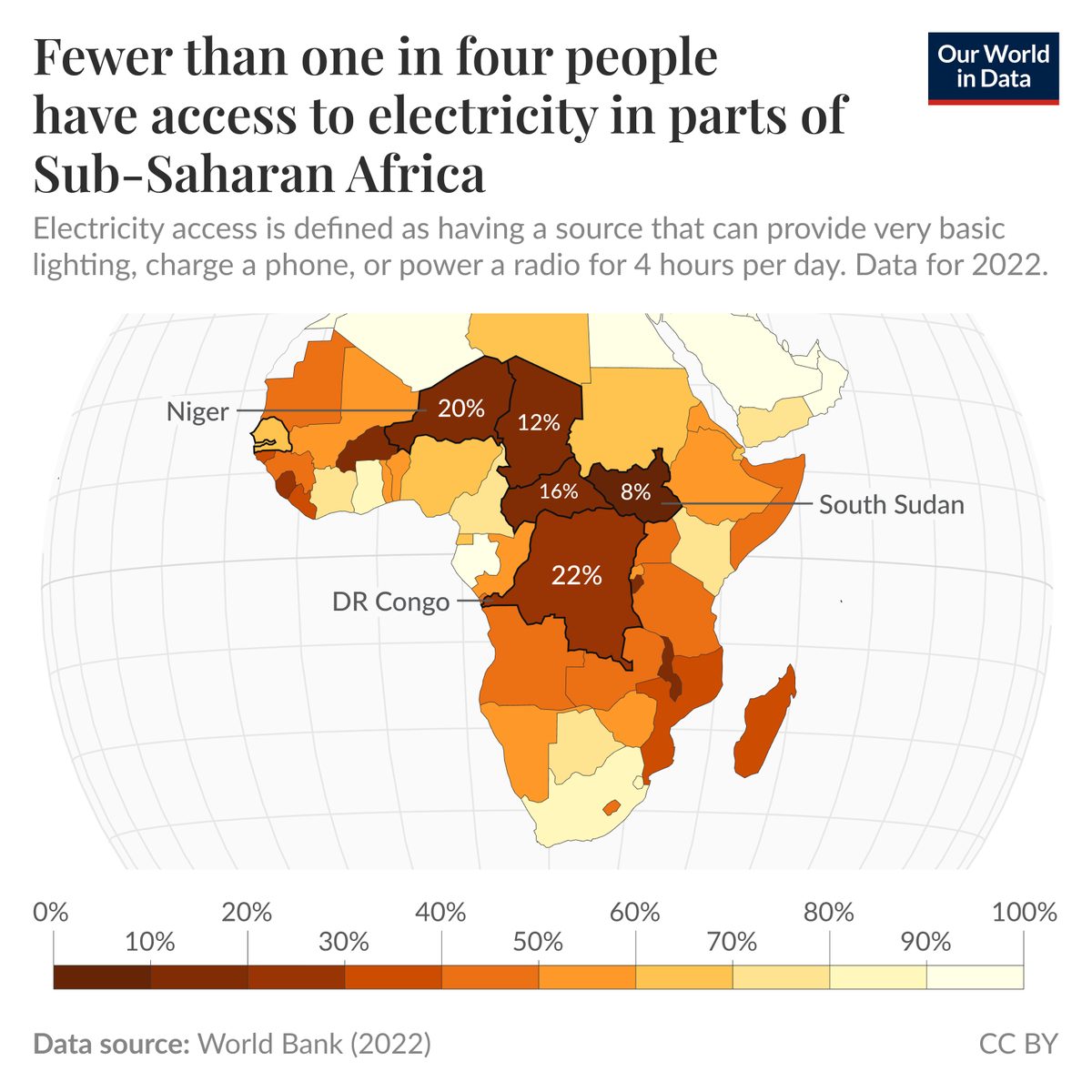
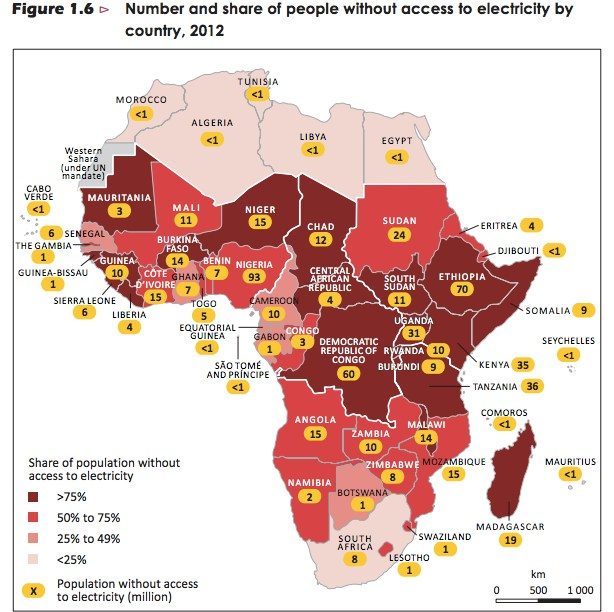
The progress is real but uneven. About 85% of those still without power now live in Sub-Saharan Africa, where population growth has outrun grid expansion. The region's share has climbed from 50% in 2010 even as the global total has fallen by half.

Why it matters

Electricity enables refrigerated medicine, schooling after sunset, and modern healthcare. Roughly 675 million people still go without, down from 1.35 billion.

Key Indicators

675M
People still without electricity
Down from 1.35 billion in 2000, per Our World in Data and Tracking SDG7.
50%
Reduction since 2000
Global population without electricity has been cut in half over 25 years.
334,000
Daily new connections
Average daily count of people gaining electricity access since 2000.
85%
Share of gap in Sub-Saharan Africa
Up from 50% in 2010 as access expanded faster in Asia than in Africa.
92%
Global electrification rate
Share of the world's population with basic electricity access in 2023.
$48B
Mission 300 financing
Combined World Bank and African Development Bank pledges through 2030.

Interactive

Exploring all sides of a story is often best achieved with Play.

Ever wondered what historical figures would say about today's headlines?

Sign up to generate historical perspectives on this story.

People Involved

Organizations Involved

Timeline

  1. Halfway milestone confirmed

    Data point

    Our World in Data's updated figures, republished by HumanProgress, confirm the global unelectrified count has halved since 2000, from 1.35 billion to about 675 million.

  2. Private Sector Council launched

    Policy

    Mission 300 launches a Private Sector Council to bring commercial financing and corporate offtake into African electricity rollouts.

  3. 17 more countries sign on

    Policy

    Seventeen additional African countries commit to national energy compacts under Mission 300, expanding the initiative's reach.

  4. Tracking SDG7 2025 published

    Report

    Joint IEA, IRENA, UN, World Bank, and WHO report puts the global unelectrified count at 666 million, with 85% in Sub-Saharan Africa.

  5. Dar es Salaam Energy Declaration

    Policy

    Forty-eight African countries endorse national energy compacts under Mission 300 at the inaugural Africa Energy Summit.

  6. World Bank and AfDB launch Mission 300

    Policy

    Ajay Banga announces a joint World Bank and African Development Bank pledge to connect 300 million Africans by 2030.

  7. First reversal in a decade

    Data point

    Energy price shocks tied to the war in Ukraine push the global unelectrified count up, the first such rise in more than ten years.

  8. India electrifies its last village

    Milestone

    Leisang village in Manipur becomes the final inhabited Indian village connected to the grid, completing village-level electrification.

  9. India launches Saubhagya

    Policy

    Prime Minister Narendra Modi launches the Saubhagya scheme to wire every Indian household to the grid.

  10. UN adopts SDG7

    Policy

    United Nations member states adopt Sustainable Development Goal 7, targeting universal energy access by 2030.

  11. Sub-Saharan Africa reaches half of global gap

    Data point

    South Asian electrification accelerates faster than African access. Sub-Saharan Africa's share of the unelectrified population reaches 50%.

  12. Baseline: 1.35 billion without electricity

    Data point

    Roughly 22% of humanity lives without electricity access. Sub-Saharan Africa, South Asia, and Southeast Asia hold the bulk of the gap.

Scenarios

Predict which scenario wins. Contrarian picks score more — points lock in when the scenario resolves.

Log in to predict. Track your picks, climb the leaderboard. Log in Sign Up
1

SDG7 target missed in 2030, but Africa's gap closes by half

Current pace points to about 645 million people still without electricity in 2030. Most of the shortfall sits in Sub-Saharan Africa, where rural population growth keeps outpacing grid extension. Mission 300 reaches roughly 200 million of its 300 million target. Decentralized solar mini-grids displace grid expansion as the dominant access method in rural Africa.

Discussed by: International Energy Agency, World Bank, Tracking SDG7 2025 report
Consensus
2

Mission 300 hits target as off-grid solar scales

Forty-eight African energy compacts deliver on schedule. Private capital from the new Private Sector Council closes the financing gap. Solar mini-grid costs continue to fall, making rural connections cheaper than grid extension across most of Sub-Saharan Africa. By 2030, the global unelectrified population drops below 300 million.

Discussed by: World Bank, African Development Bank, Sustainable Energy for All
Consensus
3

Population growth keeps Africa's absolute count near 600 million

Sub-Saharan Africa is projected to add roughly 600 million people by 2050. If electrification continues at the 2020-2023 pace, the percentage of Africans with access keeps climbing but the absolute unelectrified count stays near 600 million. The 2026 halving milestone becomes the high-water mark for a generation.

Discussed by: Tracking SDG7 2025 report, UN Population Division demographers
Consensus
4

Universal access reached by 2030

A surge in international energy financing, roughly triple current rates, plus rapid solar deployment in Africa closes the gap by 2030. This would require connecting 120 million people every year, four times the 2023 pace. No funding pipeline currently exists at that scale.

Discussed by: UN Sustainable Development Goals reporting unit
Consensus

Historical Context

U.S. Rural Electrification (1935-1953)

May 1935 – 1953

What Happened

Only 10% of American farms had electricity in 1935. President Franklin Roosevelt created the Rural Electrification Administration that May, offering low-interest federal loans to farmer cooperatives. The federal government took on work that private utilities had refused as unprofitable.

Outcome

Short Term

By 1942, nearly half of American farms had power. The REA financed roughly 350,000 miles of new transmission lines in seven years.

Long Term

By the early 1950s, more than 90% of American farms had electricity. Rural productivity, water pumping, and refrigeration transformed for a generation.

Why It's Relevant Today

The American case shows how dedicated public financing can close an electrification gap that private utilities leave behind. Mission 300's loan-and-compact structure borrows the same logic.

China's Last-Mile Electrification (1998-2015)

1998 – 2015

What Happened

China had roughly 200 million people without electricity in the late 1990s, mostly in remote western provinces. Beijing launched the Township Electrification Program in 2002 and the Village Electrification Program in 2005, combining grid extensions with off-grid renewables. By 2015 the country had reached universal access.

Outcome

Short Term

Roughly 100 million Chinese citizens gained electricity between 2000 and 2010. Rural household incomes rose as small businesses became viable after dark.

Long Term

China became the world's largest solar manufacturer in part because of domestic deployment in unelectrified villages. The country now supplies most of the solar panels used in African off-grid rollouts.

Why It's Relevant Today

China is the single largest contributor to the halved global total since 2000. Its solar manufacturing base now powers much of the next wave of African electrification.

India's Saubhagya Scheme (2017-2022)

October 2017 – March 2022

What Happened

Prime Minister Narendra Modi launched Saubhagya in October 2017 to wire every Indian household. About 30 million households still lacked connections. The scheme paid for last-mile wiring, meter installation, and a basic LED kit.

Outcome

Short Term

By April 2018, India declared all 18,374 inhabited villages electrified, ending with Leisang in Manipur. By 2022, 28.6 million households had been connected.

Long Term

India closed most of its access gap in five years. Connection quality remains uneven, with reliability and hours of supply varying by state, but the headline count moved decisively.

Why It's Relevant Today

India accounts for the second-largest share of the global drop in unelectrified population. Its scheme structure—paid connections, government-backed financing—is a model Mission 300 references in country compacts.

Sources

(11)