
Pull to refresh
Logo
Novo Nordisk licenses once-weekly oral obesity drug from China's Hengrui Pharma

Novo Nordisk licenses once-weekly oral obesity drug from China's Hengrui Pharma

Money Moves

Deal worth up to $2.6 billion, including $300 million upfront, covers rights outside Greater China to GLP-1/GIP candidate HRS-1596.

Today: Hengrui and Novo sign $2.6 billion license deal

Overview

Updated 1 hour ago

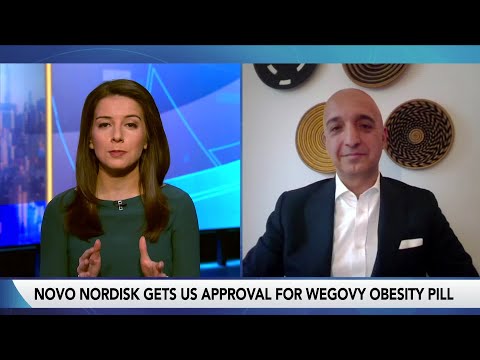
Novo Nordisk will pay China's Hengrui Pharma $300 million upfront to license an experimental weight-loss pill designed for once-weekly use. The deal, which could reach $2.6 billion with milestone payments, gives Novo exclusive rights to HRS-1596 outside Greater China.

HRS-1596 activates two appetite-regulating hormone pathways — GLP-1 and GIP — and is approved for phase I trials in China. If it clears development, it would be the first once-weekly oral treatment in a market where oral options now require a daily pill. The deal also marks China's biggest drugmaker by market value supplying a Western giant's obesity pipeline.

Why it matters

If HRS-1596 reaches the market, Novo would hold the convenience edge in oral weight-loss pills — once a week instead of every day.

Questions about this story

Free account needed to ask — your question is kept and asked for you right after sign-up. Answers are public.

No questions yet — be the first to ask.

Key Indicators

$2.6 billion
Maximum deal value
Total potential value including upfront and milestone payments for HRS-1596 rights.
$300 million
Upfront payment
Paid to Hengrui at signing for exclusive rights outside Greater China.
$2.3 billion
Milestone payments
Tied to development, regulatory, and commercial milestones, plus sales royalties.
Once weekly
Planned oral dosing interval
Current oral GLP-1 drugs require daily dosing; HRS-1596 targets a sevenfold cut in frequency.
Over 250
GLP-1 candidates in China
Drug candidates in development in China, per Handelsblatt, feeding Western licensing interest.

Voices

Curated perspectives — historical figures and your fellow readers.

Ever wondered what historical figures would say about today's headlines?

Sign up to generate historical perspectives on this story.

People Involved

Organizations Involved

Timeline

July 2026 September 2026

4 events Latest: Today
Tap a bar to jump to that date
  1. Hengrui and Novo sign $2.6 billion license deal

    Today Business

    Novo Nordisk agreed to pay $300 million upfront, plus up to $2.3 billion in milestones, for exclusive rights to HRS-1596 outside Greater China.

  2. Hengrui stock rallies on deal news

    Today Market

    Hengrui shares rose 4.2% to HK$46.62 in Hong Kong as investors welcomed the out-licensing agreement.

  3. NMPA approves HRS-1596 for phase I trials

    Regulatory

    The National Medical Products Administration cleared HRS-1596 tablets for phase I trials in weight management and type 2 diabetes, Hengrui disclosed.

  4. NMPA accepts HRS-1596 trial applications

    Regulatory

    China's drug regulator accepted Hengrui's phase I clinical trial applications for HRS-1596 tablets in weight management and type 2 diabetes.

Scenarios

1

Novo closes HRS-1596 license and phase II trials begin

Likely Resolves by Q2 2027

Discussed by: Reuters and company statements expect closing in Q4 2026; Investing.com notes the out-licensing strategy has been a re-rating driver for Hengrui.

Hart-Scott-Rodino antitrust clearance and customary conditions complete on schedule in late 2026, Hengrui pockets the $300 million upfront, and the program advances into phase II trials in China and beyond.

2

Regulatory review delays the deal past Q1 2027

Possible Resolves by Q1 2027

Discussed by: The announcement itself flags Hart-Scott-Rodino clearance as a condition of closing; deals of this size sometimes draw extended antitrust review.

The closing condition drags. Hart-Scott-Rodino review or other customary conditions stretch past the expected Q4 2026 window, pushing definitive closing into 2027.

3

Phase I data disappoints and the program stalls

Possible Resolves by Q2 2028

Discussed by: The HKEX filing itself warns of trial and approval uncertainty; early-stage GLP-1 candidates frequently fail on weight loss or tolerability.

HRS-1596's phase I readouts disappoint on efficacy or show poor tolerability in an oral once-weekly format. Novo or Hengrui deprioritizes it and no phase II trial is registered.

Historical Context

2 moments from history that rhyme with this story — and how they unfolded.

September 2019

Rybelsus, first oral GLP-1 (2019)

Novo Nordisk won US approval for Rybelsus, oral semaglutide, the first GLP-1 drug that could be taken as a pill rather than injected. It required once-daily dosing and careful fasting rules.

Then

Rybelsus gave Novo an oral diabetes option and established that oral peptide delivery could work at scale.

Now

It set the oral GLP-1 bar at daily dosing, which now looks like the constraint HRS-1596 aims to break.

Why this matters now

Novo pioneered oral GLP-1 delivery with a daily pill. HRS-1596 targets the jump to once-weekly oral dosing, extending the same playbook.

2025

Novo licenses United Laboratories drug (2025)

Per Handelsblatt, Novo Nordisk licensed a weight-loss drug candidate from China's United Laboratories, one of many such deals as Chinese GLP-1 development surged past 250 candidates.

Then

The deal added another external candidate to Novo's metabolic pipeline.

Now

It signaled Novo's growing reliance on Chinese biotechs to supplement its internal research.

Why this matters now

The Hengrui agreement extends the same pattern, with Novo again buying a Chinese metabolic asset as the obesity market's oral race intensifies.

Sources

(9)