
Pull to refresh
Logo
Iran designates Argentina's navy and air force as terrorist organizations

Iran designates Argentina's navy and air force as terrorist organizations

Rule Changes

Tehran invokes its 2019 reciprocity law seven months after Buenos Aires blacklisted the Revolutionary Guard.

Overview

Updated 58 minutes ago

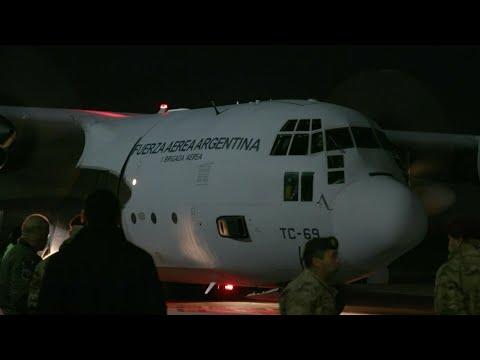
Iran's foreign ministry designated Argentina's navy and air force as terrorist organizations on November 11. The statement cited "the principle of reciprocity" and a 2019 Iranian law that lets Tehran retaliate against any country that adopts Washington's listing of the Islamic Revolutionary Guard Corps. Argentina's army was not named.

Buenos Aires put the Guard on its terrorism register on March 31, nearly seven months before Tehran's reply. The Argentine foreign ministry rejected the move as "completely baseless", saying its armed forces operate under national and international law. Iran had run the same play against Britain weeks earlier, using the same 2019 statute.

Why it matters

Iran's 2019 reciprocity law turns any ally's terrorist listing into a two-way exchange, widening a designations fight that now runs through Washington, London and Buenos Aires.

Questions about this story

Free account needed to ask — your question is kept and asked for you right after sign-up. Answers are public.

No questions yet — be the first to ask.

Key Indicators

2
Argentine military branches designated
Iran named the navy and air force, and pointedly left out the army.
7
Months between Argentina's listing and Iran's reply
Buenos Aires announced the Guard designation on March 31; Tehran answered on November 11.
85
People killed in the 1994 AMIA bombing
Argentina cites the attack, which it blames on Hezbollah and Iranian officials, as the basis for listing the Guard.
29
People killed in the 1992 Israeli embassy bombing
The earlier Buenos Aires attack that Argentine courts also attribute to Hezbollah.

Voices

Curated perspectives — historical figures and your fellow readers.

Sign up to generate historical perspectives on this story.

People Involved

Organizations Involved

Timeline

March 1992 November 2026

12 events Latest: Yesterday Showing 8 of 12
Tap a bar to jump to that date
  1. Iran designates Argentina's navy and air force

    Latest Designation

    Tehran invokes its 2019 reciprocity law and warns Buenos Aires bears the consequences.

  2. Argentina rejects the designation

    Statement

    The foreign ministry calls the move baseless and demands Iranian cooperation with its courts.

  3. Iran labels MI6 hostile and UK forces terrorist

    Designation

    Tehran applies the reciprocity law to Britain's navy and air force.

  4. Britain blacklists the Revolutionary Guard

    Designation

    London proscribes the Guard, prompting Tehran to prepare a reciprocal response.

  5. Argentina expels Iran's senior diplomat

    Diplomacy

    Mohsen Soltani Tehrani is declared persona non grata in Buenos Aires.

  6. Milei's office announces the Guard designation

    Designation

    The statement cites a debt of more than 30 years to bombing victims' families.

  7. US and Israel launch war against Iran

    Conflict

    The offensive reshapes the diplomatic backdrop for allied designations.

  8. Argentina designates the Quds Force

    Designation

    Buenos Aires adds the Guard's overseas branch to its terrorism list.

  9. AMIA Jewish centre bombing kills 85

    Attack

    A truck bomb destroys the community centre in Buenos Aires and injures hundreds.

  10. Israel's Buenos Aires embassy bombed

    Attack

    The blast kills 29 people. Argentine courts later attribute it to Hezbollah.

Scenarios

1

Both designations stay on paper with no enforcement

Likely Resolves by May 11, 2027

Discussed by: Neither government has announced prosecutions, asset freezes or port restrictions against the other's military, and Iran's statement did not say what its law changes in practice.

Iran's reciprocity law allows measures short of enforcement, and Argentina's register targets institutions rather than named officers. The listing gives each government a domestic political result at low cost. The risk sits in routine administration: a visa refusal for an Argentine officer or a denied port call would turn the paperwork into a real dispute, and either side could point to the other's designation as the reason.

2

Iran extends the label to Argentina's army

Possible Resolves by May 11, 2027

Discussed by: Analysts reading the November 11 statement noted that it named only two service branches.

The statement designates the navy and air force and says nothing about the army, an omission that keeps escalation available without requiring a new legal basis. Argentina's army is the branch most associated with the country's own past human rights cases, so listing it would sharpen the political insult. Tehran has widened a reciprocity list before: Britain received three designations in one statement.

3

Argentina answers through courts and Interpol

Possible Resolves by Nov 11, 2027

Discussed by: Argentina's foreign ministry paired its rejection with a renewed demand that Iran hand over suspects to its courts.

Buenos Aires has used Interpol red notices as its main legal instrument in the AMIA case for years, with several Iranian citizens named. A new notice or extradition request aimed at a serving official would convert a statement-level exchange into a legal pursuit. It would also raise the stakes for any country where the named official travels.

4

A regional broker restores diplomatic channels

Unlikely Resolves by Nov 11, 2027

Discussed by: Latin American governments have generally avoided taking sides in the conflict, leaving room for mediation.

Argentina expelled Iran's senior diplomat in April, leaving the relationship without a main formal channel. A third country could host talks, and Milei's government has clashed with regional partners before, so any mediation would need a broker with ties to both. A restoration would not remove the designations, but it would reopen the route for the judicial cooperation Argentina keeps demanding.

Historical Context

3 moments from history that rhyme with this story — and how they unfolded.

July 1994

AMIA community centre bombing, Buenos Aires (1994)

A truck bomb destroyed the Argentine Israelite Mutual Association building in Buenos Aires on July 18, 1994, killing 85 people and injuring hundreds. Argentine investigators blamed Hezbollah and Iranian officials, and courts later issued Interpol red notices for several Iranians. Tehran has denied involvement.

Then

No one has been convicted in the case, and Argentine courts have pursued Iranian officials through Interpol notices rather than through trials in Argentina.

Now

The bombing became the legal and political foundation for Argentina's 2026 designation of the Revolutionary Guard.

Why this matters now

Milei's government cited the victims' families when it listed the Guard, and Argentina's foreign ministry renewed its handover demand after Tehran's reply.

April 2019

The US lists the Revolutionary Guard, Iran legislates reciprocity (2019)

Washington designated the Islamic Revolutionary Guard Corps a foreign terrorist organization in 2019. Iran's parliament answered with a Law on Reciprocal Action, which applies to any country that complies with or supports the US decision.

Then

The law sat largely unused for years while the designation fight stayed between Washington and Tehran.

Now

It gave Tehran a standing legal instrument to answer allied listings, which it used against Britain and Argentina in 2026.

Why this matters now

Iran's November 11 statement cites the 2019 law by name as the basis for designating Argentina's navy and air force.

July–November 2026

Britain lists the Guard, Iran replies in kind (2026)

The United Kingdom blacklisted the Revolutionary Guard in July 2026. In early November, Iran's foreign ministry designated MI6 as a hostile group and the Royal Navy and Royal Air Force as terrorist organizations.

Then

Both governments issued statements; Iran announced no specific measures against British forces.

Now

The same legal mechanism now applies to any country that lists the Guard, not only to the United States.

Why this matters now

Argentina's turn came days later, with the same statute cited and the same structure of naming two service branches.

Sources

(7)