

Pull to refresh
Logo
JWST detects a forbidden trihydrogen signal predicted in 1986

JWST detects a forbidden trihydrogen signal predicted in 1986

New Capabilities

Astronomers see the trihydrogen cation's weak rotational lines for the first time, in shock waves from newborn stars.

Overview

Updated 1 hour ago

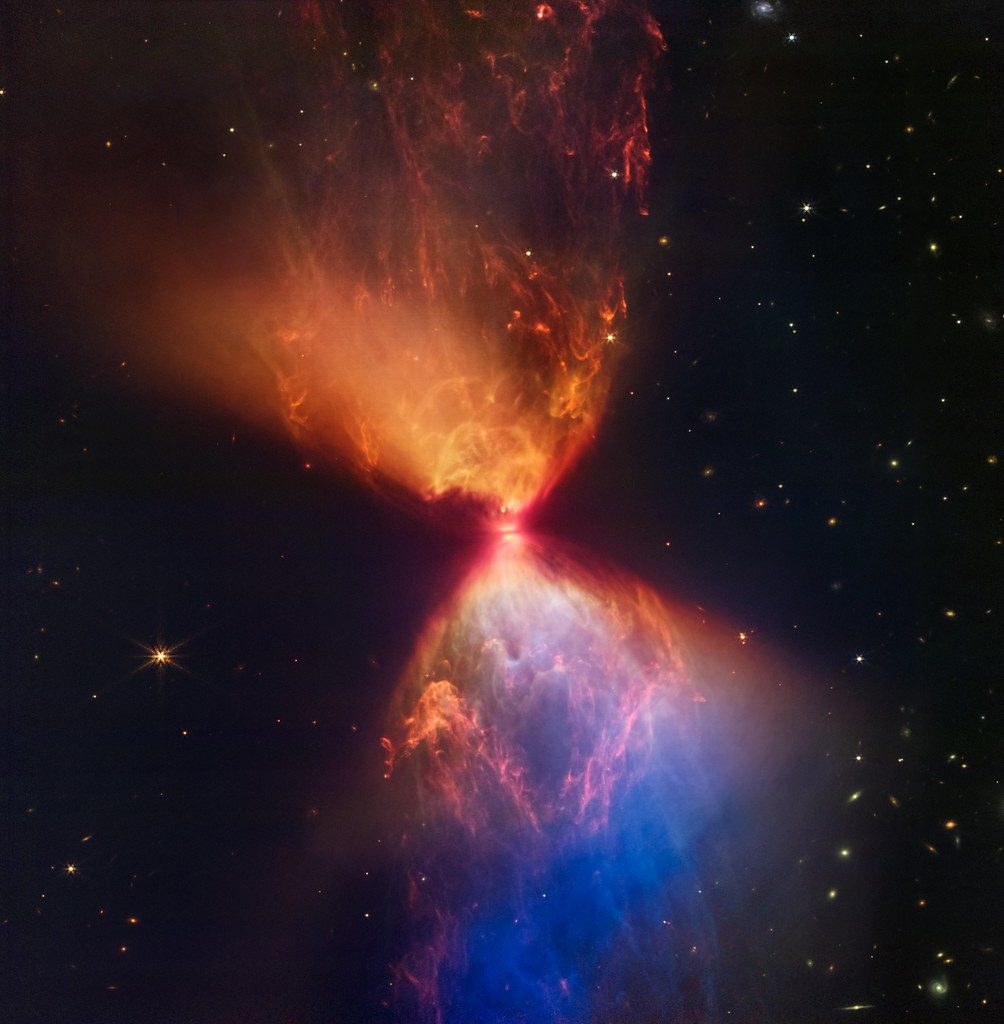
Astronomers calculated in 1986 that the trihydrogen cation would emit a faint rotational glow. For four decades no telescope or laboratory saw it. Then JWST found 26 of those spectral lines in the shocked gas around a newborn star.

The lines appeared in Herbig-Haro 168, a jet-driven shock in the Cepheus A star-forming region, and in archival data for HH 211. The detection gives astronomers a direct tracer of chemistry inside stellar shocks, though existing shock models do not yet explain how the emission gets so bright.

Why it matters

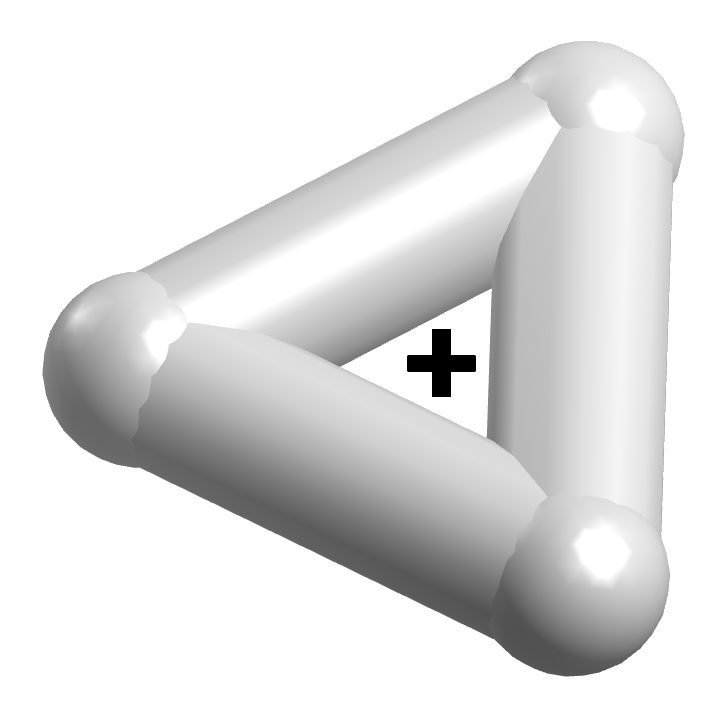
H3+ seeds most interstellar chemistry, and this new signal lets astronomers probe the violent shocks where stars form.

Questions about this story

Free account needed to ask — your question is kept and asked for you right after sign-up. Answers are public.

No questions yet — be the first to ask.

Key Indicators

26
H3+ spectral lines identified in HH 168
All detected with high statistical confidence, according to the study.
72σ
Significance of the strongest line
A statistical measure of how unlikely the signal is to be noise.
1986
Year the emission was predicted
Fu-Shih Pan and Takeshi Oka calculated the forbidden transitions.
5–6×
Factor by which one shock model underestimated H3+
That model matched ordinary molecular hydrogen but missed the trihydrogen brightness.

Voices

Curated perspectives — historical figures and your fellow readers.

Sign up to generate historical perspectives on this story.

People Involved

Organizations Involved

Timeline

1986 November 2026

3 events Latest: Yesterday
  1. JWST identifies 26 forbidden H3+ lines

    Latest Detection

    Neufeld's team reports 26 H3+ lines in HH 168, the strongest at 72 sigma.

  2. Same emission found in HH 211

    Detection

    Archival JWST observations of a second Herbig-Haro object show the same H3+ lines.

  3. Pan and Oka predict a faint H3+ glow

    Theory

    Pan and Oka calculate that centrifugal distortion gives H3+ a tiny dipole and weak forbidden rotational lines.

Scenarios

1

Independent team confirms H3+ lines in a third Herbig-Haro object

Likely Resolves by Nov 12, 2027

Discussed by: The JWST team calls for follow-up observations; the HH 211 find hints the emission is common.

Another group uses JWST or ground-based infrared spectroscopy on a different Herbig-Haro object. Matching the 1986 wavelengths at comparable significance would show the emission is not peculiar to HH 168 and HH 211.

2

Laboratory spectroscopy detects the forbidden transition

Unlikely Resolves by Nov 12, 2029

Discussed by: Pan and Oka's original prediction; the study notes it was never seen in a lab.

A laboratory builds a sensitive enough infrared spectrometer and a dense enough H3+ sample. Detecting the same weak lines on Earth would confirm the quantum calculation without relying on astrophysics.

3

Revised shock models reproduce the bright H3+ emission

Possible Resolves by Q2 2027

Discussed by: Neufeld and colleagues, whose two shock models each failed in a different way.

The team's models either matched ordinary molecular hydrogen but underestimated H3+ by five or six times, or matched H3+ only outside validated conditions. A revised model that fits both molecules within known physics would explain the brightness.

Historical Context

3 moments from history that rhyme with this story — and how they unfolded.

1916–2015

Gravitational waves predicted and detected (1916–2015)

Albert Einstein's general relativity predicted ripples in spacetime in 1916. For nearly a century the signal was thought too faint to measure. LIGO's interferometers detected the merger of two black holes in September 2015.

Then

The detection opened gravitational-wave astronomy and won the 2017 Nobel Prize in Physics.

Now

It established that extremely weak predictions can be confirmed once instruments gain enough sensitivity.

Why this matters now

Like the H3+ lines, gravitational waves were a decades-old theoretical prediction that waited for a detector able to see them.

1846

Neptune found by prediction (1846)

Urbain Le Verrier calculated the position of an unseen planet from irregularities in Uranus's orbit. Johann Galle found Neptune within a degree of the prediction in 1846.

Then

Neptune became the first planet found by mathematical prediction rather than chance observation.

Now

It cemented the idea that theory could direct telescopes to hidden objects.

Why this matters now

Both cases show a calculation pointing observers to something no one had yet seen.

1928–1932

Positron predicted and found (1928–1932)

Paul Dirac's equation predicted an antiparticle to the electron in 1928. Carl Anderson detected the positron in cosmic-ray tracks in 1932.

Then

The positron was the first antimatter particle observed.

Now

It validated Dirac's framework and opened particle physics to antimatter research.

Why this matters now

A precise theoretical prediction led observers to a new signal, as with the H3+ wavelengths.

Sources

(2)