

Pull to refresh
Logo
Venous disease trials at VEINS 2026 support catheter-based treatments

Venous disease trials at VEINS 2026 support catheter-based treatments

New Capabilities

C-TRACT, BOLT, and Spectrum results cover stenting, thrombectomy, and cyanoacrylate closure

2 days ago: Late-breaking trial results announced

Overview

Updated 1 hour ago

Three late-breaking trials at The VEINS 2026 conference in Las Vegas produced new evidence for catheter-based venous disease treatments. The results cover iliac vein stenting for post-thrombotic syndrome, single-session mechanical thrombectomy for deep vein thrombosis, and cyanoacrylate closure for venous leg ulcers.

Venous disease has long been managed with compression and anticoagulation alone. These trials show endovascular interventions can improve quality of life, clear clots, and heal ulcers, with safety profiles similar to standard care.

Why it matters

If these results hold, more venous disease patients could get catheter-based treatment instead of lifelong compression and anticoagulation.

Questions about this story

Free account needed to ask — your question is kept and asked for you right after sign-up. Answers are public.

No questions yet — be the first to ask.

Key Indicators

98%
Thrombus reduction rate in BOLT
Complete or near-complete clot removal in the mechanical thrombectomy study.
88.1%
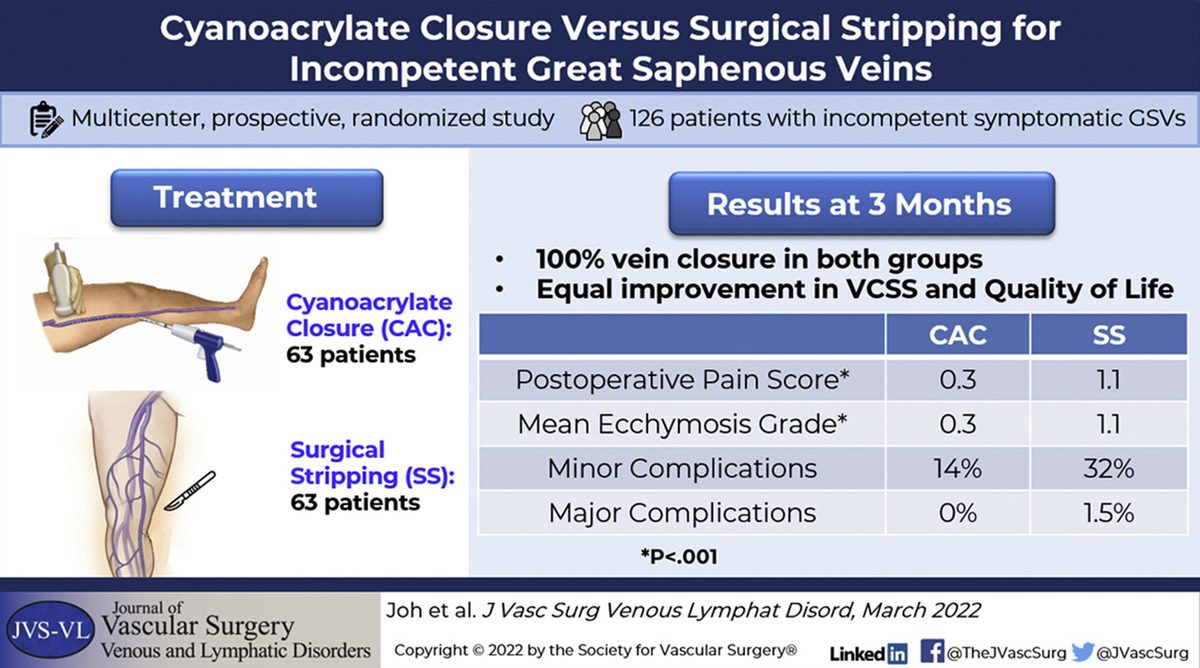
Ulcer healing rate in Spectrum
Venous leg ulcers healed within 24 months in the VenaSeal study.
225
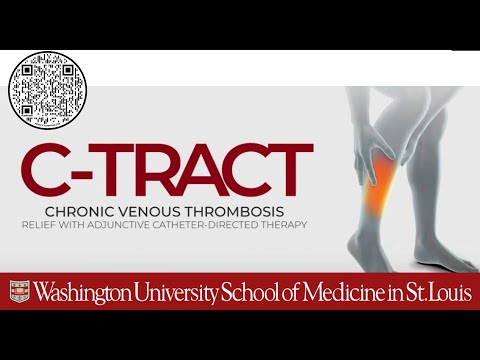
Patients randomized in C-TRACT
Randomized trial of iliac vein stenting for post-thrombotic syndrome across 29 U.S. centers.
24
Months of follow-up
Longest follow-up reported for C-TRACT and Spectrum at VEINS 2026.

Voices

Curated perspectives — historical figures and your fellow readers.

Ever wondered what historical figures would say about today's headlines?

Sign up to generate historical perspectives on this story.

People Involved

Organizations Involved

Timeline

August 2026 October 2026

3 events Latest: 2 days ago
  1. Late-breaking trial results announced

    Latest Clinical Trial Results

    C-TRACT, BOLT, and Spectrum results presented, covering stenting, thrombectomy, and cyanoacrylate closure for venous disease.

  2. VEINS 2026 conference opens at Bellagio Las Vegas

    Conference

    The Venous Endovascular INterventional Strategies conference began, with late-breaking trial sessions scheduled for October 3-4.

  3. VIVA Foundation announces 26 trials for VEINS and VIVA 2026

    Announcement

    The VIVA Foundation said 26 clinical trials would be presented at The VEINS and VIVA 2026 conferences, October 3-6 at Bellagio Las Vegas.

Scenarios

1

C-TRACT results expand payer coverage for iliac vein stenting

Possible Resolves by End of 2027

Discussed by: AllMind market analysis of Medtronic implications

The randomized 24-month data could push Medicare and commercial payers to cover iliac vein stenting for post-thrombotic syndrome patients with iliac vein obstruction. The AllMind analysis notes this would widen the market beyond nonthrombotic lesions, though it does not establish product-specific differentiation for any single stent.

2

BOLT data clears path for FDA approval of vacuum thrombectomy

Likely Resolves by End of 2027

Discussed by: VIVA Foundation announcement

The BOLT study met both primary endpoints: 98% thrombus reduction and a 3.1% major adverse event rate within 48 hours. The study ran under an Investigational Device Exemption, so the data could support FDA clearance of the computer-assisted vacuum thrombectomy device as a first-line single-session treatment for acute iliofemoral deep vein thrombosis.

3

Spectrum data expands VenaSeal use in advanced venous disease

Likely Resolves by End of 2027

Discussed by: Medtronic announcement

The 88.1% ulcer healing rate and 77.1% freedom from recurrence through 24 months could support expanded use of VenaSeal in patients with active venous leg ulcers. Medtronic already secured commercial payer coverage and may pursue label expansion or guideline inclusion for C6 disease.

Historical Context

2 moments from history that rhyme with this story — and how they unfolded.

December 2017

ATTRACT trial (2017)

The NIH-sponsored ATTRACT trial randomized 692 patients with acute deep vein thrombosis to pharmacomechanical catheter-directed thrombolysis plus anticoagulation or anticoagulation alone. Published in the New England Journal of Medicine, it found no difference in overall post-thrombotic syndrome incidence but reduced PTS severity.

Then

The results led to more selective use of catheter-directed thrombolysis for acute DVT.

Now

The trial established that patient selection matters for endovascular DVT treatment and set the stage for C-TRACT.

Why this matters now

C-TRACT is the follow-up NIH trial testing endovascular therapy in patients who already have post-thrombotic syndrome, addressing the question ATTRACT left open about established disease.

January-April 2015

Stroke thrombectomy trials (2015)

Five randomized trials (MR CLEAN, ESCAPE, EXTEND-IA, SWIFT PRIME, REVASCAT) showed mechanical thrombectomy dramatically improved outcomes in large vessel occlusion stroke. Several were stopped early because the benefit was clear.

Then

Guidelines rapidly changed to recommend thrombectomy as standard of care for eligible stroke patients.

Now

Mechanical thrombectomy became the standard treatment for large vessel occlusion stroke within a few years.

Why this matters now

BOLT is attempting a similar shift for deep vein thrombosis, using single-session mechanical thrombectomy to clear clots and reduce post-thrombotic symptoms.

Sources

(6)