
Pull to refresh
Logo
Nvidia begins selling RTX Spark desktops built to run AI models locally

Nvidia begins selling RTX Spark desktops built to run AI models locally

New Capabilities

ASUS, Dell and MSI ship first, with prices from $4,399 and up to 128GB of shared memory

Overview

Updated 39 minutes ago

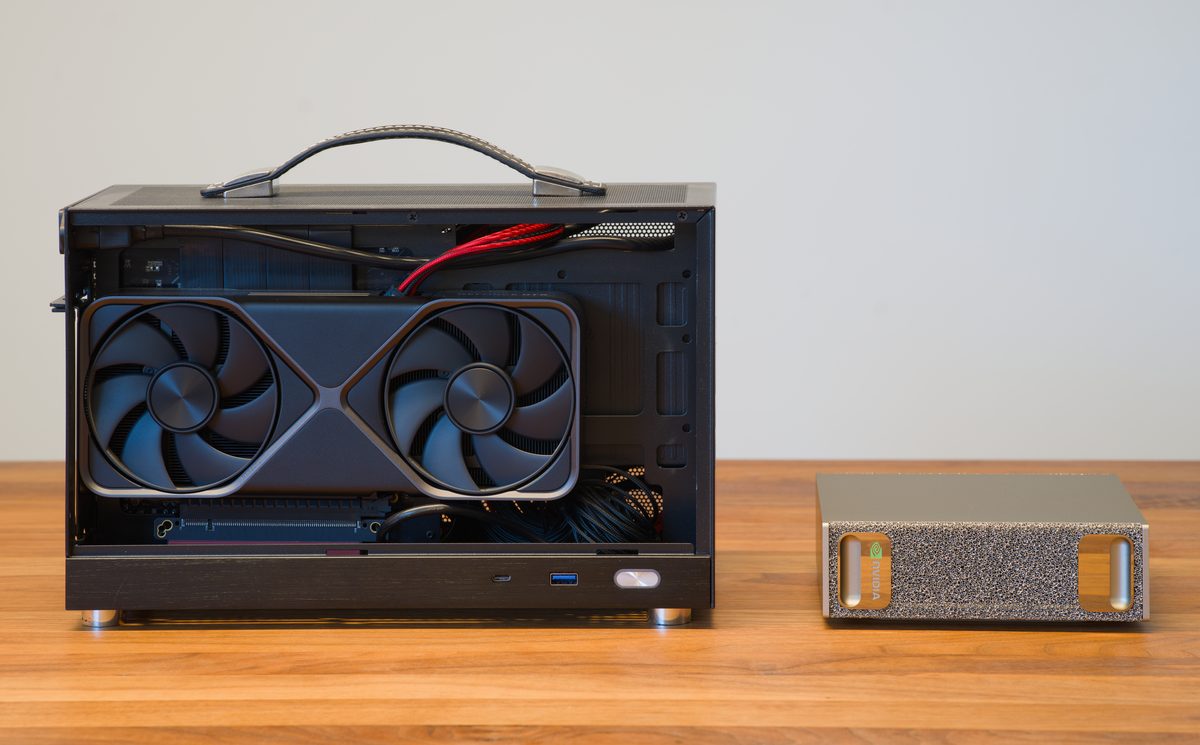
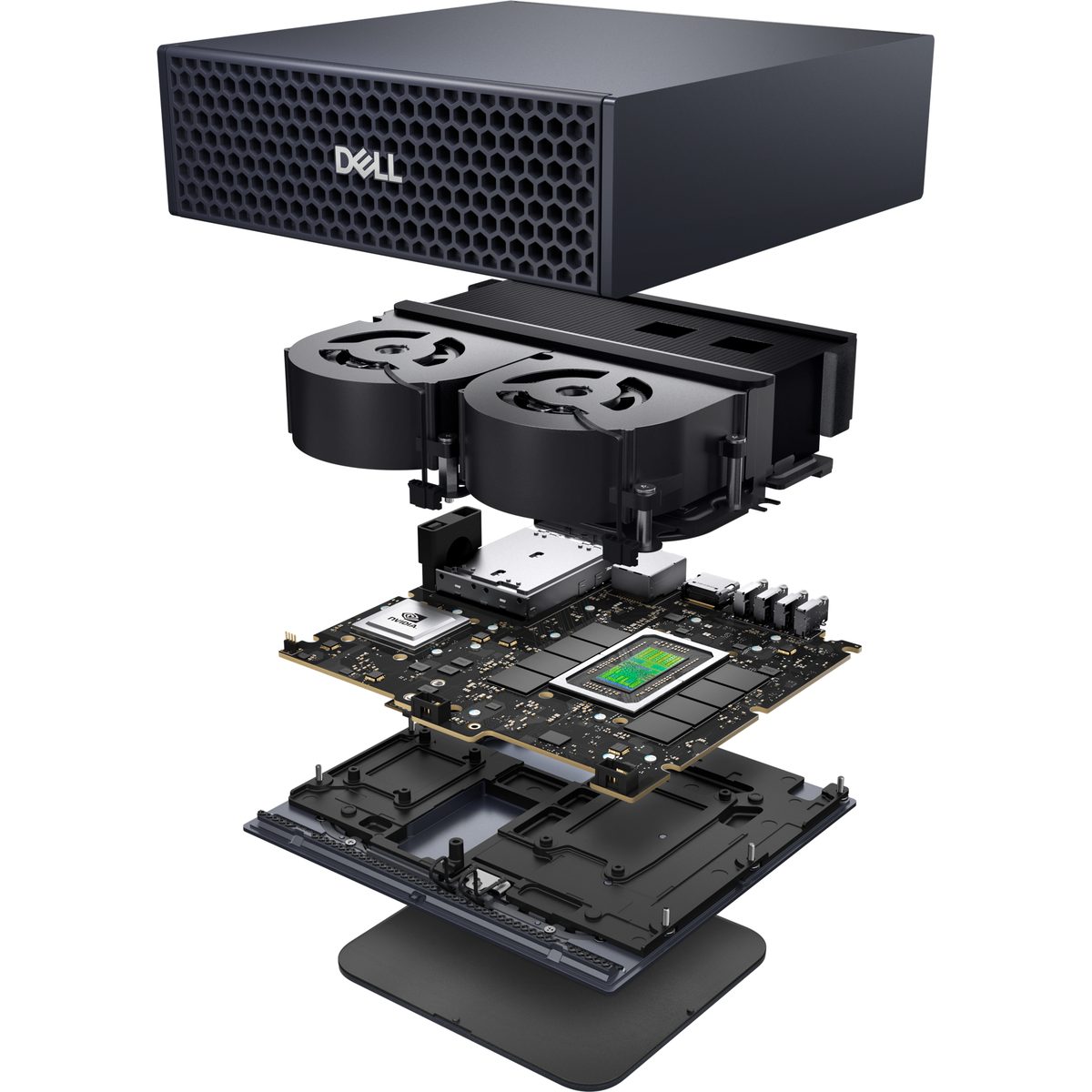
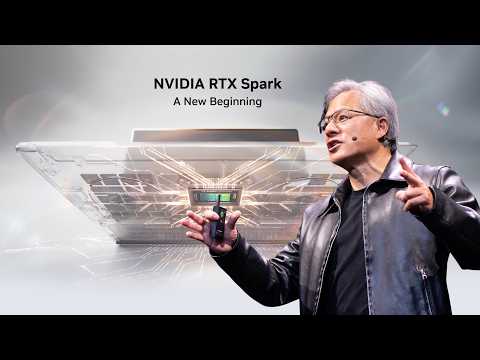
Nvidia started selling compact desktop computers on November 18 that run large AI models on a desk instead of in a data center. ASUS, Dell and MSI shipped first, with systems starting at $4,399 and reaching $7,999 for a 128GB configuration.

The pitch is economic: own the machine, keep agents running around the clock, stop paying per token. Nvidia's own comparison puts a month of heavy token generation at about $20 in electricity against roughly $1,200 in cloud charges. What buyers cannot yet see is tokens per second, or how the box compares with a cloud API or a high-memory Mac.

Why it matters

If a $4,399 desktop can replace per-token cloud bills, the economics of running AI shifts from renting compute to owning it.

Questions about this story

Free account needed to ask — your question is kept and asked for you right after sign-up. Answers are public.

No questions yet — be the first to ask.

Key Indicators

$4,399
Starting price
Entry configuration with 64GB of unified memory.
$7,999
Top MSI configuration
128GB of memory and a 4TB solid-state drive.
128 GB
Maximum unified memory
Shared between the processor and graphics chip, not split into separate pools.
6,144
CUDA cores in the Blackwell GPU
The graphics processor paired with a 20-core Grace CPU.
~$20
Monthly electricity, Nvidia's estimate
For 61 million tokens generated on one machine at full load.
~$1,200
Monthly cloud cost, Nvidia's comparison
Same token volume through a cloud model, per Nvidia's presentation.

Voices

Curated perspectives — historical figures and your fellow readers.

Sign up to generate historical perspectives on this story.

People Involved

Organizations Involved

Timeline

2026 November 2026

5 events Latest: Today
Tap a bar to jump to that date
  1. Compact desktops go on sale from three vendors

    Today Product launch

    ASUS, Dell and MSI began selling RTX Spark mini PCs. Acer, GIGABYTE, HP, Lenovo and Microsoft models were announced for later.

  2. Nvidia sets pricing from $4,399 to $7,999

    Today Pricing

    The 64GB configuration starts at $4,399. An MSI unit with 128GB of memory and a 4TB drive lists at $7,999.

  3. Independent test finds the box draws less power than advertised

    Today Review

    ComputerBase measured a 105-watt peak in a game and about 65 watts on the GPU during model inference, under the 140-watt ceiling.

  4. Software stack adds native Arm apps and agent tools

    Today Software

    Adobe shipped native Windows on Arm applications, Blender gained DLSS Ray Reconstruction, and ComfyUI and Hermes agent workflows run locally.

  5. RTX Spark laptops reach buyers first

    Product launch

    Nvidia's Arm-based laptops went on sale ahead of the desktops, establishing the chip platform and its Windows on Arm software stack.

Scenarios

1

All five remaining partners ship RTX Spark desktops

Likely Resolves by Q2 2027

Discussed by: Nvidia's launch announcement, which named Acer, GIGABYTE, HP, Lenovo and Microsoft as later arrivals

Nvidia said mini PCs from Acer, GIGABYTE and HP are coming, along with a Microsoft Surface RTX Spark Dev Box and a Lenovo model. If each of those vendors lists a system for sale, the platform becomes a standard category rather than a three-vendor experiment. Slippage at any one of them would suggest the hardware is harder to build at volume than the launch implied.

2

Entry price falls below $4,000 within a year

Possible Resolves by Nov 18, 2027

Discussed by: Hardware Upgrade and ip73, both of which flagged the price as the main barrier to a broader buyer pool

At $4,399 for 64GB, the machines cost more than a well-equipped Mac Studio and far more than a gaming desktop. A price cut, a cheaper 32GB tier, or a sale-priced configuration would signal that Nvidia and its partners need volume rather than margin. Memory prices drive much of the bill, so a cut depends on the component market as much as on strategy.

3

Nvidia announces a second-generation Spark desktop

Possible Resolves by End of 2027

Discussed by: Trade coverage comparing RTX Spark with the earlier DGX Spark line, which Nvidia has already revised once

Nvidia has a habit of shipping a first machine and following it within about two years. A successor would likely mean a newer GPU generation, more memory bandwidth, or a lower price on the same memory. The absence of an announcement by the end of 2027 would suggest the company is waiting on demand data before committing to another desktop.

Historical Context

3 moments from history that rhyme with this story — and how they unfolded.

1977-1985

Time-sharing gives way to personal computers (1977-1985)

For most of the 1970s, using a computer meant renting time on a central machine and paying by the hour. The Apple II in 1977 and the IBM PC in 1981 put a machine on the buyer's desk for a fixed price, with no meter running.

Then

Buyers who ran heavy workloads could compare a purchase price against years of rental bills and often chose ownership.

Now

Owned computing became the default for general work, and the companies selling time on central machines lost most of that business.

Why this matters now

The cloud API bill versus the box on the desk is the same trade, with tokens in place of compute hours.

April 2016

Nvidia's DGX-1 puts an AI computer beside a desk (2016)

Nvidia packed eight graphics accelerators into one chassis and sold it to research labs as a self-contained AI machine. It was priced for institutions, not individuals, and ran a Linux software stack rather than Windows.

Then

Research groups could train models without building their own cluster, and the DGX line became Nvidia's template for integrated systems.

Now

The idea of a single box as an AI unit of purchase survived, shrinking in size and price over the following decade.

Why this matters now

RTX Spark is that idea at a consumer price, with a Windows stack and a buyer who is one person rather than a lab.

November 2020

Apple moves the Mac to its own Arm chips (2020)

Apple replaced Intel processors in its laptops and small desktop with the Arm-based M1, which shared one pool of memory between processor and graphics. The first machines shipped in November 2020.

Then

The chips delivered large gains in performance per watt, but software written for Intel had to be rebuilt or translated.

Now

Arm became a credible desktop architecture, and shared memory became a selling point for running large models on a single machine.

Why this matters now

RTX Spark is a Windows PC on Arm with shared memory, and it faces the same software-rebuild problem Apple worked through.

Sources

(7)