
Pull to refresh
Logo
Trump orders federal agencies to replace 'AI' with 'Super Intelligence'

Trump orders federal agencies to replace 'AI' with 'Super Intelligence'

Rule Changes

Executive order rebrands artificial intelligence terminology across the federal government and sets a 60-day deadline for a new statutory definition

Today: Executive order published in the Federal Register

Overview

Updated 1 hour ago

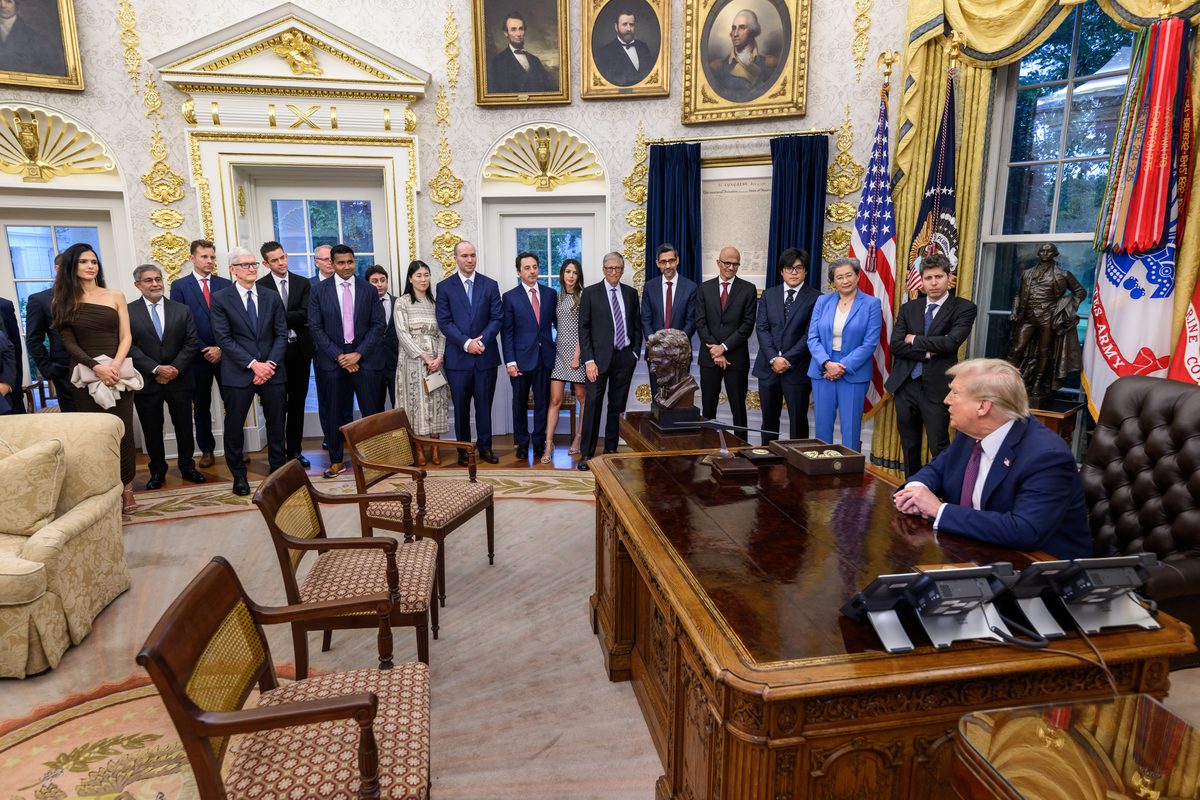
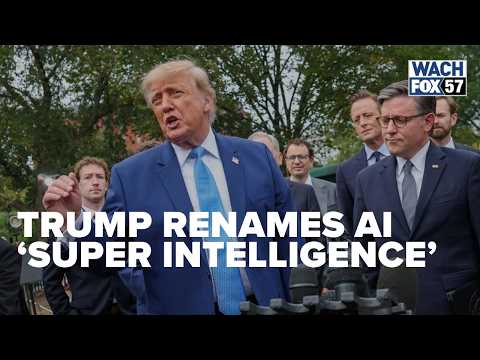
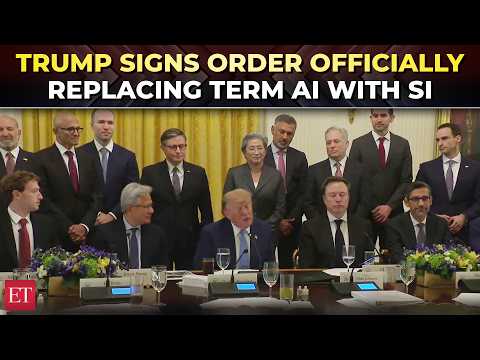
President Trump signed an executive order on September 29 directing every federal agency to stop saying "Artificial Intelligence" and start saying "Super Intelligence." The change applies to official correspondence, websites, reports, and policy documents across the executive branch.

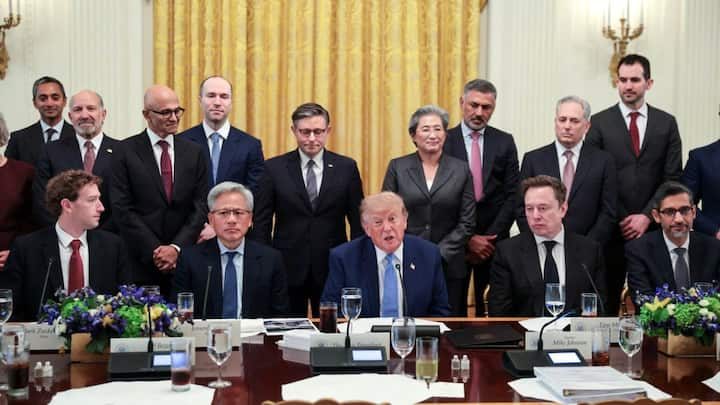
The order also gives the White House science office 60 days to propose a new federal definition of the term. Six technology chiefs signed a separate, voluntary accord on frontier model safety the same day, which Trump called "morally binding."

Why it matters

Federal vocabulary for AI is changing, and a new statutory definition could reshape how the technology is described, funded, and regulated in US law.

Questions about this story

Free account needed to ask — your question is kept and asked for you right after sign-up. Answers are public.

No questions yet — be the first to ask.

Key Indicators

60 days
Deadline for White House science office to propose a federal 'Super Intelligence' definition
The order requires the Assistant to the President for Science and Technology to submit proposed legislative language within 60 days of September 29, 2026.
$5B
Genesis Mission funding announced under Trump administration
A national effort to use Super Intelligence for breakthroughs in science, medicine, energy, and manufacturing.
6
Tech leaders who signed the White House Accord on Super Intelligence
CEOs from Google, Meta, Anthropic, OpenAI, xAI, and Nvidia signed the voluntary frontier-safety document on September 29, 2026.
90+
Federal actions in America's AI Action Plan (July 2025)
The plan identified actions to accelerate AI innovation, build infrastructure, and extend US leadership.

Voices

Curated perspectives — historical figures and your fellow readers.

Ever wondered what historical figures would say about today's headlines?

Sign up to generate historical perspectives on this story.

People Involved

Organizations Involved

Timeline

July 2025 October 2026

4 events Latest: Today
Tap a bar to jump to that date
  1. Executive order published in the Federal Register

    Today Publication

    The order was formally published, establishing the effective policy language for the executive branch.

  2. Trump signs executive order renaming AI to 'Super Intelligence'

    Executive Action

    The order directs all agencies to use 'Super Intelligence' and 'SI' in new official documents. Six tech CEOs signed a voluntary frontier-safety accord the same day.

  3. White House unveils National Super Intelligence Policy Framework

    Policy

    The framework included legislative recommendations to ensure Americans benefit from the technology.

  4. White House releases America's AI Action Plan

    Policy

    The plan identified more than 90 federal actions to accelerate AI innovation, build infrastructure, and extend US leadership.

Scenarios

1

Congress adopts 'Super Intelligence' into law

Possible Resolves by Q2 2027

Discussed by: The executive order itself, which directs the science office to submit proposed legislative language to the President

The White House science office submits draft legislation defining "Super Intelligence" by late November 2026. Congress could pass the measure, formally replacing the "artificial intelligence" definition in 15 U.S.C. 9401(3) with the new term. The administration has already pushed related legislation through the National Super Intelligence Policy Framework released in March 2026, giving this path some momentum. Still, whether the term becomes statutory depends entirely on Congress, which controls its own agenda.

2

Order reversed by court or successor administration

Possible Resolves by Q3 2027

Discussed by: The Verge, which noted the order "could still constitute a real (and very strange) shift"

A federal court could rule that the order exceeds executive authority over statutory terminology, or a future administration could rescind it with a new executive order. Executive orders are the easiest instruments of policy to reverse, so the terminology shift could prove temporary if political control changes. The order applies only to the executive branch and does not bind Congress or the courts, limiting its reach.

3

'Super Intelligence' becomes standard practice without legal change

Likely Resolves by Q2 2027

Discussed by: The language of the order itself, which takes effect immediately for newly issued documents

Agencies adopt "Super Intelligence" and "SI" in new materials as directed, even if Congress never codifies the term. The statutory definition would remain unchanged, creating a gap between how the government speaks and how the law reads. This is the default path unless legal action or legislation intervenes, since the order instructs agencies not to acknowledge the usage of "Artificial Intelligence" in applicable settings.

Historical Context

3 moments from history that rhyme with this story — and how they unfolded.

July 1947

War Department becomes Defense Department (1947)

The National Security Act of 1947 renamed the War Department as the National Military Establishment, which became the Department of Defense in 1949. The change replaced language built around wartime command with a permanent defense posture suited to peacetime and Cold War confrontation.

Then

The new name signaled a standing military establishment ready for peacetime as well as war, and the department began reorganizing around the new structure.

Now

The term "Department of Defense" became standard, and the name change both reflected and reinforced the shift from wartime mobilization to permanent military readiness.

Why this matters now

Shows how renaming a government institution can both signal and drive a policy shift. The 'Super Intelligence' order similarly attempts to use terminology to redirect how the federal government frames a technology.

October 2001 - March 2003

Homeland Security terminology (2001-2003)

After the September 11 attacks, President George W. Bush created the Office of Homeland Security by executive order in October 2001. Congress then passed the Homeland Security Act of 2002, establishing the Department of Homeland Security, which became operational in March 2003.

Then

A new vocabulary of "homeland security" spread across federal agencies, replacing earlier language about domestic defense and counterterrorism.

Now

The term reshaped the federal bureaucracy's structure and priorities, and remains standard usage more than two decades later.

Why this matters now

Illustrates how a politically chosen term can transform federal language and even create new institutions. Unlike that case, the 'Super Intelligence' order is a terminology change that has not yet been matched by statutory or structural change.

March 2003

Freedom Fries (2003)

The House cafeteria renamed French fries "freedom fries" after France opposed the Iraq invasion. The change was symbolic and applied to menus, not law.

Then

The new name became a political shorthand for tensions between the US and France during the Iraq War.

Now

The name faded from use once the controversy subsided, and the cafeteria quietly dropped it.

Why this matters now

A cautionary example of politically motivated renaming that persists only as long as the political winds favor it. The 'Super Intelligence' order faces a similar risk if political control shifts.

Sources

(10)